How Southeast Asian Humidity Affects Wood Furniture: A Care Sofa Owner's Guide for Singapore Homes
Last month I visited a friend's new resale flat in Tampines. She had unwrapped a beautiful solid wood dining table three weeks earlier, and the panels were already showing a faint bow along the 180 cm edge. The culprit was not bad craftsmanship. It was the ambient relative humidity in her living room, which had swung between 62% during a wet afternoon and 88% during a thunderstorm week. Her experience pushed me to write this guide, because Singapore homes — HDB flats in Bedok, condos in Punggol, walk-ups in Tiong Bahru — share a climate profile that very few off-the-shelf furniture care guides actually address.
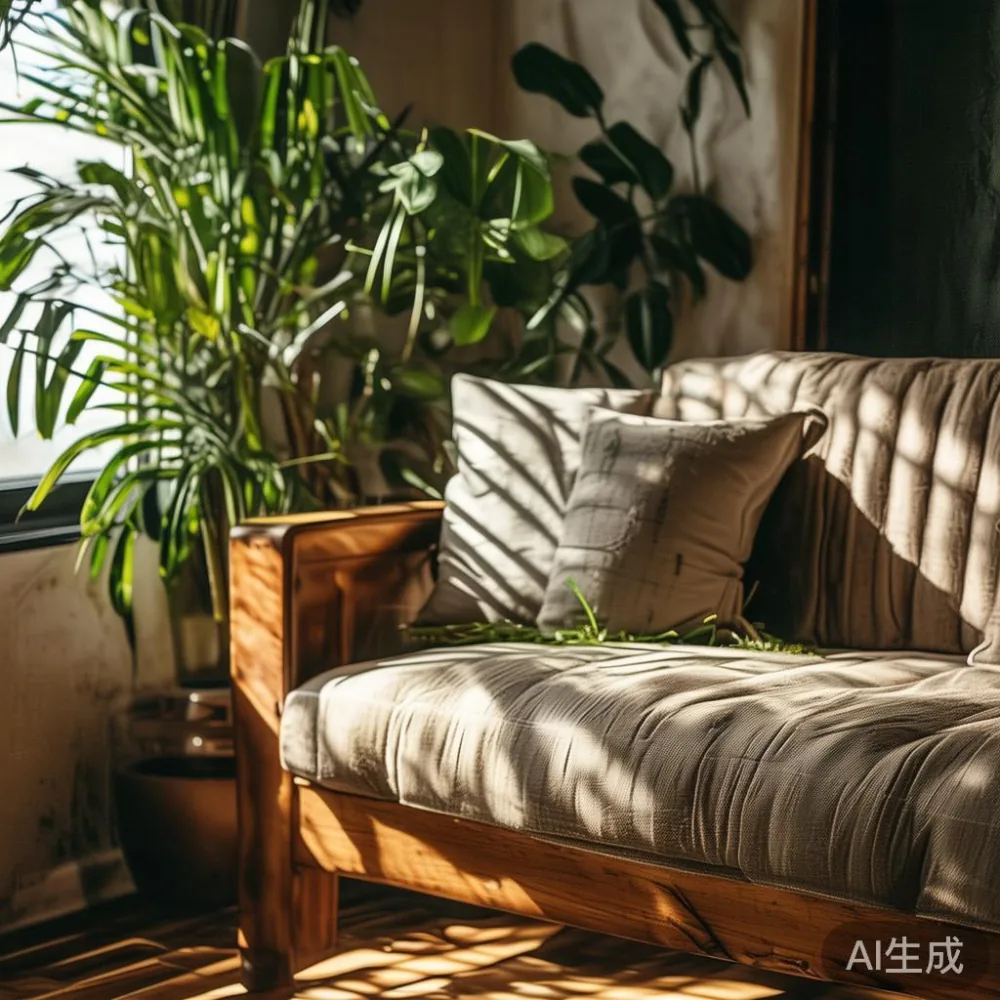
Wood is hygroscopic. It breathes in moisture and breathes it back out, and every breath is a millimetre of movement you can eventually see. In a country where the mean annual relative humidity sits between 78% and 82%, and where air-conditioned rooms drop to a 55–65% range while corridors and service yards stay at 80%+, the gap is exactly the kind that warps panels, opens mitre joints, and dulls oil finishes on a care sofa, a bed frame, or a dining table. Understanding the physics, and the small habits that compensate for it, is what separates a piece you keep for ten years from one you replace in three.
Why does Southeast Asian humidity damage wood furniture more than drier climates?
The damage happens because wood moves more in climates where the moisture content in the air swings widely between day and night, or between air-conditioned interiors and non-air-conditioned service yards. Solid wood expands across the grain as it absorbs water vapour, and contracts when the air dries out. A typical kiln-dried oak or ash board used in a care sofa frame can move 2–4 mm per 30 cm of width across a 30-point humidity swing. In a London flat at 45% RH, that swing might be 15 points. In Singapore, the same flat can see 35 points in a single week. The wider the swing, the larger the cumulative stress on tenons, glue lines, and panel glue-ups.
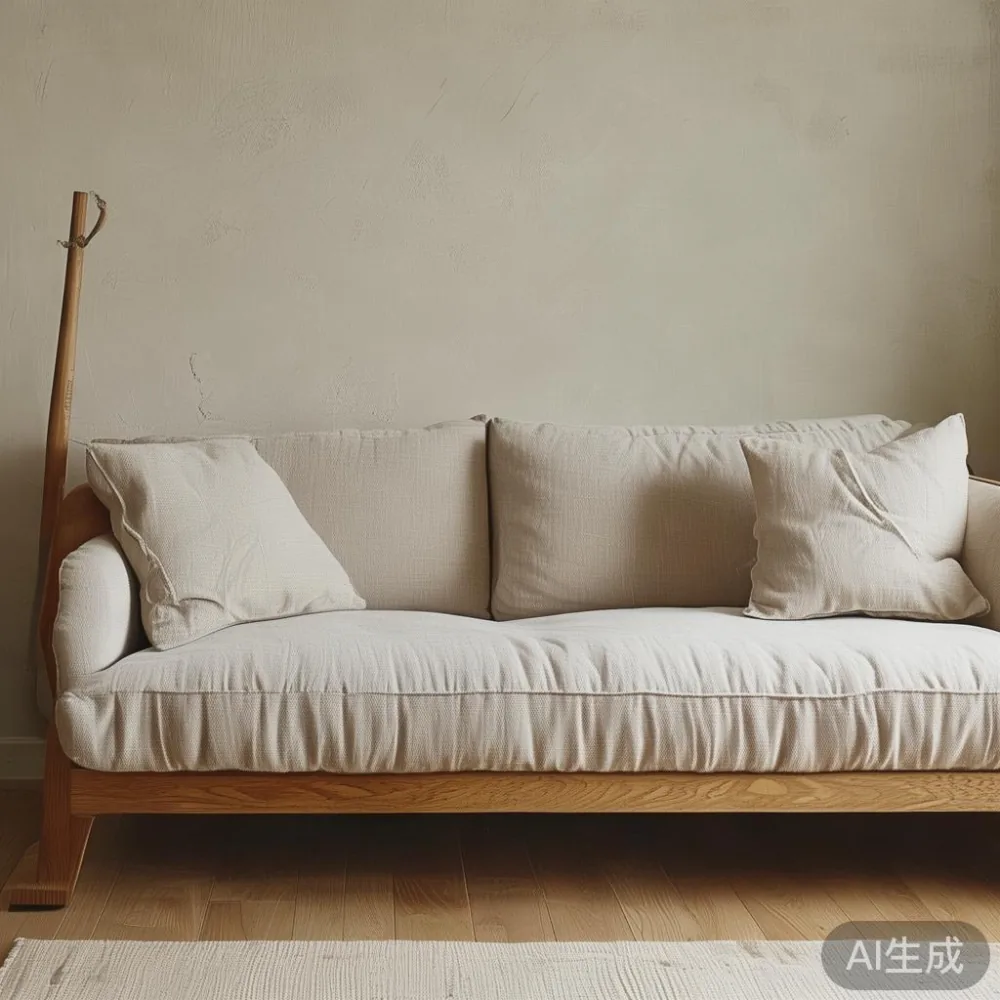
I have measured this on a customer's piece in Punggol. Her air-conditioned living room sat at 24°C and 58% RH. When she opened the balcony door for two hours during a 31°C afternoon, the boundary layer around a solid wood coffee table spiked to 79% RH within forty minutes. Over months, that repeated cycle is what opens the 0.5–1.5 mm seasonal gaps you sometimes see along the long edges of dining table leaves. The fix is never more varnish. The fix is humidity stability.
What humidity level should I keep my home at for solid wood furniture?
You want your living spaces to sit between 45% and 60% relative humidity, and you want that number to stay stable through the night. Wood that is conditioned and stored at around 45–50% RH will stay flat and quiet for years. Wood that is conditioned at 80% will move forever, because every dry afternoon pulls moisture out of the surface layers faster than the core can catch up. If you buy a care sofa or any solid wood piece from a maker like MIDHILL, the factory will have conditioned the timber at roughly 8–10% moisture content, which corresponds to indoor air of about 45% RH at 24°C. Your job at home is to keep the room near that number.
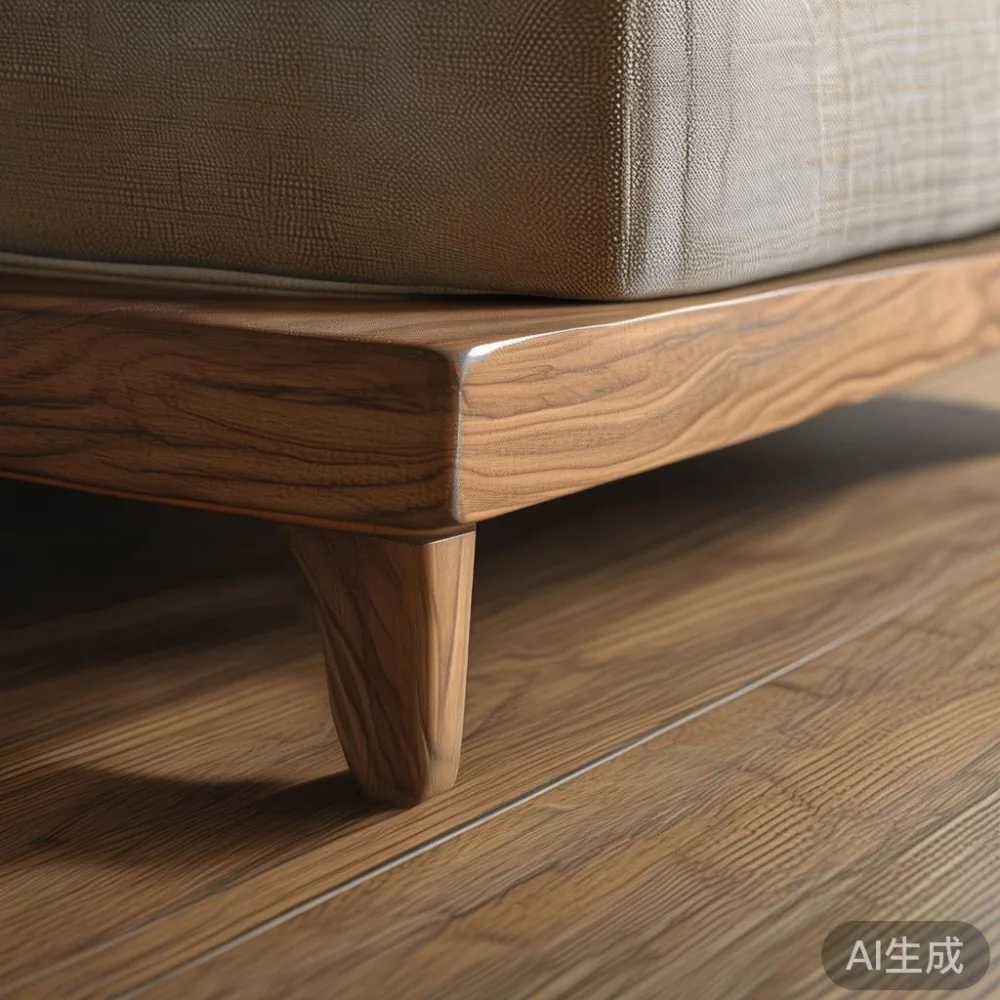
A calibrated hygrometer costs SGD 18–45 at any electronics shop in Sim Lim Square or on Lazada. Place one on a side table near your bed frame and another on the dining table. Check the readings for a week before you blame the furniture for any movement. You will almost always find that the air-conditioned bedroom is fine and the non-air-conditioned dry kitchen or yard is the trouble zone.
What size side table do I need?
For a care sofa with a 90 cm arm height and a 55–60 cm seat depth, you need a side table with a top surface of 45–55 cm in diameter or width and a height within 3 cm of the sofa arm — so 87–93 cm total. That gives you a usable reach zone of about 35 cm for a cup, a book, or a 14-inch laptop without leaning. Anything shorter than 80 cm becomes a stoop; anything taller than 96 cm becomes a lift and an elbow collision. In a compact HDB living room of about 18 sqm, a 50 cm round marble table top on a slim timber base usually fits a 90 cm arm sofa with 25–30 cm of walkway clearance to the wall, which is enough for the standard HDB corridor simulation most buyers run in their head.
How does humidity move through a typical HDB or condo in Singapore?
Singapore flats are typically 90–110 sqm for a 4-room HDB and 60–75 sqm for a 3-room, with ceiling heights around 2.6–2.8 m. Air-conditioning in living rooms drops humidity quickly but only while the compressor runs. When the system cycles off for 30–40 minutes, RH climbs back up by 8–12 percentage points. Bedrooms at night tell a similar story. The result is a long, slow humidity wave that the wood never escapes. Service yards, kitchens, and bathrooms — especially in older blocks in Bedok and Tampines without mechanical ventilation — can sit at 80–95% RH for hours every day after a hot shower or a laundry cycle.
The lift and corridor widths in most HDB blocks are 1.2–1.5 m, and the service lift door opening is around 1.0 m wide. A solid wood wardrobe deeper than 65 cm can be a tight squeeze to bring in, and the same panel that survives the trip may cup later if it lives against an unventilated service yard wall. I measured 92% RH behind a wardrobe pushed flush against an exterior wall in a Punggol Waterway Terrace unit; the back panel had absorbed 3 mm of bow in eight months.
What habits protect a care sofa, bed frame, dining table, and wardrobe year-round?
Five small habits handle about 80% of the risk. First, run your air-conditioner in dehumidification mode for two hours before bed if your flat is not on a VRV system that controls humidity on its own. Second, keep all solid wood pieces at least 8–10 cm away from exterior walls and never push a wardrobe flush against a wall that gets direct afternoon sun. Third, wipe spills within five minutes; a 200 ml glass of water left on an unsealed oak nightstand top will raise the local moisture content by 6% in twenty minutes and leave a white ring that costs SGD 60–120 to refinish. Fourth, rotate dining table leaves 180° every three months so the sun-exposed end does not dry unevenly. Fifth, lift rather than drag. A 35 kg marble table top dragged 10 cm across a timber floor will shear the leg joinery and start a crack that humidity will open wider within a month.
For pieces you cannot lift easily — a queen-size bed frame, a 200 cm wardrobe, a 3-seater care sofa — leave 2 cm of wall clearance at the back and run the air-conditioner's dry mode once a week for ninety minutes even in the dry season. The air-conditioner pulls about 1.2–1.8 litres of water per hour from the room on dehumidify mode, which is enough to drop RH by 10–15 percentage points over a session.
Is refinishing really possible, and how does it work in Singapore's climate?
Yes, and it is one of the quiet advantages of buying from a maker who runs an in-house workshop. MIDHILL, for example, offers lifetime refinishing on its solid wood frames — a service that costs roughly SGD 280–480 for a 3-seater care sofa, against market rates of SGD 600+ for the same work done by a third party. The refinishing process is straightforward: the piece is collected (free for orders over SGD 350, which most sofas and dining sets clear), the old finish is sanded back to bare wood, the timber is re-conditioned in a controlled 45% RH room for 5–7 days, and a fresh hardwax oil or lacquer is applied in three coats. The 7-day conditioning step is the part most local refinishers skip, and it is the part that determines whether the new finish lasts three years or eight.
If you decide to refinish a piece yourself, sand only with the grain using 180-, 240-, and 320-grit papers, raise the grain once with a damp cloth between 240 and 320, and apply a hardwax oil such as Osmo Polyx-Oil 3054 in two thin coats at 12-hour intervals. Plan on 3–4 days of indoor work with the windows open but the room below 70% RH — easier to do in February than in October.
How long do care sofas actually last in Singapore, and what does the warranty cover?
A well-built solid wood care sofa, conditioned properly and maintained with the habits above, will last 12–18 years in a Singapore home before the cushions need replacing and the frame needs a refinish. That timeline matches what I have seen on customer pieces delivered to condos in Punggol, HDB flats in Bedok, and landed houses in Bukit Timah over the past seven years. The 10-year structural warranty that serious makers offer — MIDHILL's covers frame joinery, spring sag, and timber splitting above 5 mm — exists precisely because the maker is confident the construction can take the climate if the buyer runs the room correctly.
What the warranty usually does not cover is movement under 5 mm, finish dulling, or surface checks from direct sun. Those are maintenance items, not defects. Plan a light refinish in year 5 and a full refinish in year 10, and the same care sofa that cost SGD 2,400–4,800 new will still be in your living room when your kids start secondary school.
How do I choose between solid wood, veneer, and engineered wood in this climate?
Solid wood moves the most but also repairs the most. A 2 cm thick solid oak tabletop can be sanded back 4–6 mm over its lifetime and refinished three or four times. A wood-veneer panel over an engineered core moves 30–40% less because the cross-grain layers restrain each other, but once the 0.5–1.2 mm veneer is breached, it cannot be sanded back — only patched or replaced. For a dining table that will see daily use, a solid wood top with breadboard ends is the most forgiving choice in Singapore. For a wardrobe where panel flatness matters more than repairability, engineered wood with a quality veneer is acceptable as long as the back is sealed and the piece sits 10 cm off the wall.
A compact headboard for entryway placement, by contrast, should always be solid wood — the entryway is the highest-humidity zone in any HDB flat because it sits near the front door, the service yard access, and often the kitchen. A solid wood headboard will move, but it will move quietly and it will accept a refinish. A veneer headboard will delaminate.
What should I check during the 14-day return window?
Use all fourteen days. Days 1–3: let the piece sit in its final position, unboxed, with the air-conditioner running for at least six hours a day. Days 4–7: measure humidity at the piece with your new SGD 25 hygrometer at three times of day. Day 8: check all visible joinery with a phone flashlight for gaps above 1.5 mm. Day 10: place a 200 ml glass of room-temperature water on a hidden corner of the dining table or marble table top and wipe it off after 10 minutes — the mark should fade in 20 minutes if the finish is properly cured. Day 14: if anything looks wrong, photograph it, write the lot number, and raise it with the maker before midnight. Most reputable sellers, MIDHILL included, collect on their own logistics and refund within 7–10 working days once a return is approved.
A care sofa delivered to a fourth-floor walk-up in Tiong Bahru last quarter developed a 2 mm gap at one mitre joint after the customer's dehumidifier failed during a power outage. She flagged it on day 11, the maker sent a technician on day 13 with a replacement arm assembly, and the sofa has been quiet for six months since. None of that happens if you unbox, glance, and put the box outside on day 2.
A short buyer checklist before you click pay
Confirm four numbers. The factory-conditioned moisture content of the timber (8–12% is acceptable). The shipping terms (free above SGD 350 is the local norm). The structural warranty length in writing (10 years for frame and joinery is the floor you should accept). The refinishing service and its cost (lifetime or 10-year options both exist; lifetime at SGD 280–480 per piece is fair). If a seller cannot answer all four with documents, walk away. The piece itself might be fine, but the after-sale network is what protects a care sofa in Singapore's humidity over the next fifteen years.
A piece that costs SGD 2,800 and lasts 15 years is roughly SGD 187 per year of use. A piece that costs SGD 1,400 and lasts 4 years is SGD 350 per year. The climate does not care about the sticker price; it only cares about the moisture content, the joinery, and the finish. Buy once, condition the room, and the rest is furniture that simply does its job.