How to Style a Small HDB Flat in Singapore Without Making It Feel Crowded
I still remember walking into my colleague's new 3-room BTO in Punggol last month. The floor plan was tidy, the lift was wide enough for a 2.4 m sofa carton, and yet the living room felt like a storage unit. Two years later, after she swapped her bulky fabric set for a low-profile solid wood sofa, removed one side table from a dining table, and painted the walls in a single warm off-white, the same 18 sqm space reads as a calm, light-luxury flat. That visit is the seed of this guide: styling a small apartment is less about buying less and more about choosing pieces that earn their footprint.
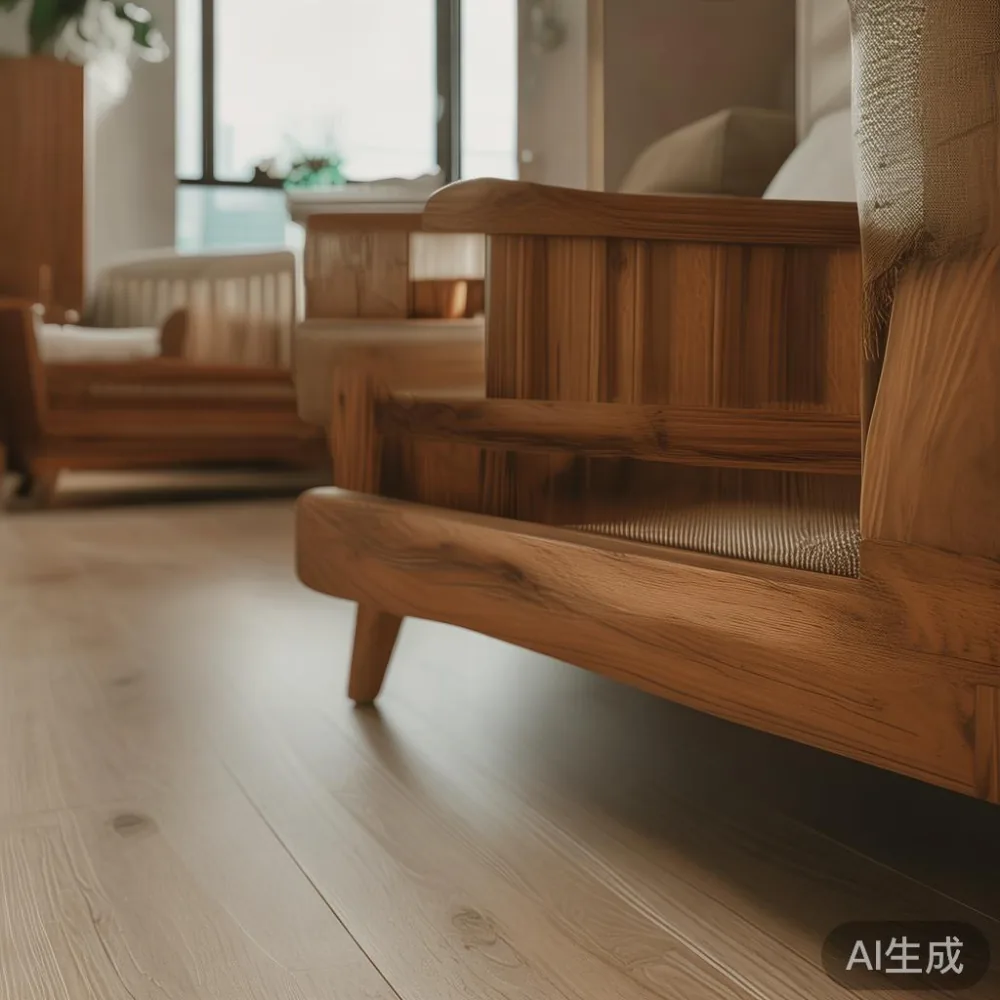
Why do small HDB flats feel crowded in the first place?
The short answer: too many visual seams fighting for attention. Most 4-room HDB and condo units in Tampines or Bedok measure between 90 sqm and 105 sqm, but the living room alone is often only 16 sqm to 22 sqm. If you stack a tall bookcase, a deep three-seater, a chunky coffee table, and a heavy rug, every wall has a job and no wall gets to breathe. Add overhead lighting at 3,000 K to 4,000 K, and the eye has nowhere to rest.
Three Singapore-specific factors make this worse. First, corridor widths in older blocks run 1.2 m, so a sofa deeper than 95 cm simply will not pivot around the stair landing. Second, lift openings in many Punggol and Sengkang towers are 0.9 m wide, ruling out anything that cannot be flat-packed under 90 cm on its longest side. Third, our 9% GST on imported furniture quietly pushes shoppers toward oversized, low-quality pieces that look like a bargain until they dominate the room.
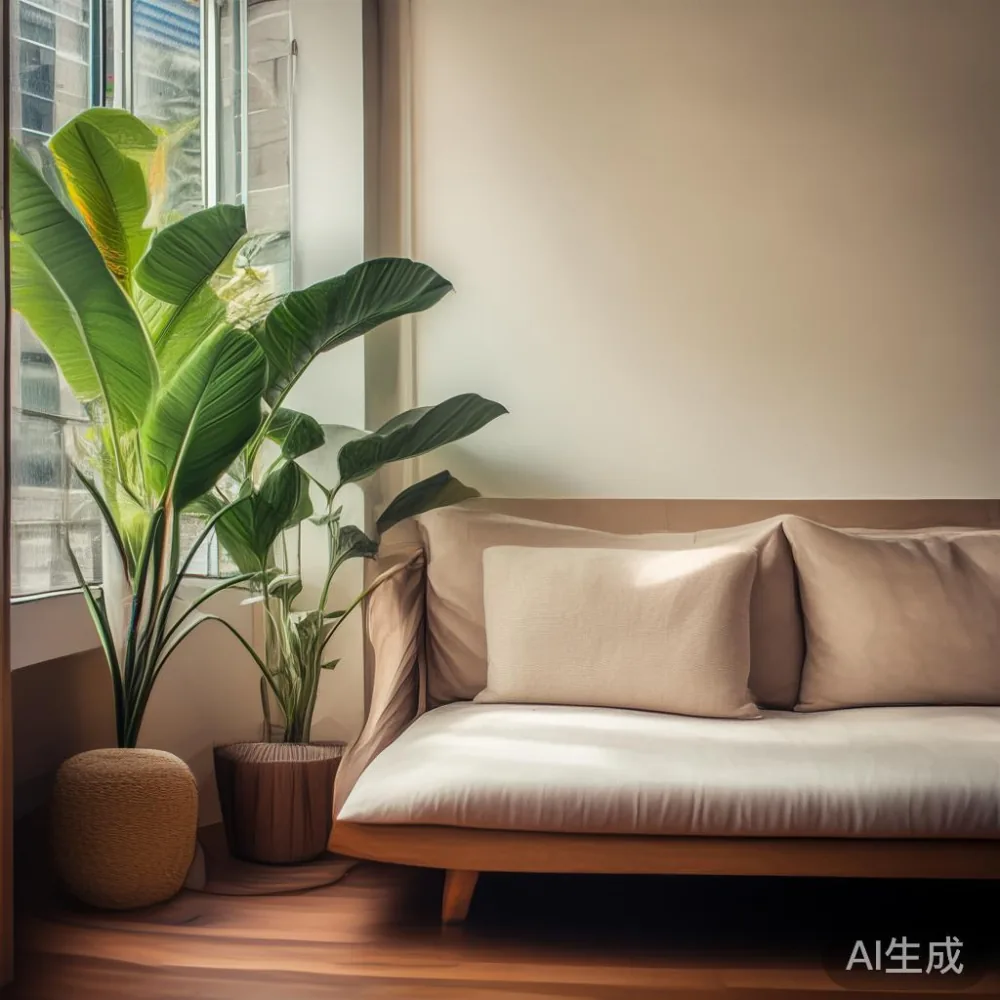
What dimensions actually work in a Singapore HDB living room?
Before picking finishes, measure honestly. For a typical 3-room BTO living room of roughly 4.2 m by 4.0 m, here are the numbers I recommend to every client:
- Sofa length: 180 cm to 220 cm (a 2-seater or compact 3-seater). Anything above 240 cm will swallow the room.
- Sofa depth: 85 cm to 95 cm including the back. A deeper seat looks comfy in the showroom but blocks the walkway.
- Sofa seat height: 38 cm to 42 cm. Lower seats make ceilings feel taller, which is the optical trick behind French light luxury interiors.
- Coffee table: 100 cm by 50 cm oval, with a 38 cm clearance around it. Round marble tables of 70 cm diameter also work beautifully in flats under 90 sqm.
- TV console: 150 cm wide, 35 cm deep, on short 10 cm legs so the floor stays visible.
- Dining table: 120 cm to 140 cm for four people, or a 90 cm round for two. Pull-out extensions only when the room is 14 sqm or larger.
Stick to these dimensions and the room will read as generous even on a 2.4 m ceiling. Leave a 70 cm to 80 cm walkway behind the dining chairs and at least 90 cm in front of the TV. These two numbers matter more than any colour palette.
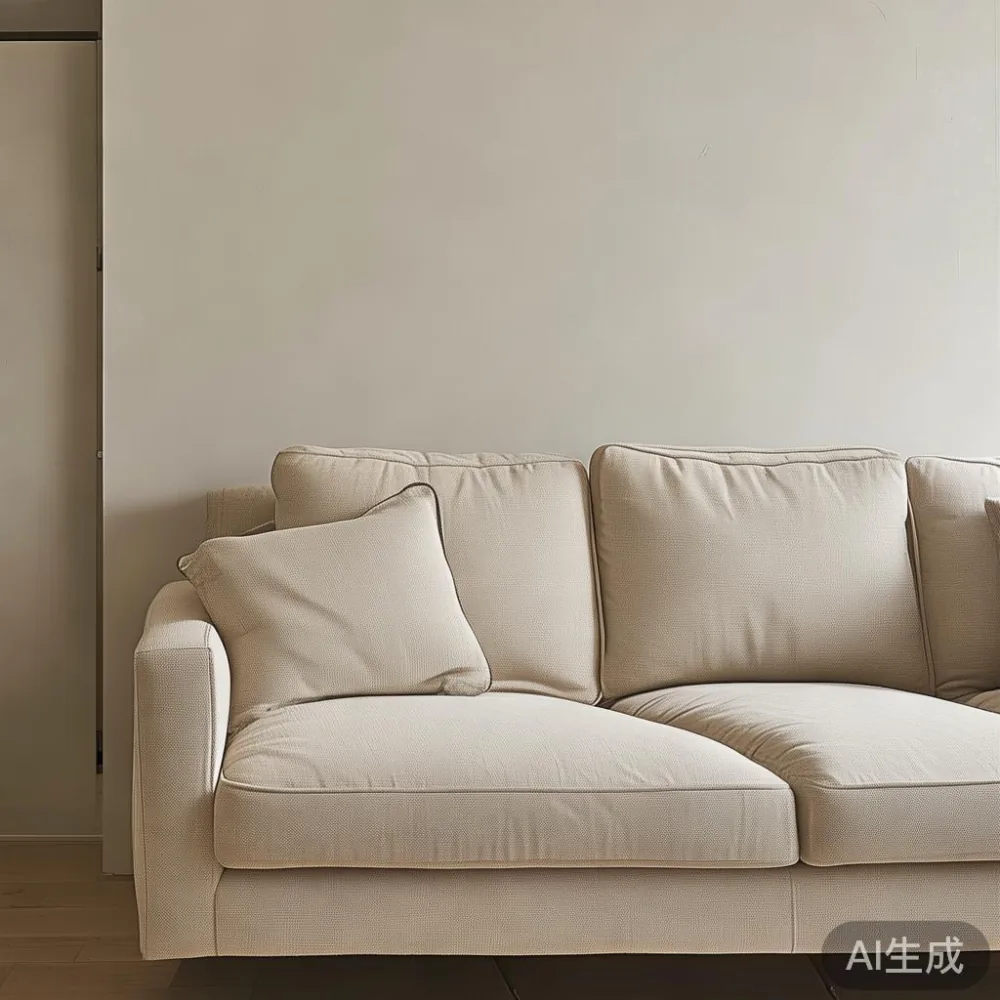
How do I choose a shipping damage for a small apartment?
Choose a shipping damage by measuring lift doors and corridor turns first, then matching the largest flat-packed dimension, and finally inspecting the carton within 24 hours of delivery. That is the rule I have used for the last 12 years, and it has saved my clients from a dozen jammed deliveries in older Bedok blocks. In a HDB context, a shipping damage is any dent, crushed corner, or scratched surface you discover on the carton or the furniture itself between the warehouse and your living room floor. Most freight forwarders into the country take 18 to 28 days by sea, plus 2 to 4 days for last-mile lorry delivery, which is why damage can also mean a hairline crack from a long voyage rather than a hard knock.
Here is the practical checklist I run through before signing the delivery order. Confirm the outer carton dimensions against your lift door: HDB passenger lifts are usually 1.1 m wide by 2.1 m deep by 2.3 m tall, while service lifts can reach 1.6 m by 2.4 m by 2.4 m. If the longest carton side exceeds the lift opening, ask the supplier to re-pack or split the order, because forcing a sofa through a too-small door guarantees corner damage. Photograph every face of the carton before opening. Open the carton in the corridor if the corridor is wider than 1.5 m, so you can rotate the piece and inspect all four sides. Check the foam wrap density: at least 5 cm of EPE foam around the frame, plus corner protectors on solid wood sofa legs, plus a wooden crate for any marble table top thicker than 18 mm. Note any damage on the delivery order in writing, with photos and a short video, before the driver leaves. Keep the carton for 7 days, because most suppliers, including MIDHILL, will only process claims within that period.
If you are ordering a heavier piece such as a solid wood bed frame or a 6-seater dining table, request edge-protector strips and a double-walled carton. Solid oak at 750 kg/m³ can crack a 1.2 cm plywood back panel if the carton is dropped on a corner, so the carton itself is part of the product.
Which furniture pieces earn their footprint in a small flat?
Five pieces do the heavy lifting, and the rest should follow them, not the other way around.
1. A low-profile solid wood sofa. A solid wood sofa with a kiln-dried oak or ash frame sits lower to the floor than most fabric sofas, which is why it reads as calm rather than bulky. Look for a frame depth of 6 cm to 8 cm, mortise-and-tenon joinery, and a seat depth of 90 cm to 95 cm. Removable, washable covers in linen or cotton add another 5 to 7 years of life. For households with children, an oversized sectional sofa for kids room can double as a play zone in a 4-room flat, provided the long side stays under 240 cm and the chaise depth stays under 160 cm.
2. A round or oval marble table. Marble carries the cool, post-modern light luxury look without shouting. A 70 cm round marble table on a slim black steel base weighs around 38 kg, which two adults can move for cleaning. Avoid marble larger than 120 cm in any direction, because the slab weight crosses 80 kg and your floor tiles will not forgive a drop.
3. A wall-hugging dining table. A 120 cm by 70 cm wall-hugging dining table seats four at breakfast and folds to 35 cm deep against the wall at night. Solid wood tops in oak or ash handle Singapore humidity (typically 70% to 85% RH) better than MDF when the factory applies a moisture-balanced lacquer.
4. A 2-door wardrobe with mirrored panels. Mirrored wardrobe doors bounce daylight across the room and remove the need for a separate dressing mirror. For a master bedroom of 12 sqm to 14 sqm, a 180 cm wide by 55 cm deep wardrobe is the sweet spot. Deeper than 60 cm and you lose the ability to walk past the bed.
5. A slim nightstand. A nightstand should be 45 cm wide, 38 cm deep, and no taller than the mattress top. Two identical nightstands flanking the bed frame create symmetry, which is the cheapest interior-design trick in the book. Skip the drawer pulls and use push-latch instead, so nothing sticks out into the walkway.
MIDHILL's showroom in Foshan works to similar rules, which is why their 2-seater solid wood sofa frames sit at 86 cm deep and 38 cm seat height, and why their 4-door wardrobes ship at 55 cm even on the deepest models. Those numbers are not accidents; they are the result of 18 years of exporting into HDB corridors and service lifts across Southeast Asia.
How do colours and lighting change the perception of space?
Three rules cover 90% of small-flat styling in Singapore. Stick to a palette of one wall colour, one accent, and one metal finish. Use warm 2,700 K bulbs everywhere except the kitchen, which gets 3,000 K. Hang curtains 15 cm below the ceiling line so the rod creates a horizontal seam that pulls the eye up.
For wall colours, warm whites such as Dulux Whispering White (30YY 83/026) or Jotun Sense 1624 reflect more daylight than pure white in afternoon sun. If you prefer a bolder accent, a single wall in a muted sage, dusty blue, or terracotta works better than four walls in colour. Avoid dark ceilings; they lower the perceived ceiling by 30 cm to 40 cm and cancel out the work your low furniture is doing.
Lighting matters more in the tropics than in temperate climates, because we rely on fans and air-conditioning rather than open windows. Layer three sources: an 18 W LED ceiling flush mount (about 1,500 lumens), two wall sconces at eye level (about 400 lumens each), and one floor lamp in the corner near the sofa. The floor lamp should have a 25 cm to 30 cm shade diameter and a slim 1.6 cm stem, so it disappears into the wall.
For the bedroom, aim warm 2,700 K at 200 to 300 lux at the bed headboard. That is bright enough for reading, gentle enough for sleep. Avoid 4,000 K cool bulbs in the bedroom; they suppress melatonin and make a 12 sqm room feel clinical.
What is the most common styling mistake Singaporeans make in small flats?
Buying for the showroom, not the floor plan. My colleague's old sofa was a 2.6 m fabric three-seater with a 1.05 m depth, which sounds reasonable until you try to walk around it. The walkway shrank to 45 cm, so anyone passing the sofa had to turn sideways. She also owned a 1.6 m TV console that pushed the TV 40 cm further from the seating, forcing her to enlarge the screen from 50 inches to 65 inches and shrinking the room again. Two pieces, one room, gone.
The fix is simple. Tape the furniture footprint on the floor with painter's tape before you buy. Live with the tape for 48 hours. Sit on a chair inside the taped outline and watch TV, eat dinner, fold laundry. If you bump the tape twice in two days, the piece is too big. This 30-SGD roll of tape has saved more small flats than any interior designer I know.
The second mistake is mixing too many metals. Brass handles on the wardrobe, chrome legs on the nightstand, black steel on the marble table, and rose gold on the dining chair. Pick one metal per room and repeat it at least three times. American light luxury interiors often use brushed brass or matte black; French light luxury leans toward polished nickel or antique bronze. Either works beautifully, as long as you commit.
The third mistake is ignoring corridor and lift logistics. A 2.3 m solid wood bed frame cannot enter a HDB block whose service lift measures 1.5 m by 2.2 m by 2.2 m. Always ask the supplier for the flat-packed carton dimensions, not the assembled dimensions, and check them against your block's lift specifications. Most suppliers in Foshan, including MIDHILL, publish flat-pack specs on the product page, which removes the guesswork.
How much should a small-apartment furniture refresh actually cost in Singapore?
For a realistic 3-room BTO of about 90 sqm, here is a sample budget in Singapore dollars for a light-luxury refresh that does not crowd the room:
- Solid wood sofa (2-seater, oak frame, linen cover): S$1,800 to S$2,600
- Marble coffee table (70 cm round, sintered stone top): S$480 to S$720
- Dining table (120 cm by 70 cm, solid ash): S$900 to S$1,400
- Two dining chairs: S$240 to S$400
- TV console (solid wood, 150 cm): S$650 to S$1,100
- Bed frame (queen, solid oak): S$1,200 to S$2,000
- Mattress: S$800 to S$1,600
- Two nightstands: S$360 to S$600
- 2-door mirrored wardrobe: S$1,500 to S$2,400
- Lighting, rug, curtains: S$600 to S$1,000
Total: roughly S$8,500 to S$13,800, depending on whether you buy local stock or order direct from a Foshan factory. Sea freight from China to Singapore typically adds S$180 to S$420 per cubic metre, with a 22 to 30 day transit. Customs duty is 0% on most wooden furniture under HS 9403.60, but 9% GST applies on the landed value, so budget for it.
If that figure feels high, remember that a well-built solid wood sofa lasts 12 to 18 years, a solid wood bed frame 15 to 25 years, and a marble table 20+ years. Spread over two decades, the annual cost of a light-luxury living room is lower than a yearly trip to a furniture mall.
What care and maintenance keeps small-flat furniture looking new?
Three habits preserve every piece in this list. Wipe solid wood with a damp (not wet) microfibre cloth once a week, then dry it. Rotate sofa cushions every two weeks so the foam recovers evenly. Seal marble table tops with a penetrating sealer every 12 months, because Singapore's humidity and curry-heavy kitchens will mark unsealed stone within six months.
For the dining table, use felt pads under plates and avoid placing hot pots directly on the wood; a 90°C pot will cloud most lacquers within a minute. For the wardrobe, leave the doors open for 20 minutes after a shower so the interior dries and the hinges do not rust. For the bed frame, tighten the slat screws every six months; humidity causes wood to swell and loosen joints by 1 mm to 2 mm over a year.
MIDHILL offers lifetime refinishing on its solid wood frames, which means a 20-year-old sofa can be sanded and re-lacquered for a fraction of the replacement cost. That kind of after-sales care is what separates a light-luxury piece from a flat-pack disposable, and it is the reason a small flat furnished with care can still feel fresh in 2035.
A simple care sofa checklist for your next HDB viewing
Bring a tape measure, your phone, and this list. Measure the lift door. Measure the corridor turn. Measure the living room wall where the sofa will sit. Subtract 90 cm for walkway. Whatever length remains is your maximum sofa length. Sit on the care sofa in the showroom for at least five minutes, then lie on the bed frame for two minutes. Lift the marble table top and feel the weight; if it is under 30 kg for a 70 cm round, the slab is too thin and will crack within three years. Ask for the carton dimensions in writing. Ask for the foam wrap thickness in writing. Ask whether the supplier offers free replacement parts for five years. If the answers are yes across the board, you have found a care sofa that will outlast three rental cycles and still look composed in your next home.
Styling a small apartment without making it feel crowded is not about austerity. It is about choosing pieces that respect the floor plan, the lift, the corridor, and the light. Get those four things right, and even a 16 sqm living room in a Punggol BTO can feel like a light-luxury retreat.