What to Check Before Buying a Sofa You Cannot Sit On — A Singapore Buyer's Pre-Purchase Checklist
Last month I watched a couple in a Tampines HDB block wheel a three-seater sofa out of a lift at Block 8 just to have it jam against the corridor turn. The lorry driver climbed down, scratched his head, and suggested they cut the box and "push it like that lah." They did not push it like that lah. They paid a S$180 return-trip fee and ate another four weeks of waiting. That is the moment I decided to write this list — because in Singapore, choosing a care sofa online is rarely a matter of comfort. It is a matter of millimetres, kilograms, and lift doors that are 90 cm wide on the dot.
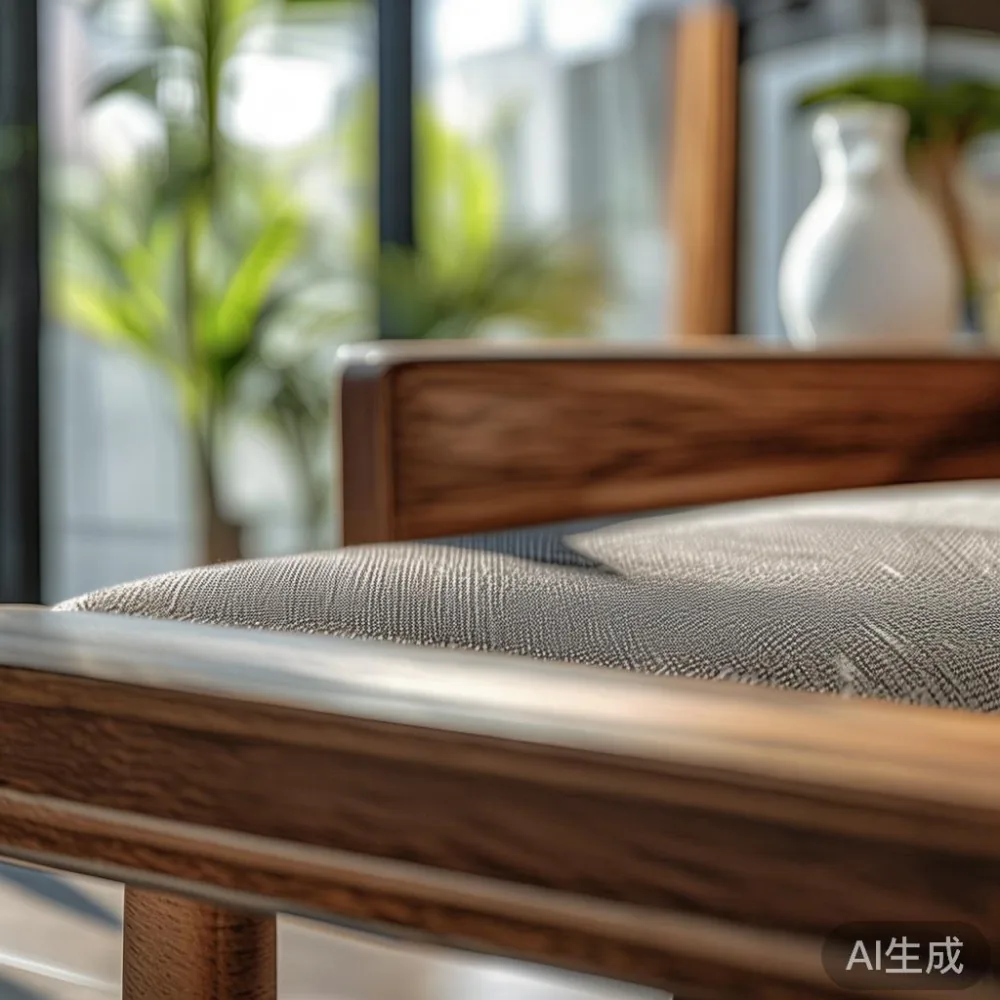
Why a Sofa You Cannot Sit On Is the Most Expensive Sofa in the World
Singapore's HDB corridors and lift cabins are sized for a 3-room flat's worth of groceries, not a 2.4-metre Chesterfield. The standard HDB passenger lift internal cabin measures roughly 1.1 m wide × 1.4 m deep × 2.4 m tall, with a single door opening of about 0.9 m wide × 2.1 m high. Older blocks in Punggol area's newer Build-To-Order precincts tend to have the same 800–900 kg cargo limit. A solid-wood-framed three-seater typically weighs 65–95 kg before packaging; fully crated, with foam and a corner protection frame, it lands between 110 kg and 160 kg. The two numbers that matter are door width and diagonal of the crate. If the crate diagonal exceeds the door height, the sofa physically cannot enter the home standing up, and tilting it inside a 1.4 m deep cabin is what damages both the lift handrail and your Friday evening.
So before you fall in love with a profile photo, pull out a ruler, a tape measure, and a printout of your block's lift diagram. If the seller on the other side of the South China Sea cannot answer those four questions in writing, walk away. A reliable Foshan furniture maker like MIDHILL will have those numbers on a spec sheet within an hour; a casual Trading Company listing will not. That is not a slur on Trading Companies — it is a measurement of how quickly answers arrive when you ask, in English, "What is the carton size in cm, and what is the gross weight in kg?"

The Eight Things You Must Confirm in Writing Before You Pay a Deposit
Treat the list below as a pre-flight inspection. Skip one item and you are gambling with your 9% GST-inclusive receipt and your corridor neighbours' patience.
1. Three Carton Dimensions and Gross Weight
Demand carton length × width × height in centimetres, plus gross weight in kilograms. For a three-seater, anything heavier than 95 kg gross on a single carton means you will need two porters (S$60–S$120 per trip in Singapore). For a two-seater, 55–75 kg gross is the realistic band. If the seller quotes only the product dimensions, ask again — product dimensions do not survive styrofoam corner blocks and a wooden crate.

2. Frame Material and Joinery
Ask whether the frame is solid hardwood (oak, ash, beech, walnut) or engineered board. Ask whether the joints are mortise-and-tenon, dowelled, or stapled. A solid wood sofa frame should outlive your lease — ten years is the floor, not the ceiling. If the seller cannot name the wood species, the frame is most likely rubberwood with a marketing veneer. That is not a moral judgement; it is a weight and longevity judgement.
3. Cushion Fill Specification
High-resilience foam at 32–35 kg/m³ density wrapped in a feather or fibre topper is the typical mid-to-upper tier. Anything below 28 kg/m³ density will bottom out within 18 months. Ask for the foam density number; if the answer is "comfortable," you have your answer.
4. Fabric or Leather Martindale Rating
For households with kids or a beagle, anything below 30,000 rubs will pill within two years. 50,000+ is the realistic family band. Real leather should be top-grain, not bonded — bonded leather peels in 18–24 months in Singapore's humidity.
5. Warranty Structure and What It Actually Covers
A 10-year structural warranty on the frame is the realistic benchmark for a care sofa from a serious Foshan furniture maker with a 2008 factory origin. "Lifetime" warranties that exclude "sagging, softening, or compression" are marketing language. Ask: which parts, what labour cost, who pays return shipping?
6. Delivery Window and Who Is Doing the Last Mile
From a Foshan factory order date, 35–55 days to a Singapore HDB doorstep is the realistic timeline, plus 7–10 days for a Singapore-based white-glove crew to handle in-home delivery, in-home placement, and carton removal. If the seller quotes "about a month," confirm whether the month includes sea-freight or only the last-mile leg. Many buyers in Bedok and Punggol have been caught by the "month" that turns into ten weeks because the sea leg ran into a Guangdong typhoon window.
7. Return Policy in Singapore-Dollar Terms
A 14-day return on a non-defective sofa is generous; a 14-day return with a 25% restocking fee plus return shipping from Singapore to Guangdong is a different number. Get the formula, not the headline. Free return-shipping above US$350 is realistic on landed-cost orders; below that threshold, add S$120–S$280 to your budget.
8. Care Sofa Maintenance Kit and Refinishing Eligibility
A true care sofa should come with a written maintenance kit: which foam conditioner to apply annually, which fabric protector to use quarterly, and how to handle a spill in the first 30 seconds. Some Foshan makers offer lifetime refinishing on solid wood frames — sanding, re-staining, re-sealing — for a fixed fee (S$280–S$480 per piece) once every five years. That option alone justifies choosing a serious factory over a Trading Company aggregator.
How Wide Is Too Wide? Reading the Lift Diagram of Tampines, Bedok, and Punggol Blocks
HDB lift cabins come in a handful of standard sizes, and the corridor turning radius is the silent killer. A 1990s-era 4-room block typically has a 0.9 m door, a 1.1 m wide cabin, and a corridor turn of about 1.8 m wall-to-wall. A 2010s-era Punggol executive HDB can be more generous — 1.2 m wide cabin, 0.95 m door — but the corridor turn is still the bottleneck. If your sofa crate diagonal exceeds 2.3 m, it will not clear a 90-degree corridor turn in most HDB blocks, even with the crate tilted to 45 degrees. That is why the question is not "does it fit in the lift" but "does it fit through the door, down the corridor, around the stairwell turn, and into your living room corner."
For private condos in the Bedok Reservoir fringe and the Punggol Waterway precinct, the lift doors are often 1.0–1.1 m wide, but the service lift (the one movers actually use) is sometimes the same size as the passenger lift — there is no oversized service lift. Always confirm with your concierge before paying a deposit. I learned this the hard way helping a colleague move into a Punggol condo last year: the service lift was 0.95 m wide, the sofa crate was 0.92 m wide, and 30 mm of foam corner protection turned the crate into a load-bearing object that had to be chiselled down on-site.
Where Light-Luxury Positioning Meets a 4-day Verdict
"Light luxury" is not a budget tier — it is a material discipline. French light luxury (think slim brass sabots, cane backs, boucle upholstery on solid beech), American light luxury (oak frames, leather slings, walnut trims, the Mid-century modern accent chair silhouette repeated at sofa scale), and post-modern light luxury (matte marble plinths, brushed metal accents, full-curve silhouettes) are three currents with materially different weight profiles.
French light luxury on a 2.4 m frame tends to be the heaviest (85–105 kg gross), because solid beech and brass fittings add real mass. American light luxury on a 2.2 m frame lands at 65–85 kg gross, the friendliest band for HDB delivery. Post-modern light luxury with marble or sintered-stone armrests can push 120 kg gross — a different logistics problem entirely, and not a candidate for a top-floor HDB without a service lift.
For buyers who want under 2000 European furniture Singapore pricing but European material discipline, the trick is to look for an Italian light luxury dining table or a French-style care sofa whose specs were actually built in a Guangdong factory using European tooling. The honest mills in Foshan will tell you the country of origin of the wood (French oak from Limousin, American walnut from Pennsylvania, Italian beech from the Alps) and the country of assembly (their own factory floor). The dishonest ones will tell you the wood is "European oak" and the assembly is "overseas premium workshop." Demand the invoice.
How Do You Style the Rest of the Room Around a Care Sofa You Have Not Sat On Yet?
This is the question I get most often from buyers in Tampines and Punggol who have already committed to a care sofa but cannot visualise the rest of the room. The honest answer: pick the bed frame, the dining table, the wardrobe, and the nightstand from the same factory's collection, even if you only need the sofa today. Matching wood species across a solid wood sofa, a bed frame, a dining table, a wardrobe, and a nightstand means the tone stays consistent for the next decade, and refinishing the care sofa in year eight still leaves the rest of the room coherent.
For storage-heavy HDB flats, a care sofa with built-in storage under the chaise — light luxury with storage in the chaise compartment and the ottoman — frees up 1.2–1.5 m² of floor space that would otherwise go to a sideboard. Pair that with an American light luxury wardrobe in white oak, and the visual mass stays light. For buyers wondering how to style American wardrobe in apartment layouts under 90 m², the answer is floor-to-ceiling panels in the same oak as the sofa's exposed frame, no external handles, and a single brass pull on the wardrobe's linen compartment. Anything more will fight the sofa visually.
For the dining corner, an Italian light luxury dining table in sintered stone (12 mm thick, not marble — marble stains in Singapore's humidity without monthly maintenance) keeps the care sofa's palette honest. For the bedroom, a solid wood bed frame in the same species as the sofa's legs, plus a two-drawer nightstand in matching veneer, closes the loop. And yes, how to choose French wardrobe comes down to the same eight-point inspection: frame species, joinery, drawer slides (Blum or Hettich are the realistic benchmarks), finish (water-based matte lacquer, not high-gloss polyurethane), hardware weight in grams, warranty structure, delivery window, and in-home fitting confirmation.
The 60-Minute Pre-Purchase Drill You Should Run Before You Click Pay
Set a 60-minute timer and run this drill. If any item fails, do not pay the deposit.
0–10 minutes: Print the lift diagram and the corridor plan of your block. Measure the door width (cm) and the corridor turn radius (cm). Write both numbers in your notes.
10–25 minutes: Ask the seller, in writing, for carton dimensions (L×W×H in cm), gross weight (kg), frame species (Latin name if possible), foam density (kg/m³), fabric Martindale (rubs), warranty parts list, delivery window in calendar days from deposit, and return-shipping formula.
25–40 minutes: Cross-check the carton diagonal against your door height. If diagonal > 2.3 m, ask for the sofa in two cartons. If the seller refuses two-carton packing, walk away.
40–55 minutes: Ask for factory photos taken within the last 30 days — not the marketing shots from 2018. A serious Foshan factory will have a WeChat channel or a Google Drive folder with current photos. MIDHILL, for instance, ships from a Foshan factory floor that produces its own sofas, bed frames, dining tables, wardrobes, and nightstands — one source, one warranty, one freight invoice. That integration is what makes the pre-purchase drill short: one email, one answer, one set of numbers.
55–60 minutes: Read the warranty clause aloud. If you stumble over a sentence, ask for a plain-English version. If the plain-English version does not exist, the warranty clause is a marketing artefact, not a contract.
What If the Sofa You Cannot Sit On Turns Out to Be the Sofa You Cannot Refuse?
A care sofa is a 10-year-plus commitment under your HDB's ceiling fan, in your corridor's humidity, on your children's Tuesday-evening floor time. The eight-point inspection is not paranoia — it is the difference between a S$1,400–S$3,200 purchase that ages quietly and a S$1,400–S$3,200 purchase that ages loudly. Singapore's HDB context strips the romance out of furniture buying: the lift is 0.9 m, the corridor is 1.8 m, the GST is 9%, and the typhoon season is either this month or next month.
Run the drill. Measure twice. Ask in writing. Confirm the diagonal. And if the seller answers all eight items before your 60-minute timer rings, you have found a Foshan furniture maker worth shipping a care sofa across the South China Sea — and a sofa worth sitting on for the next decade.