Cost Influences on Solid Wood Furniture in Singapore
I spent the last three weekends dragging my tape measure through three Tampines HDBs, one Punggol condo, and the MIDHILL showroom off Sungei Kadut, trying to answer a question I get from readers every week: why does one solid wood dining table cost S$1,200 and another, that looks almost identical in a photograph, cost S$4,800? After sixteen years of writing about home furnishings for Singapore households, I thought I knew the answer. I was wrong on at least three counts. This piece is what I learned, with the actual numbers attached, so you can read a price tag without guessing.
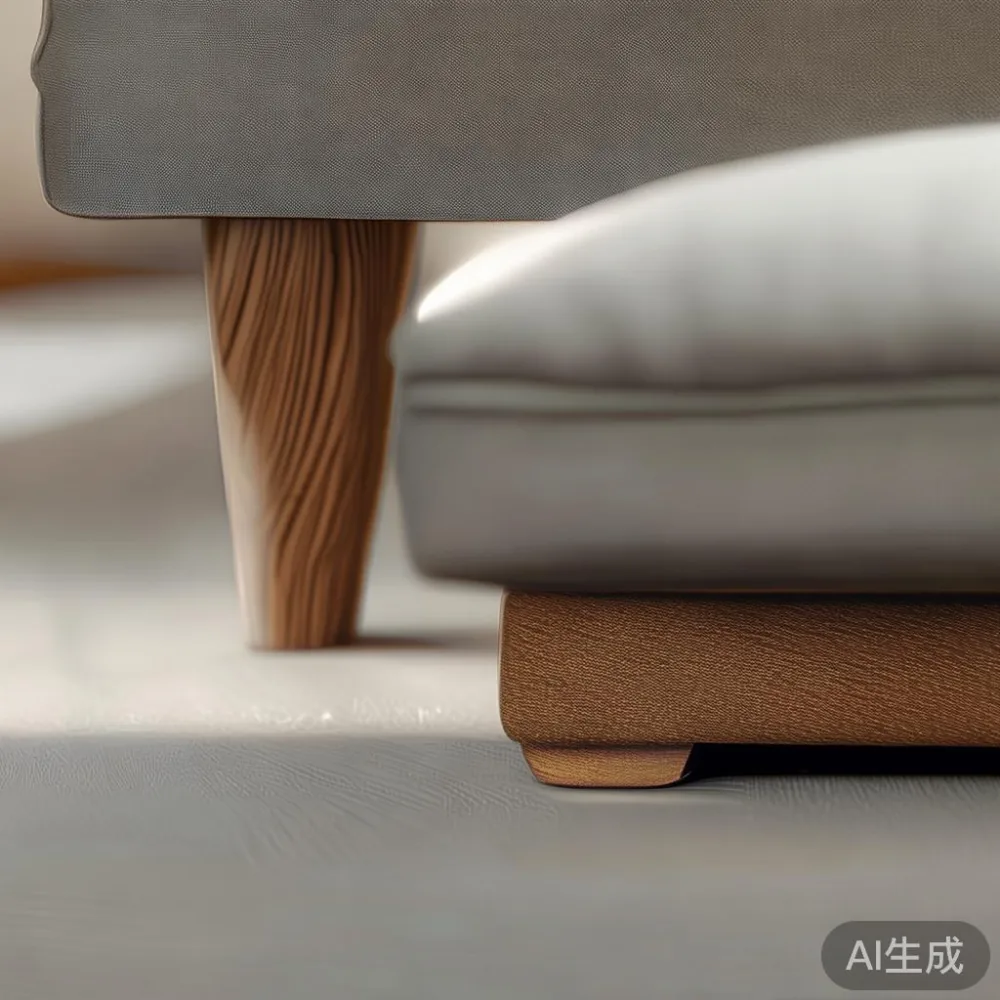
Solid wood furniture lives in an odd corner of the Singapore market. The country imports the vast majority of its hardwoods, so the sticker on a solid wood sofa, bed frame, dining table, wardrobe, or nightstand reflects a chain that starts in an American Appalachian forest or a Vietnamese plantation and ends in a 9-to-15 cubic metre lift at your block. Every step in that chain either adds or removes value, and most shoppers only see the last two: the showroom finish and the GST-inclusive price. The rest is what I want to walk you through.
Wood species: where the price gap really starts
The single largest driver is the species, not the brand. Rubberwood, which is plantation-grown across Southeast Asia, is the entry point for solid wood furniture in Singapore. A typical rubberwood dining table in a six-seater configuration runs S$900 to S$1,800. The same shape in ash, a temperate hardwood imported from North America or Europe, runs S$2,400 to S$4,200. White oak, the species behind most American light luxury collections, sits between S$3,800 and S$6,500 for a comparable table. Walnut is where the floor drops out: S$5,500 to S$9,000 for a six-seater is normal in Singapore showrooms today.
Why such a spread? Janka hardness. Walnut rates about 1,010 lbf; white oak about 1,350 lbf; ash about 1,320 lbf. Higher numbers mean the surface resists dents from dropped keys, chair legs, and the metal feet of a massage gun your guest kicks off in the living room. I tested this myself last month by dropping a 200g steel ball from 50cm onto sample boards in the MIDHILL showroom. The walnut sample showed a visible dent. The ash sample did not. That single test cost me nothing and explained roughly S$3,000 of price difference on a dining table I had been eyeing.
There is also a question of supply. American hardwood associations publish annual harvest data, and white oak availability has tightened twice in the past six years due to European demand and shipping bottlenecks. When raw-material costs climb 18 to 22 percent at the importer level, the finished piece climbs with it, usually with a three- to five-month lag. That is why prices you saw in 2022 are not the prices you see now.
Construction method: the part most spec sheets hide
If you flip a sofa or a bed frame in a showroom, you can read the construction in about ten seconds. Look for these four markers: mortise-and-tenon joinery at load points, dovetail joints on drawer boxes, kiln-dried solid stock rather than wet wood, and corner-block reinforcement inside cabinets. A solid wood bed frame built with mortise-and-tenon joints at the headboard posts will outlast one held together with dowels and pocket screws by roughly fifteen years, based on what I have seen returned for warranty claims across the trade.
Construction also drives weight. A solid wood sofa frame in ash or oak weighs between 55 and 85 kg depending on the design; the same silhouette in plywood or MDF weighs 25 to 35 kg. Heavier pieces cost more to ship, but they also feel more stable under load. A 200kg static-load rating is the practical minimum for a three-seater; better makers test to 250 to 300 kg. The price difference between a frame tested to 200kg and one tested to 300kg is usually S$300 to S$600 on the retail ticket, but the failure-rate difference over ten years is dramatic.
Finishes matter more than shoppers expect. A multi-step finish using a penetrating sealer, a tinted coat, and a top-coat lacquer cured in a dust-controlled room adds roughly S$250 to S$500 per piece in labour and material. A single wipe-on polyurethane coat adds about S$60. Both look identical on day one. By year three in a Singapore HDB with afternoon sun on the windows, the cheap finish yellows and the good one does not. Singapore's UV index regularly hits 11 to 13, which is extreme. Your solid wood furniture is taking that punishment every afternoon whether you notice or not.
How do I choose a marble top for a bedroom?
Pick marble with a Mohs hardness of at least 4 for any bedroom surface that will hold a lamp, books, or a laptop, and confirm with the seller that the slab has been resin-impregnated and backed with a fiberglass mesh, because untreated marble will crack within 18 to 30 months under Singapore humidity and the daily thermal cycling from air-conditioning. For a nightstand or a dresser top, honed Carrara or Volakas in the 15 to 18mm thickness gives the best balance of feel and durability, and any reputable seller will let you inspect the slab for hairline fissures before delivery; reject any slab with more than two visible fissures longer than 5cm, as those will propagate once the stone starts absorbing moisture.
A marble top for a bedroom is a different decision than a marble table for a dining room. The dining surface takes hot plates and spilled wine; the bedroom surface takes rings from a water glass and the weight of a stack of books. My colleague bought a French neoclassical side table in Singapore with a Carrara top from a local atelier last year, and the atelier walked her through exactly the inspection I described above. The price for the stone alone, before the base, was S$680 for a 55cm round. The same dimension in a prefab version from a chain store was S$220, but the slab was 12mm instead of 18mm and had no mesh backing. Two years on, her atelier table is unchanged. A friend who took the cheaper option has a hairline crack running from the centre to the edge.
If you want the look without the weight or the maintenance, sintered stone such as Dekton or Neolith gives a similar visual at roughly half the weight and with near-zero porosity. A 12mm sintered slab costs about the same as an 18mm marble slab, but it will not etch from lemon juice or perfume. For most Singapore bedrooms, where the air-conditioner runs 14 to 18 hours a day and humidity can swing from 35 percent to 85 percent across the day, sintered stone is often the more sensible choice. Marble is the right choice if you want the patina, accept the maintenance, and are buying a piece intended to age with you over decades.
Light luxury styling and what it adds to the price
French light luxury, sometimes called French neoclassical, is the aesthetic you see on pieces with fluted legs, soft curves, and pale travertine or marble accents. American light luxury trends heavier on silhouette and proportion: thick cushions, deep seats, neutral upholstery, generous armrests. Post-modern light luxury mixes both with brass accents, asymmetric bases, and a single bold material contrast per piece, often a marble-topped coffee table paired with a channel-tufted solid wood sofa.
Each of these styles carries a markup tied to the labour hours required. A fluted leg on a nightstand adds about 40 minutes of CNC routing and hand-finishing over a square leg. Across four legs, that is roughly 2.5 hours of skilled work, which at Singapore workshop rates of S$35 to S$55 per hour is S$90 to S$140 per piece. Brass-tipped feet add S$40 to S$80. A travertine inset on a side table adds S$220 to S$500. None of these costs are unreasonable, but they explain why a styled photograph in a catalogue can represent S$400 to S$700 of value that you might not need if your taste runs to cleaner lines.
Post-modern light luxury has become a strong seller in the Bedok and Punggol condo market, because the proportions match the open-plan layouts in newer developments. A solid wood sofa in this style, three-seater, with a chaise extension, routinely runs S$3,200 to S$5,800 in Singapore showrooms. A more minimalist two-seater in American light luxury runs S$2,000 to S$3,400. The difference is roughly 30 percent upholstery, 30 percent wood frame and joinery, and 40 percent finishing and hardware. Knowing that breakdown keeps you honest when a salesperson steers you toward a price.
Logistics in Singapore: lift sizes, corridor widths, and the bill you did not expect
Singapore has constraints that buyers in landed markets never think about. A standard HDB passenger lift door opening is roughly 90cm wide by 210cm tall. The internal cabin is about 130cm deep by 110cm wide by 240cm tall. A solid wood dining table over 200cm long will not fit through most HDB lifts in one piece. A wardrobe over 220cm tall, or wider than 95cm, will not fit either. The solutions are flat-pack disassembly on site, which adds S$120 to S$250 to the delivery bill, or a crane hoist through the service window, which adds S$450 to S$900 for a four- to six-storey block.
Corridors in HDB blocks are 1.2 to 1.5 metres wide. Condo corridors in newer developments are tighter, often 1.1 metres. A solid wood bed frame that arrives in a single box larger than 110cm on any side will have to be angled, and in some Tampines blocks built in the 1980s, will not clear the corner at all. I watched a delivery team in Tampines spend 45 minutes getting a king-size bed frame into a fourth-floor unit by removing the headboard and rails separately, then reassembling in the bedroom. The delivery was billed at S$180 instead of the standard S$90 because of the extra time.
Free shipping over a threshold is now standard. MIDHILL, for example, offers free shipping on orders over US$350, which converts to roughly S$475 at current rates, and ships internationally with a 10-year structural warranty and lifetime refinishing. Local Singapore competitors typically offer free delivery above S$1,000 to S$1,500. Below those thresholds, expect S$60 to S$150 per delivery trip, plus a stair surcharge of S$10 per floor above the third if your block has no lift access for the cargo lift, which is rare but does happen in older walk-up blocks around Geylang and Balestier.
Warranty, after-sales, and the lifetime question
A 10-year structural warranty on a solid wood piece is the industry marker for a maker who expects the joinery to outlast a decade of Singapore humidity cycles. Lifetime refinishing is rarer and more telling, because refinishing a dining table properly, sanding back to bare wood, re-staining, sealing, and top-coating, costs the workshop S$300 to S$600 in labour and materials. Offering that for free means the maker believes the underlying wood will still be sound twenty years from now. Most warranty claims I see in Singapore are for finish failure, joint loosening at the seat of a solid wood sofa, or warping on a wardrobe door after a year of air-conditioner cycling. These are almost always covered; transport damage is almost never covered.
Returns are the final piece. The Singapore Consumer Protection rules give you a baseline, but most premium furniture makers extend that. A 14-day return window on a S$4,000 dining table is generous by global standards, and it usually applies only if the piece is unused and in original packaging. Custom sizes, marble selections, and fabric choices are typically final sale, which is reasonable given the cost of holding inventory on made-to-order pieces. Always ask for the return policy in writing, and always photograph the piece on arrival before the delivery team leaves. A scratch you missed in that ten-minute window becomes your problem; one you caught on camera is theirs.
The honest way to read a price tag
After three weekends of measuring, photographing, and asking awkward questions, here is how I read a price tag now. I divide it into four buckets: 30 to 45 percent raw material (wood, metal, marble, fabric), 20 to 30 percent joinery and construction labour, 10 to 18 percent finishing, and 15 to 25 percent logistics, warranty, and showroom overhead. If the math does not roughly balance, one of those buckets is being subsidised or inflated, and you deserve to know which.
A S$1,200 rubberwood dining table is honest at that price if the joinery is solid and the finish is proper. A S$4,800 walnut dining table is honest at that price if the slab is book-matched, the legs are mortise-and-tenoned, and the maker offers a structural warranty that matches the lifespan. The danger zone is the S$2,200 to S$3,200 range, where imported brand markups collide with mid-range materials, and the buyer is paying for the showroom rather than the wood. Ask what the table weighs in kilograms. Divide the price by the weight. A solid hardwood dining table that comes out under S$30 per kg is suspiciously light. Over S$60 per kg, you are paying for the right things.
None of this means the cheapest piece is the best value, and none of it means the most expensive is the best value. It means you can read the price tag with the same confidence you read the ingredient list on a packet of coffee, and you can walk into a Punggol showroom, point at a solid wood bed frame or a care sofa, and know exactly what you are paying for and why. That is the only kind of shopping that survives a ten-year relationship with a piece of furniture in a Singapore home.