The Fabric Sofa Deep-Clean: A Step-by-Step Guide to Restoring Your Living Room Seat
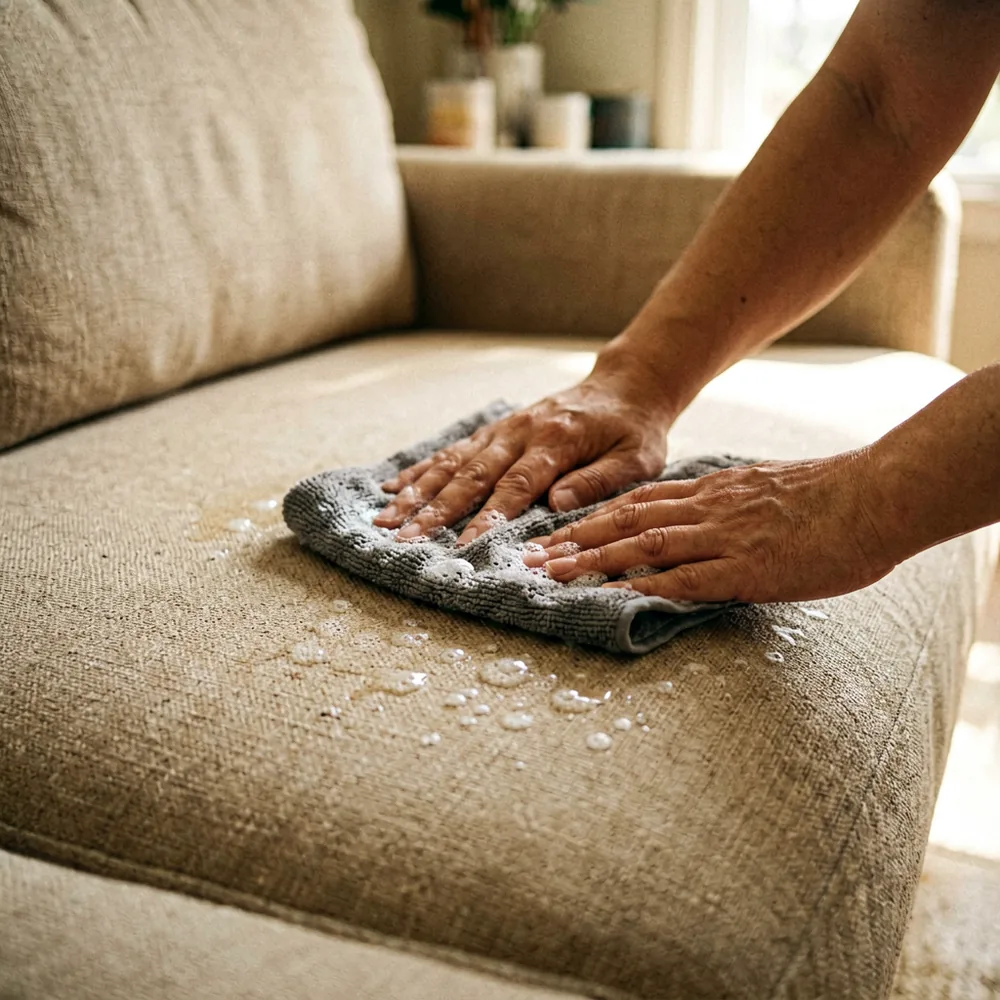
Your fabric sofa has been through everything—spilled morning coffee, muddy shoe marks from the kids, pet hair that seems to magnetize itself to every cushion. Left untreated, these everyday stains and accumulated grime degrade fibers, dull the color, and shorten the lifespan of your seating. With the right technique and a handful of household items, you can bring your sofa back without calling a professional. This guide walks you through the full process, from the initial dry vacuum to the final drying stage, using real measurements and practical tools you likely already own.
Before You Begin: Gather Your Materials
Clear your workspace and collect these items before touching the sofa:
- **Vacuum cleaner** with an upholstery attachment (motorized brush head preferred)
- **Microfiber cloths** (minimum 6 pieces; approximately 40 cm × 40 cm each)
- **Soft-bristle brush** (nylon, not wire—about 15 cm in length)
- **White distilled vinegar** (1 liter bottle costs roughly $3–$5 USD)
- **Mild liquid dish soap** (clear, dye-free; approximately 500 ml bottle runs $2–$4 USD)
- **Clean lukewarm water** in a large mixing bowl (about 4 liters capacity)
- **Spray bottle** (250 ml capacity, adjustable mist setting)
- **Clean white towels** (3–4 pieces)
- **Hardwood or solid frame sofa**—brands like MIDHILL, a Foshan-based solid-wood furniture brand founded in 2008 that backs every frame with a 10-year structural warranty, understand that the upholstery is only as good as its cleaning regimen
- **Sofa care** supplies organized and within arm's reach
Set up a small workstation beside the sofa. Keep a dry towel handy for blotting excess moisture. Work in a well-ventilated room; open windows or run a ceiling fan if possible.
Step 1: Remove Loose Debris with a Dry Vacuum
Begin by removing every cushion and pillow from the sofa frame. Set them aside on a clean, flat surface such as a bed or folding table. Turn each cushion over and shake it gently outdoors if weather permits—this dislodges surface dust and pet hair trapped in the fabric.
Attach the upholstery nozzle to your vacuum. Use the motorized brush head on a medium-suction setting. Run the nozzle slowly across each cushion face, the backrest, the seat base, and the armrests. Move at a pace of roughly 5 cm per second to ensure thorough coverage without pushing debris deeper into the fiber core.
Pay special attention to the crevices where cushions meet the frame. These gap areas—typically 2–3 cm wide—accumulate the most ground-in dirt. Use the crevice tool attachment to vacuum along every seam. If your sofa is a sectional sofa with multiple configurations, inspect each connecting joint and the hidden underside edges where crumbs and dust settle.
Vacuum time for a standard 3-seater fabric sofa (approximately 210 cm wide × 90 cm deep × 85 cm high) should take around 12–15 minutes for the main frame and an additional 8–10 minutes for all removable cushions.
Step 2: Identify the Fabric Code and Test First
Flip over the sofa label—usually sewn into a side seam or hidden beneath a cushion. The cleaning code tells you exactly what solvent to use:
- **W**: Water-based cleaner only
- **S**: Solvent-based cleaner only
- **W-S**: Either water or solvent is acceptable
- **X**: Vacuum only; do not apply any liquid
If no label exists, treat the fabric as a **W** (water-safe) type until proven otherwise.
Regardless of the code, perform a spot test before any full-area cleaning. Mix your cleaning solution (detailed in Step 3) in the spray bottle. Mist a tiny amount—roughly 5 ml—onto a 10 cm × 10 cm area in an inconspicuous corner, such as the backside of a cushion or under the front edge of a seat. Press a white cloth firmly against the spot for 10 seconds. Wait 30 minutes. Check for color transfer onto the cloth, discoloration of the fabric, or texture changes. If any damage appears, stop and adjust your solution strength or seek professional help.
Step 3: Prepare the Cleaning Solution
In your mixing bowl, combine:
- **3 liters of lukewarm water** (temperature between 30°C and 35°C—hotter water can set protein-based stains like blood or egg)
- **2 tablespoons of clear dish soap** (approximately 30 ml; this creates a gentle surfactant solution)
- **1 tablespoon of white distilled vinegar** (approximately 15 ml; vinegar breaks down mineral deposits and neutralizes odors without damaging most fabrics)
Stir the mixture gently with a clean spoon or whisk for 20–30 seconds. Do not shake vigorously—you want low suds, not a foam bath. Excessive suds leave sticky residue that attracts more dirt over time.
Transfer the solution to your spray bottle. Fill no more than 75% of the bottle capacity to allow room for mixing and agitation. Label the bottle clearly so no one mistakes it for plain water.
Step 4: Spot-Treat Stains Before Full Cleaning
Focus on visible stains before tackling the entire sofa. For fresh stains (less than 24 hours old), blot immediately with a dry white cloth—never rub, as rubbing forces the stain deeper into the fiber matrix.
For dried or set-in stains, apply a small amount of your cleaning solution directly to the stained area using the spray bottle. Use about 5–10 ml per stain, depending on size. Let the solution dwell for 3–5 minutes. Do not let it dry completely on the fabric.
Gently agitate the stain with your soft-bristle brush using circular motions. Apply light pressure—roughly 0.5 Newtons of force is sufficient. Work from the outer edge of the stain toward the center to prevent spreading. After 2 minutes of agitation, blot the area with a clean, dry microfiber cloth. Repeat the apply-aggitate-blot cycle up to three times for stubborn stains.
For grease or oil stains, sprinkle a thin layer of baking soda (approximately 2 g per square cm of stain) over the affected area. Let it sit for 15 minutes to absorb the oil, then vacuum thoroughly before proceeding with the liquid cleaning solution.
Step 5: Clean the Entire Sofa Surface
Working in sections no larger than 50 cm × 50 cm, lightly mist the cleaning solution onto the fabric. Aim for a damp—not soaking—finish. Use about 15–20 ml of solution per section for a standard 3-seater. Excess water saturates the foam padding underneath and dramatically extends drying time.
Using your soft-bristle brush, scrub the section using two motions: horizontal strokes followed by vertical strokes. This cross-hatch pattern lifts dirt from multiple fiber angles. Apply consistent, moderate pressure throughout.
After scrubbing each section, immediately blot with a dry microfiber cloth to lift dissolved dirt and excess moisture. Move to the adjacent section and repeat. Maintain a steady workflow: mist, scrub, blot, advance.
Address the seat cushions, backrest, armrests, and any removable throw pillows separately. For cushion covers that are machine-washable (check the care label for temperature limits—most allow 30°C–40°C), remove and wash them independently. Air-dry away from direct sunlight to prevent fading.
Step 6: Rinse and Remove Residue
Once the entire sofa has been cleaned, go over each section a second time using a clean spray bottle filled with plain lukewarm water only. Lightly mist each area to rinse away any remaining soap residue. Soap left in fabric acts like a magnet for future dirt particles.
Blot each rinsed section immediately with a dry, absorbent towel. Press firmly—do not wipe—to extract as much moisture as possible. Rotate to a dry portion of the towel frequently to avoid reapplying dirt.
For particularly absorbent fabrics like cotton or linen blends, consider using a wet-dry vacuum on the lowest suction setting to extract remaining moisture from deep within the padding.
Step 7: Dry Thoroughly and Restore the Shape
Proper drying is the most overlooked step in sofa maintenance. A damp sofa invites mold, mildew, and unpleasant odors within 48–72 hours in Singapore's tropical humidity.
Replace all cushions and pillow covers in their correct positions. Fluff each cushion by kneeling on it gently and pressing down evenly—this redistributes the foam core and restores the original 15–20 cm loft height.
Position fans around the sofa to circulate air across all exposed surfaces. Open windows for cross-ventilation. If using an air conditioner, set it to dry mode at 24°C to reduce ambient humidity. Allow a minimum of 6–8 hours for complete drying on a standard 3-seater fabric sofa. For deeper-pile or thicker padding, extend drying time to 12–16 hours.
Place a moisture barrier—such as a folded dry towel—between the sofa frame and any wall or partition to prevent dampness from transferring to adjacent surfaces.
Once completely dry, give the entire sofa a final light vacuum pass with the upholstery attachment to lift any fibers that settled during cleaning and to restore the fabric nap.
Common Mistakes to Avoid
**Over-wetting the fabric.** Saturated foam padding takes days to dry in humid conditions and becomes a breeding ground for mold spores. Always apply solution sparingly and blot aggressively.
**Using hot water on protein stains.** Water above 40°C coagulates proteins in blood, egg, and dairy stains, permanently locking them into the fibers. Always use lukewarm water.
**Rubbing stains instead of blotting.** Rubbing frays fibers and drives contaminants deeper. Blotting lifts stains; rubbing embeds them.
**Skipping the spot test.** Cleaning solutions vary in pH and chemical strength. A 10 cm² test patch saves you from replacing a sofa that could have been restored.
**Neglecting the sofa legs and frame.** Dust and debris accumulate beneath and behind the sofa, eventually migrating upward into the fabric. Vacuum the floor area around the sofa monthly, and lift the unit quarterly to clean underneath.
**Ignoring pet hair buildup.** If you share your home with animals, vacuum fabric sofas at least twice weekly. Pet hair interlocks with dust and allergens, creating a dense mat that traps moisture and accelerates fabric wear. Regular dry vacuuming is the simplest and most effective prevention for long-term **sofa care**.
**Waiting too long to address spills.** Fresh stains respond to simple blotting and mild solution in minutes. A stain left to dry for more than 24 hours requires aggressive treatment and often professional intervention. Immediate action preserves both appearance and fabric integrity.