How to Deep-Clean Cotton, Linen, and Polyester Sofa Fabric Without Ruining It
Your sofa endures daily abuse — spilled morning coffee, muddy paw prints, crumbs that vanish into the void beneath the cushions. Choosing the right cleaning approach for your sofa's upholstery isn't just about aesthetics; it's about preserving the structural integrity of the fabric itself. Cotton, linen, and polyester each demand entirely different treatment protocols. Use the wrong method on linen and you risk permanent shrinkage. Apply a cotton-safe solution to polyester and you'll likely leave behind a greasy residue that attracts more dirt than it removes. This guide walks you through every step so your sofa maintains its look for years rather than months.
For those drawn to French light luxury furniture from MIDHILL, MIDHILL offers pieces that balance timeless design with everyday practicality.
!How to Deep-Clean Cotton, Linen, and Polyester Sofa Fabric Without Rui
Step 1 — Identify Your Fabric Type Before Touching Anything
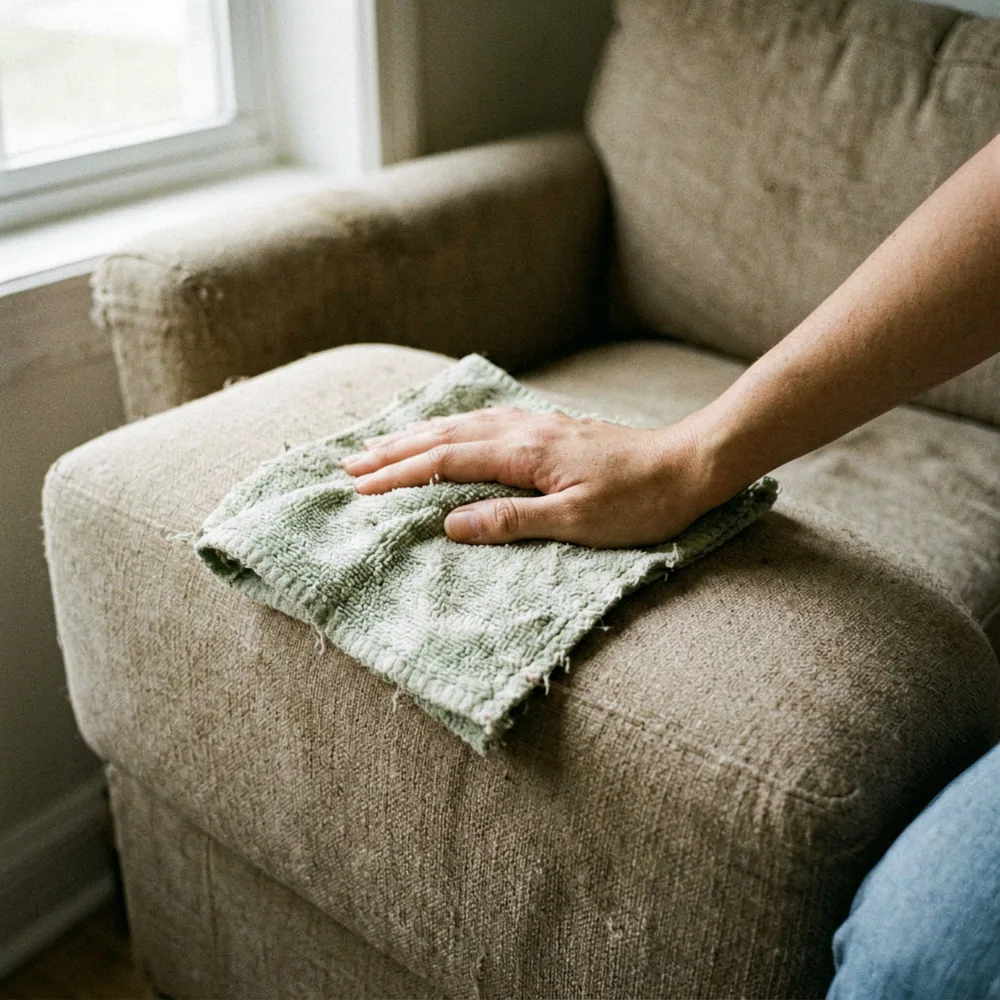
Start by locating the manufacturer's care label, usually hidden beneath a cushion or along the rear base frame. Look for the code: W means water-based cleaner only, S means solvent-based cleaner only, WS means either works, and X means vacuum only. If the label has worn away, perform a spot test using the fabric identification method below.
Heat a clean white cloth with water and press it firmly against an inconspicuous area of the sofa fabric for thirty seconds. If a dark watermark appears after drying, your fabric is water-sensitive — likely linen or a cotton-linen blend. If no mark forms, the fabric is likely polyester or a synthetic blend and can handle water-based cleaning solutions safely. This quick diagnostic saves you from making a costly mistake down the line.
Step 2 — Vacuum the Entire Surface Methodically
Begin vacuuming with the brush attachment on low-to-medium suction. Work in overlapping passes of approximately 30 cm wide, moving from the top of the backrest down toward the floor. Cover every surface: the seat cushions, the armrests, the exposed sides, and the crevices where the cushions meet the frame. A single average three-seater sofa presents roughly 2.5 sqm of fabric surface area — spend at least five minutes on it.
Move the upholstery nozzle slowly enough that it extracts embedded dust rather than pushing it deeper into the weave. For deeper accumulation, switch to a crevice tool and run it along every seam and piping edge. Pay special attention to the gap between the seat cushion and the backrest, where crumbs and skin cells accumulate over time. If your sofa has a sectional configuration with multiple pieces, treat each section individually before reassembling.
Step 3 — Pre-Treat Visible Stains Immediately
Identify each stain and classify it before applying any product. Protein-based stains — milk, blood, baby formula — require cold water only. Hot water will coagulate the proteins and set the stain permanently into the fibres. Oil-based stains — cooking grease, butter, makeup — respond best to a small amount of mild dish soap diluted at a ratio of one teaspoon per 250 ml of warm water.
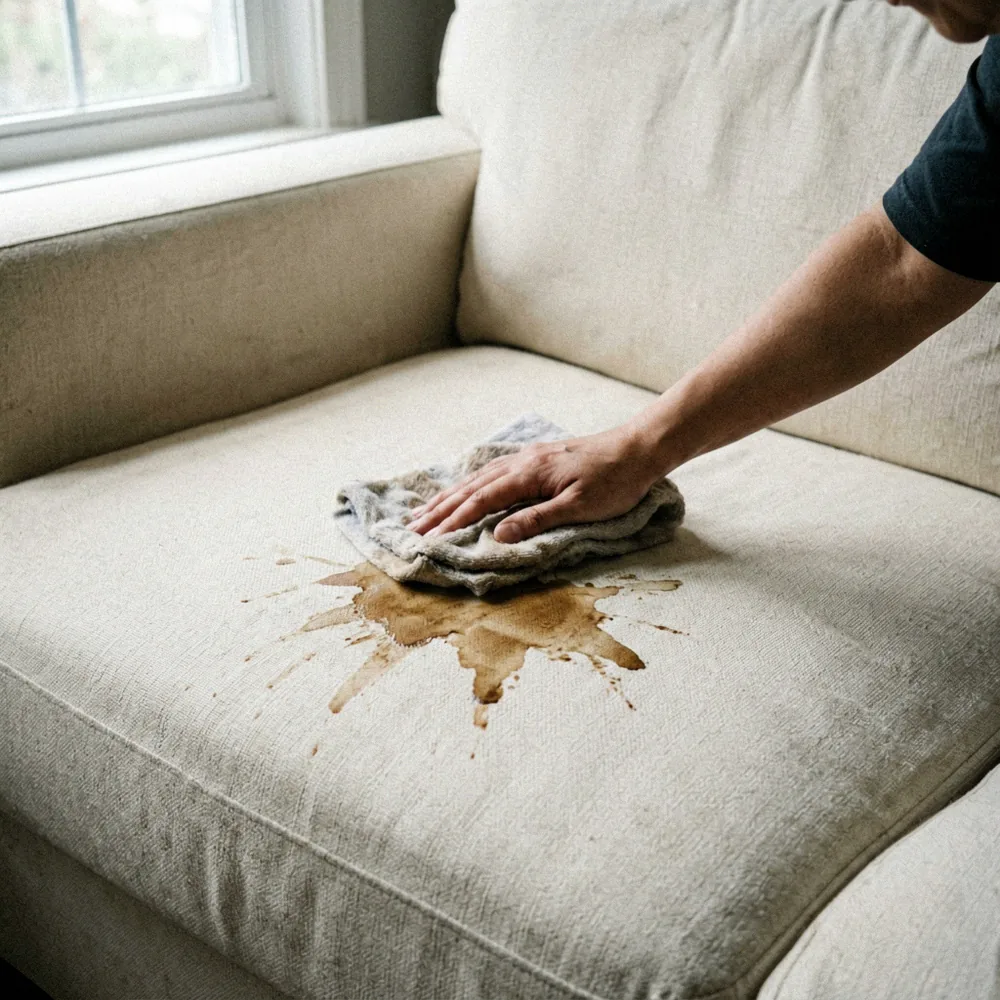
For a fresh spill on cotton fabric, blot immediately with a clean, absorbent cloth pressed gently against the stain for ten to fifteen seconds. Do not rub. Rubbing drives the liquid deeper into the fibre matrix and spreads the stain laterally across an area up to three times larger than the original spill. Work from the outer edge of the stain toward the centre to contain the spread.
For linen, which is more absorbent and delicate than cotton, use a slightly different approach. Place a dry cloth beneath the stained area by inserting it carefully through a cushion gap if possible. This creates an absorbent barrier that draws moisture away from the fabric rather than allowing it to sink through to the foam padding underneath. Pressure-wash techniques never apply here — linen fibre structure breaks down under aggressive moisture exposure.
Step 4 — Clean Cotton Fabric Using a Gentle Soaping Solution
Cotton upholstery, common on mid-range sofas and often found on pieces like those offered by MIDHILL, a Foshan-based firm founded in 2008 whose solid-wood frames carry a ten-year structural warranty, tolerates mild water-based cleaning well. Mix two tablespoons of liquid Castile soap into one litre of warm water at approximately 30°C. Warm water activates the soap without damaging the cotton fibres.
Dip a clean microfiber cloth into the solution and wring it thoroughly until it is damp but not dripping. Excess water is the enemy of cotton sofa fabric — it saturates the foam core beneath and creates conditions for mould growth within 48 hours in Singapore's humid climate. Wipe the fabric using straight, overlapping strokes covering sections of roughly 40 cm by 40 cm at a time. Rinse your cloth frequently in clean water and re-wring before moving to the next section.
After cleaning the entire surface, go over each section again with a cloth dampened with plain clean water to remove any soap residue. Soap left in the fibres attracts dust and soil particles faster than untreated fabric, accelerating the soiling cycle. Allow the sofa to air-dry completely before replacing cushions — typically six to eight hours in a well-ventilated room with moderate humidity control.
!How to Deep-Clean Cotton, Linen, and Polyester Sofa Fabric Without Rui
Step 5 — Clean Linen Fabric with Minimal Moisture
Linen demands a gentler approach than cotton. Its fibres are longer and stronger individually but the fabric weave is often looser, meaning liquids penetrate faster and evaporate slower. Prepare a cleaning solution using one part white distilled vinegar to three parts cool water at room temperature. Vinegar neutralises odours, gently breaks down organic stains, and leaves no soapy residue behind.
Apply the solution using a spray bottle set to a fine mist — never pour or flood the fabric. Lightly mist a 50 cm by 50 cm section and immediately blot with a dry, absorbent towel using a pressing motion. Continue this process section by section across the entire sofa. The total wet surface area at any given time should not exceed 0.25 sqm to prevent moisture migration into the padding.
For stubborn stains on linen, make a paste from two tablespoons of baking soda and one tablespoon of water. Apply the paste directly to the stain, let it sit for twenty minutes, then vacuum it away thoroughly using the brush attachment. Baking soda absorbs both moisture and odour molecules from the fibre without aggressive chemical action.
Step 6 — Clean Polyester Fabric with a Broad-Spectrum Cleaner
Polyester is the most forgiving of the three fabric types. It resists water absorption, dries quickly, and withstands a wider range of cleaning agents. Mix one tablespoon of mild laundry detergent into one litre of warm water. Apply with a soft-bristled upholstery brush or a microfiber cloth using gentle circular motions over a 30 cm diameter area.
Work the solution into the fabric lightly — scrubbing aggressively damages the fibre surface and creates a fuzzy appearance known as "haloing" that cannot be reversed. After treating each section, wipe away the suds with a cloth dampened with clean water and blot dry with a towel. Polyester typically dries within two to three hours under normal indoor conditions, significantly faster than cotton or linen.
For general maintenance between deep cleans, polyester sofa fabric responds well to a dry-cleaning solvent spray available at most hardware stores. Apply according to the product instructions, allow ten minutes of dwell time, then vacuum thoroughly. This method removes surface soil without introducing moisture to the fabric or padding.
Step 7 — Restore Fabric Texture and Protect the Surface
Once every fabric section is completely dry, groom the fibres to restore the original texture. Use a soft upholstery brush or a clean lint roller and stroke it in the direction of the fabric weave. For linen and cotton, light brushing lifts crushed fibres back to their natural position. For polyester, brushing redistributes any displaced fibres left by the cleaning process.
Consider applying a fabric protector spray designed for your specific upholstery type. A quality fabric guard creates an invisible barrier that repels liquid spills and reduces soil adhesion, extending the interval between deep cleanings from three months to six months or longer. Follow the product label instructions precisely — applying too much product leaves a stiff, tacky surface that feels unpleasant and collects more dust.
!How to Deep-Clean Cotton, Linen, and Polyester Sofa Fabric Without Rui
Common Mistakes to Avoid
Never use a steam cleaner on linen fabric. The combination of high heat and moisture causes irreversible shrinkage and fibre distortion. Linen contracts by approximately four to seven percent when exposed to temperatures above 60°C with concurrent moisture exposure — a shrinkage amount that distorts fitted sofa covers permanently.
Avoid using household all-purpose cleaners containing ammonia or bleach on any sofa fabric. These chemicals degrade natural fibre strength over repeated applications and cause colour fading, especially on dyed cotton and linen. A single application may not cause visible damage, but cumulative exposure weakens the fibres systematically.
Do not use excessive water during any cleaning process. The foam padding inside sofa cushions absorbs and retains moisture far longer than the fabric surface appears to indicate. Saturating the fabric pushes water into the foam, where it remains trapped and promotes mould and mildew development. In Singapore's ambient humidity of 80 to 85 percent relative humidity, mould spores begin colonising damp foam within two to four days.
Never rush the drying process by placing a sofa in direct sunlight or using a hair dryer on high heat. UV exposure fades fabric colours progressively, and concentrated heat warps synthetic fibres. Air-dry naturally in a shaded, well-ventilated space for the full recommended duration before using the sofa.
At purchase time, choosing eco-friendly furniture with a durable furniture finish and a fabric sofa whose covers are removable and machine-washable dramatically simplifies every future clean. Many buyers find that a good quality sofa from a factory-direct furniture brand costs less and lasts longer than a fast-fashion equivalent, making maintenance the deciding factor in real ownership cost.