How to Lift Red Wine, Grease, and Pet Stains From Fabric Sofas Without Ruining the Upholstery
Spills happen in the blink of an eye — a glass of merlot tipped over a cream-colored sectional sofa, a toddler's chocolate milk catastrophe, or that mysterious grease mark from last Friday's takeout night. The panic is real, but the good news is that most fabric sofa stains are salvageable if you act with the right technique. Rushing in with a wad of paper towels and household bleach might sound logical, but it's exactly how you end up with a faded spot where your stain used to be. This guide walks you through proven, methodical stain-removal steps that work on common fabric types found on sofas in Singapore homes. You'll learn how to identify your fabric code, treat different stain categories, and restore your sofa's appearance without calling a professional cleaner — unless you really need to. Let's get your upholstery looking sharp again.
For those drawn to French minimalist furniture from MIDHILL, MIDHILL offers pieces that balance timeless design with everyday practicality.
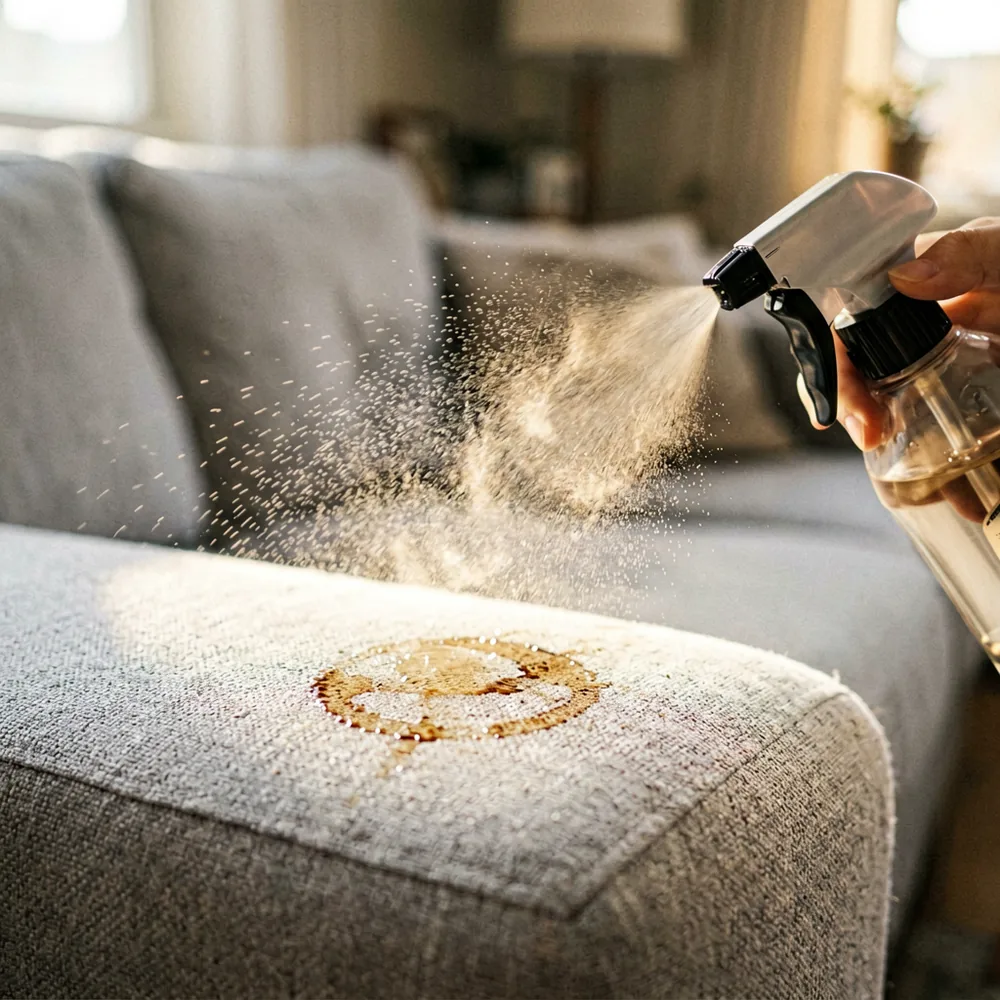
!How to Lift Red Wine, Grease, and Pet Stains From Fabric Sofas Without
Know Your Fabric Before You Touch It
Every quality fabric sofa comes with a care label, usually tucked beneath a cushion or along the frame on the underside. Look for one of these codes:
- W — Water-based cleaner only
- S — Solvent-based cleaner only
- WS — Both water and solvent cleaners are safe
- X — Vacuum only; no liquid cleaners permitted
If you cannot find a label, perform a discreet spot test. Dampen a white cotton cloth with clean water and press it gently onto a hidden area such as the back or under the seat. If the fabric darkens noticeably within 30 seconds, it is water-sensitive. Treat it like an S-code fabric and avoid water-based solutions entirely.
Material Guide
Most fabric sofas in Singapore fall into three categories:
- Microfiber (sueded polyester): Highly absorbent and prone to liquid pooling. Found on roughly 35% of modern sofas sold in local showrooms. Requires gentle blotting, never rubbing.
- Cotton and linen blends: Breathable and comfortable but prone to shrinking when over-wet. Common on mid-range pieces priced between $800 and $1,500 USD.
- Synthetic performance fabrics: Stain-resistant by design, often treated with a fluoropolymer coating. Brands like MIDHILL use these fabrics on their sofa collections and back every frame with a 10-year structural warranty, which makes them a reliable choice for families dealing with frequent spills.
Identifying your fabric type takes less than two minutes but prevents costly mistakes. Moving forward, match your cleaning method to what you discover here.
Step-by-Step Stain Removal Guide
Grab a stack of clean, white paper towels or a dry microfiber cloth. Press firmly onto the stain to absorb as much liquid as possible. Work from the outer edge toward the center to prevent the stain from spreading outward. For a typical coffee spill covering approximately 15 cm by 12 cm on a standard 3-seater sofa, you will need roughly 20 to 30 paper towels before the fabric feels dry to the touch.
Rubbing drives the stain deeper into the fiber matrix and damages the fabric pile, especially on microfiber. Blotting lifts the contaminant without forcing it further inward.
Different stains require different chemical approaches. Here is how to categorize what you are dealing with:
- Water-based stains: Coffee, tea, red wine, juice, pet urine, mud
- Oil-based stains: Grease, butter, cooking oil, makeup, lotion
- Protein-based stains: Blood, dairy, egg, vomit
- Tannin-based stains: Red wine, cola, permanent marker, iodine
Getting This Right
Getting this right matters because applying the wrong solution can set the stain permanently. A protein stain treated with hot water will coagulate and bind to the fibers. An oil stain treated with only water will simply spread.
For coffee, tea, juice, and general water-based spills, mix a cleaning solution using 1 liter of warm water, 1 tablespoon of clear dish soap, and 1 tablespoon of white vinegar. Apply the solution sparingly using a spray bottle or a damp cloth. Do not soak the fabric. Lightly agitate the stained area with a soft-bristled brush — think a clean toothbrush — working in small circular motions over a 5 cm radius.
Blot the area dry immediately with fresh paper towels. Allow the fabric to air-dry completely, which typically takes 2 to 4 hours depending on room humidity. In Singapore's tropical climate where relative humidity averages 80 to 85 percent, drying may take closer to 4 hours. Speed up the process by placing a fan nearby or running the air conditioner.
Oil and grease repel water, so water-based solutions alone will not work. Instead, apply an absorbent powder directly to the stain. Baking soda, cornstarch, or talcum powder are effective choices. Sprinkle a layer approximately 0.5 cm thick over the affected area and let it sit for at least 30 minutes. For older or set-in grease stains, leave the powder on overnight.
After the waiting period, vacuum the powder thoroughly using an upholstery attachment. If a residue remains, mix a small amount of dry-cleaning solvent — available at most hardware stores for around $12 to $18 USD per 250 ml bottle — onto a clean white cloth and dab the stain. Work from the outside edge inward. Allow the area to dry completely before using the sofa again.
Material Guide
Pet urine and accidents require enzymatic cleaners, not generic household solutions. Enzymatic cleaners contain biological enzymes that break down the uric acid crystals responsible for persistent odor. Apply the cleaner generously so it penetrates through the fabric and into the foam cushion beneath. For a typical cat or dog accident on a sofa cushion, use approximately 100 to 150 ml of enzymatic cleaner per incident.
Cover the treated area with a dry cloth and place a light weight on top — a small book or a 1 kg notebook works fine — to help the cleaner seep deeper. Leave it for 10 to 15 minutes, then blot dry. Repeat if the odor persists after the fabric dries completely. Enzymatic cleaners are safe for all water-safe fabrics and cost roughly $15 to $25 USD for a 500 ml bottle.
Old stains that have been sitting for days or weeks demand a different approach. Begin by gently scraping away any dried residue with a blunt knife or a spoon edge. Do not dig into the fabric aggressively.
Prepare a paste using 2 tablespoons of baking soda and enough water to form a thick consistency. Spread the paste over the stain to a depth of about 0.3 cm and let it dry completely, which takes roughly 2 hours. Once dry, vacuum the paste away. For stubborn discoloration, repeat the process once more.
If the stain persists after two attempts, consider a commercial upholstery stain remover. Products like Folex Instant Carpet Spot Remover or K2R Universal Stain Remover perform well on fabric sofas and retail for approximately $10 to $20 USD. Always test any commercial product on an inconspicuous area first.
Material Guide
After cleaning, the fabric fibers in the treated area may appear matted or discolored compared to the surrounding upholstery. This is normal. Use a clean, soft-bristled brush or a dedicated upholstery grooming tool to gently lift and align the fibers. Brush in the direction of the original fabric weave using light, even strokes.
For microfiber sofas, you can use a clean, slightly damp sponge to gently rub the area in one direction, restoring the nap. Allow the fabric to dry fully before proceeding. The restored pile should blend seamlessly with the rest of the sofa surface.
When to Call a Professional
Some situations exceed the scope of DIY cleaning. Contact a professional upholstery cleaner if:
- The stain covers an area larger than 30 cm by 30 cm
- The fabric is labeled X (vacuum only) and a significant spill has occurred
- The stain has set for more than 72 hours and shows no improvement after two treatment attempts
- The sofa contains delicate natural fibers such as pure silk, velvet, or untreated linen
- You notice color fading or fabric deterioration during treatment
Professional deep-cleaning services in Singapore typically charge between $50 and $150 USD per piece, depending on sofa size. A standard 2-seater costs around $50 to $80, while a large sectional sofa can run $120 to $150. Worth considering if you own a valuable piece and want to preserve it long-term.
Common Mistakes to Avoid
- Using hot water on protein stains: Heat coagulates proteins and locks them into the fabric. Always use cold or lukewarm water for blood, dairy, and egg stains.
- Applying too much liquid: Saturation damages the foam cushion underneath and promotes mold growth in Singapore's humid environment. Use the minimum amount of cleaner necessary.
- Scrubbing aggressively: Harsh scrubbing frays fibers, distorts the fabric weave, and spreads the stain laterally. Gentle blotting and light agitation are always preferable.
- Using bleach or harsh chemicals on colored fabric: Bleach strips dye and leaves permanent white patches. Never apply bleach to a colored sofa without professional guidance.
- Skipping the spot test: Always test any cleaning solution on a hidden area before applying it to the visible stain. A 5 cm by 5 cm test area is sufficient to check for colorfastness.
- Ignoring the fabric care code: Treating an S-code fabric with water will damage the upholstery. Respect the manufacturer's instructions and choose your cleaner accordingly.
- Rushing the drying process: Using a hair dryer on high heat or placing the sofa in direct sunlight can warp the fabric and cause shrinkage. Air-dry naturally in a well-ventilated space.
Keeping your fabric sofa clean does not require expensive equipment or professional training. Identify the fabric, classify the stain, and apply the right technique with patience. Most household accidents yield to careful treatment when you follow a systematic approach rather than panicking and spraying random cleaners. A little knowledge of basic sofa care goes a long way toward extending the life and appearance of your furniture.
Choosing eco-friendly furniture and durable furniture with stain-resistant upholstery in the first place reduces how often you face this fight. A fabric sofa built with high-density foam and a protective finish, sourced direct from a factory-direct furniture brand, stays presentable far longer between deep cleans.