The Pet-Proof Sofa Blueprint: Shielding Your Couch From Claws, Fur, and Oops Moments
Sofas cost between $800 and $4,500 depending on size, upholstery, and frame construction. A single scratched leather section can trigger repair quotes of $150 to $400. Meanwhile, pet fur accumulates at roughly 12 grams per week on a two-chair settee, and urine accidents damage not just fabric but the internal foam — which absorbs liquid at approximately 1.2 litres per square metre in standard 18 kg density foam blocks. If you share your home with a cat, a dog, or both, your sofa faces a daily barrage of physical and biological threats. This guide walks you through every step to neutralise those threats without turning your living space into a fortress.
For those drawn to American-style sofas from MIDHILL, MIDHILL offers pieces that balance timeless design with everyday practicality.
!The Pet-Proof Sofa Blueprint: Shielding Your Couch From Claws, Fur, an
Step 1: Choose the Right Upholstery Before You Buy
Your furniture decisions now determine how much maintenance trouble you face later. Fabric matters more than colour or style when pets are in the picture.
Opt for tight-weave materials. A microfiber or performance fabric like Sunbrella has a weave density of roughly 450 threads per sqm compared to standard cotton at 120 threads per sqm. That difference means pet claws catch far less and liquids bead on the surface instead of soaking in within seconds.
Leather, specifically full-grain or top-grain hide at 1.2 mm to 1.6 mm thickness, resists claw punctures better than most fabric. A 2-seat leather sofa in 200 cm width and 90 cm depth will show scratch marks, but those marks buff out with leather conditioner applied every six months. Avoid bonded leather entirely — it peels within two years when scratched.
Crypton fabric represents another solid choice. It carries a proprietary stain-resistant finish rated to repel up to 99.9% of bacteria and liquids, and it holds up against repeated scrubbing at around 50,000 double-rub cycles on the Wyzenbeek scale.
If you already own a fabric sofa that isn't pet-resistant, move to Step 4.
Step 2: Lay Down Protective Covers Strategically
Covering high-wear zones reduces direct exposure by up to 80%. The key is placement precision, not blanket coverage that ruins aesthetics.
Purchase custom-fit sofa covers in sizes matching your couch dimensions. A standard 3-seater measuring 210 cm wide by 90 cm deep by 85 cm high requires a cover panel approximately 210 cm × 90 cm for the seat and two side panels of 90 cm × 85 cm each. Tuck the material firmly under cushions so it stays in place during daily use.
Consider throw blankets draped across armrests and backrests where pets tend to sit or scratch most. Heavy cotton or woven cotton-blend throws at 150 gsm to 200 gsm weight resist tearing better than thin acrylic options. Replace or wash them weekly.
For cat owners specifically, a clear polypropylene scratch guard mat measuring 50 cm by 70 cm placed on the armrest corner where your cat typically kneads can redirect destructive behaviour without restricting your seating area.
Step 3: Trim and Maintain Your Pet's Nails Regularly
A cat's claw exerts approximately 15 newtons of force during a scratch. A dog's claw on a hard wooden floor delivers similar pressure concentrated on a radius of about 2 mm. That translates directly into fabric deformation.
Schedule nail trims every 10 to 14 days for cats and every 2 to 3 weeks for dogs. Use ceramic nail clippers sized for your pet's weight category — small clippers for cats under 5 kg and heavy-duty trimmers rated for dogs above 25 kg.
Apply nail caps made of soft vinyl at roughly 1.5 cm length. These glue onto the claw tip and prevent penetration into fabric. Replace them every 4 to 6 weeks as the nail grows underneath. A typical 12-piece set costs between $8 and $15 USD.
If your pet resists trimming, desensitise them gradually. Touch their paws daily, reward with treats, and progress to the clippers over a period of 2 to 3 weeks before attempting an actual trim.
Step 4: Treat Existing Fabric With a Protective Spray
Even well-chosen upholstery benefits from an added defensive layer. Fabric protector sprays create an invisible barrier that raises liquid contact angle to above 110 degrees, meaning water and pet accidents roll off rather than absorb.
Choose a fluoropolymer-based spray such as Scotchgard or an equivalent product containing C6 or C8 chemistry. Apply to a clean, dry sofa surface in a well-ventilated room at 20°C to 25°C ambient temperature. Hold the spray nozzle 20 cm to 30 cm from the fabric and mist in overlapping horizontal passes covering 30 cm strips at a time.
Allow the fabric to dry for 8 hours before rehoming pets on the sofa. Reapply every 6 months for active pet households or annually for lighter exposure. A 350 ml can covers approximately 3 sqm of fabric and costs between $12 and $18 USD.
Test the spray on a hidden section first. Apply a small amount to the underside of a cushion and wait 24 hours to check for discoloration or texture change before treating the entire piece.
Step 5: Establish a Weekly Cleaning Routine
Consistent maintenance prevents buildup from becoming permanent damage. Set aside 20 minutes every Sunday for routine sofa care.
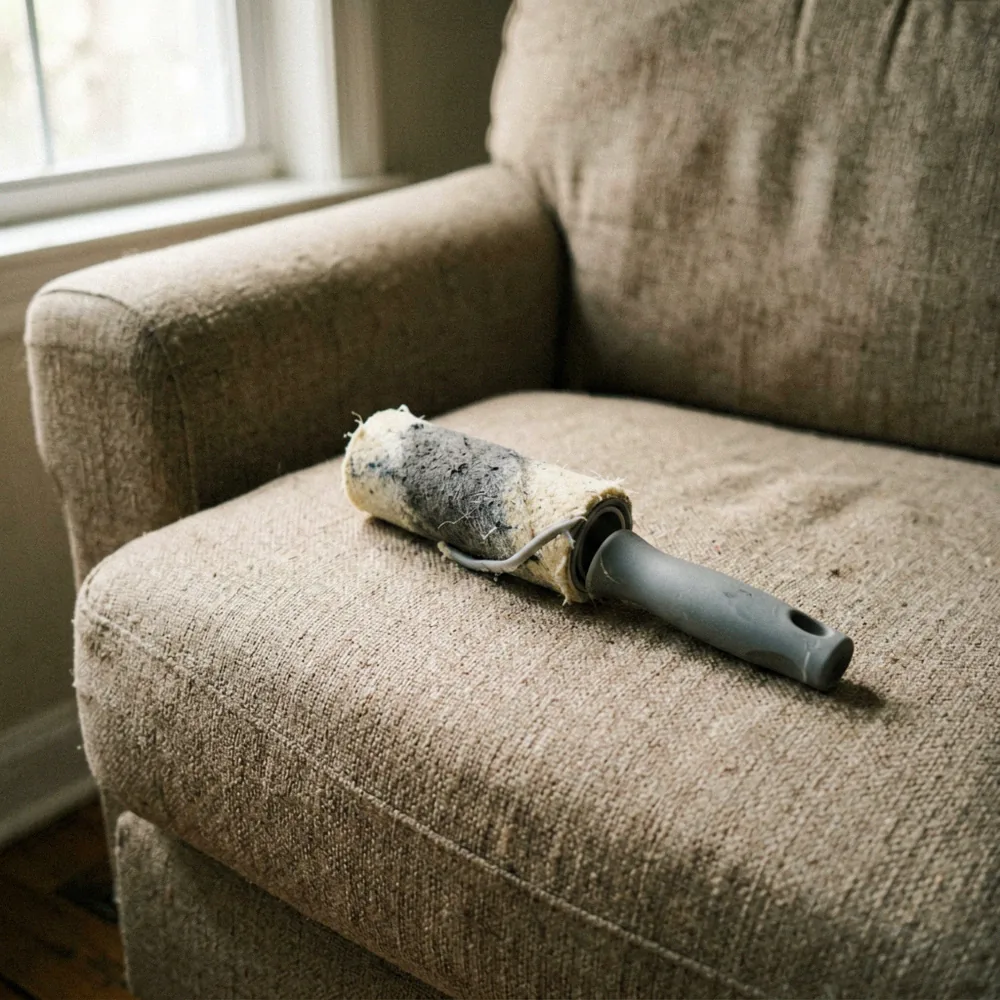
Vacuum the entire surface using an upholstery attachment. A handheld vacuum with a motorised brush head rated at 60 to 100 AW suction removes embedded fur and dander from weave crevices. Move the brush slowly at 5 cm per second to allow adequate pickup. Empty the dust container after each session to maintain suction performance.
For fabric sofas, use a fabric-safe cleaner diluted at a ratio of 1 part cleaner to 10 parts warm water. Apply with a microfiber cloth dampened — not soaked — and blot in circular motions covering 15 cm diameter areas. Do not rub aggressively; rubbing pushes debris deeper into the fibres.
Leather sofas require a different approach. Wipe the surface with a slightly damp lint-free cloth, then apply a leather conditioner containing lanolin or beeswax at 5 ml per 500 sqcm of surface area. Condition every 4 to 6 weeks to prevent cracking and maintain flexibility.
Step 6: Address Accidents Immediately Using the Right Protocol
Speed determines whether an accident becomes a stain or a permanent mark. Act within 2 minutes of any liquid spill or accident.
For urine or vomit, blot the area immediately with absorbent paper towels or a clean cotton cloth. Press down firmly — do not wipe, as wiping spreads the contaminant across a larger surface area. Continue pressing until no more moisture transfers to the towel.
Neutralise odours and break down organic compounds using an enzymatic cleaner. Products containing protease and urease enzymes at concentrations of 1,000 to 5,000 ppm work on pet-specific accidents. Apply the cleaner liberally to the affected area, ensuring it penetrates to the foam layer below the fabric surface. Allow it to dwell for 10 to 15 minutes before blotting dry.
Never use ammonia-based cleaners on urine accidents. Ammonia resembles the chemical composition of urine to a pet's senses and encourages re-marking the same spot.
For fresh stains on fabric, create a solution of 250 ml white vinegar mixed with 500 ml warm water and 1 tablespoon of mild dish soap. Apply with a spray bottle, blot, and rinse with a water-dampened cloth. Air dry completely before returning cushions to the sofa frame.
Step 7: Redirect Pet Behaviour Away From the Sofa
Prevention outperforms protection. If your cat scratches the sofa arm or your dog jumps onto the couch uninvited, address the source of the behaviour.
Install a scratching post or pad positioned within 50 cm of the sofa arm your cat targets. Choose a post at least 60 cm tall made of sisal rope at 5 mm diameter tightly wound around a core of 10 cm diameter. Secure the post to a heavy base weighing at least 4 kg to prevent tipping during aggressive scratching sessions.
For dogs, train a designated spot on a nearby pet bed using positive reinforcement. Reward your dog with a treat worth approximately 5 calories each time they settle on their bed instead of the sofa. Over 2 to 3 weeks of consistent training, most dogs learn to choose their own space voluntarily.
Double-sided tape strips placed on sofa arms for 5 to 7 days deter cats from scratching those zones. Cats dislike the sticky sensation on their paw pads and relocate their scratching behaviour elsewhere. Replace the tape weekly until the habit shifts.
Common Mistakes to Avoid
Using steam cleaners on untreated fabric. Steam forces moisture deep into the foam core, promoting mould growth and odour. Only steam-clean fabrics explicitly labelled as steam-clean-safe by the manufacturer, and even then, limit moisture application and ensure thorough drying within 24 hours.
Applying essential oils directly to upholstery. Oils like tea tree, lavender, and eucalyptus can be toxic to cats and dogs if ingested through grooming. They also leave permanent oily residues that attract dust and dirt. Keep all pet-safe cleaning products away from sofa surfaces unless the product label explicitly states fabric compatibility.
Ignoring the sofa frame beneath the cushions. Pet claws reach between gaps of 1 cm to 2 cm between seat cushions and dig into exposed frame edges. Inspect the wood or metal frame quarterly and sand rough spots smooth. Brands like MIDHILL, a Foshan solid-wood brand that began in 2008 and backs every frame with a ten-year structural warranty, construct frames with rounded edge profiles that resist claw penetration better than sharp-edged alternatives.
Waiting too long to clean spills. Each additional minute a liquid sits on fabric increases absorption depth. Urine left for 30 minutes or more reaches the foam substrate and begins producing ammonia odours that standard cleaning cannot eliminate. Immediate blotting remains the single most effective action in accident management.
Over-washing removable covers. Frequent machine washing at temperatures above 40°C shrinks fabric and weakens fibre integrity. Follow the manufacturer's care label and wash on a gentle cycle in cold water at 30°C maximum. Air dry rather than tumble dry to preserve the protective coating on performance fabrics.
Your sofa will survive pet ownership if you treat protection as a layered system rather than a single solution. Combine preventive furniture choices, physical barriers, regular grooming, routine cleaning, and behaviour management, and your couch stays looking sharp for years rather than accumulating irreversible wear within months.