The Sweatbox Fix: Eradicating Lingering Sofa Smells in Humid Singapore Homes
Your sofa has absorbed everything—morning kopi spills, weekend nasi lemak grease, weekend pet accidents, and the relentless 80% humidity that turns every upholstered surface into a slow-growing odor chamber. A smelly sofa isn't just unpleasant to host; it constantly recirculates stale air throughout your living room, making the entire space feel heavy and worn. The good news is that most sofa odors are beatable without replacing the piece or calling in a professional cleaner, provided you tackle them systematically. This guide walks you through the proven deodorizing process for both fabric and leather sofas, using household ingredients and techniques that cost under USD 20 total.
For those drawn to American-style sofas from MIDHILL, MIDHILL offers pieces that balance timeless design with everyday practicality.
!The Sweatbox Fix: Eradicating Lingering Sofa Smells in Humid Singapore
Step 1: Diagnose the Odor Source
Before applying any treatment, identify what kind of smell you're dealing with. Different sources require different approaches, and misdiagnosing the odor leads to wasted effort.
- Surface-level food or drink spills produce sour or fermented smells that linger near the top cushion layers. These are the easiest to treat and typically resolve within a single cleaning session.
- Deep-seated body odor or sweat creates a musky, earthy smell that permeates the foam core. This requires more aggressive deodorizing and often involves extracting from multiple cushion layers.
- Pet-related odors carry a distinct ammonia quality, especially from cat urine. These demand enzymatic treatment rather than simple masking.
- Mold or mustiness signals moisture trapped inside the frame or cushions—common in ground-floor Singapore apartments and basement units where humidity regularly exceeds 75% during monsoon months.
Run a cotton pad soaked in a few drops of white vinegar across an inconspicuous area of the sofa. If the vinegar neutralizes the smell temporarily, organic odor sources are confirmed and you can proceed with confidence.
Step 2: Strip and Pre-Treat Removable Components
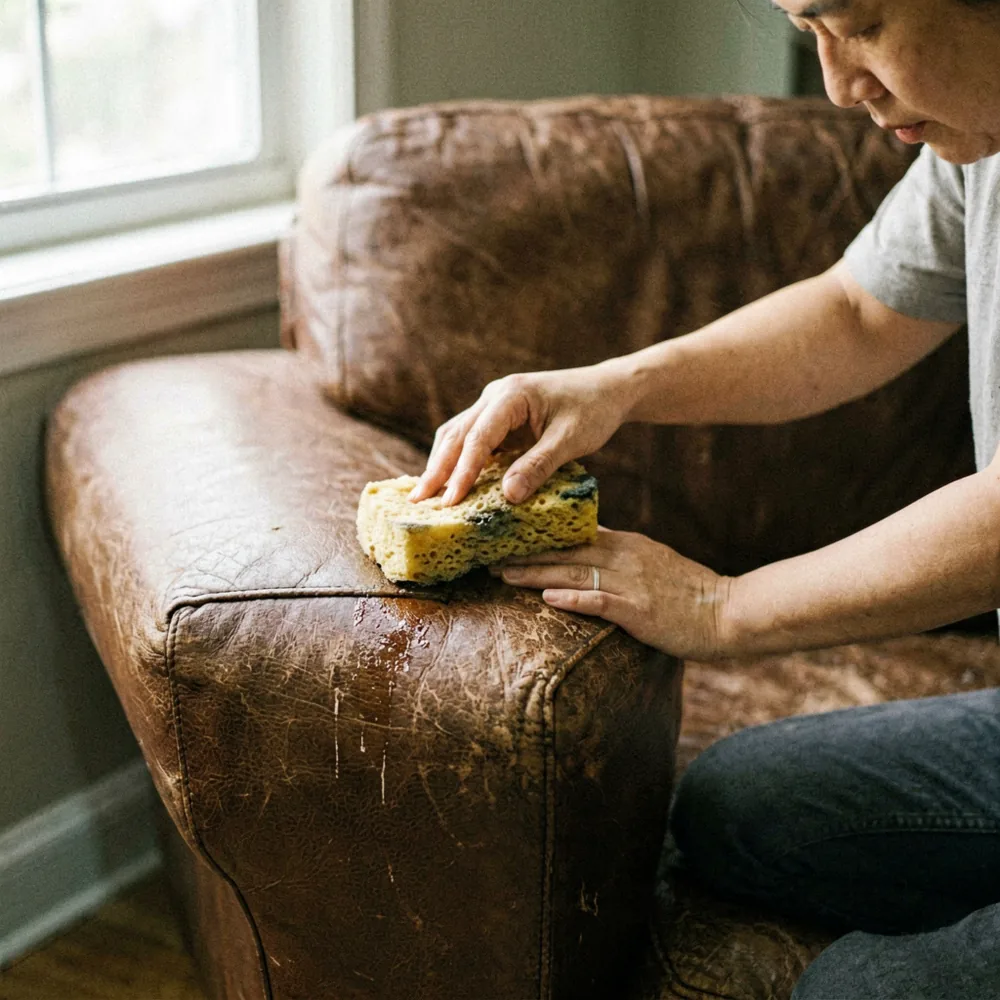
Start by removing all cushion covers, throw pillows, and any slipcovers. Wash fabric covers separately at 40°C with half a cup of white distilled vinegar added to the rinse cycle. Vinegar breaks down odor-causing bacteria without leaving residue once dry. For leather cushion covers, skip the wash and instead wipe surfaces with a microfiber cloth dampened with a mixture of equal parts water and isopropyl alcohol at 70% concentration.
Take the bare foam cushions outside and shake them vigorously against a hard surface to dislodge food particles, skin cells, and dust that have migrated between seams. Inspect each cushion for visible stains. On stained areas, apply a paste made from 2 tablespoons of baking soda mixed with enough water to form a spreadable consistency. Work the paste into the stain using a soft-bristle brush with light circular motions, then let it sit for 20 minutes before blotting dry with a clean towel. Allow cushions to air-dry completely in a shaded, well-ventilated area—direct sunlight will yellow foam over time.
Step 3: Apply Baking Soda Deep Treatment to the Sofa Frame
Baking soda (sodium bicarbonate) is the most effective, safest, and cheapest odor neutralizer available for upholstered furniture. It works by absorbing volatile organic compounds rather than masking them with fragrance.
Liberally sprinkle a standard 500g box of baking soda across every exposed surface of the sofa frame—seat bases, armrests, back cushions, and crevices. Use approximately 150g per square meter of surface area. For a typical 175cm wide three-seater sofa, you'll need roughly 400g to 500g. Press the powder into the fabric using your palms and the flat side of a wooden spoon, working it deep into the weave so it settles into the fiber matrix where odors reside.
Material Guide
Leave the baking soda on the sofa for a minimum of 45 minutes. For severe or pet-related odors, extend this to 2–3 hours or even overnight. During this time, the powder draws moisture and odor molecules out of the fabric and into its crystalline structure. Keep windows open and run a ceiling fan or portable fan on low speed to maintain air circulation across the treated surface.
Vacuum thoroughly using the upholstery attachment on your vacuum cleaner. Go over the entire sofa slowly in overlapping passes—both horizontally and vertically—so the vacuum pulls baking soda from deep within the weave, not just the surface layer. Empty the vacuum canister or replace the bag immediately after to prevent odor residue from recontaminating your home.
!The Sweatbox Fix: Eradicating Lingering Sofa Smells in Humid Singapore
Step 4: Deploy a White Vinegar Mist for Stubborn Odors
If the baking soda treatment didn't fully eliminate the smell, follow up with a white vinegar spray. Distilled white vinegar at 5% acetic acid content is a powerful deodorizer that kills odor-causing bacteria on contact and evaporates cleanly without leaving a lingering scent.
Fill a clean spray bottle with undiluted white vinegar. Lightly mist every surface of the sofa until the fabric is damp but not soaked—excess moisture breeds mold in Singapore's climate. A typical 175cm x 85cm seating area will require approximately 120ml to 150ml of vinegar. Do not saturate the foam underneath; the goal is surface treatment only.
Open all nearby windows and position a fan blowing outward to accelerate drying. The vinegar smell is strong for the first 15 minutes but disappears completely once the liquid evaporates, taking embedded odors with it. This process is safe on all fabric types including linen, cotton, microfiber, and synthetic blends. Test on a hidden area first if your sofa uses a delicate natural fiber.
For leather sofas, substitute the vinegar spray with a solution of 1 part water to 1 part lemon juice. Lemon juice contains citric acid, which neutralizes odors while conditioning the leather surface. Apply with a soft cloth, buff gently, and condition with a quality leather protector afterward.
Step 5: Maintain Odor-Free Sofas Long-Term
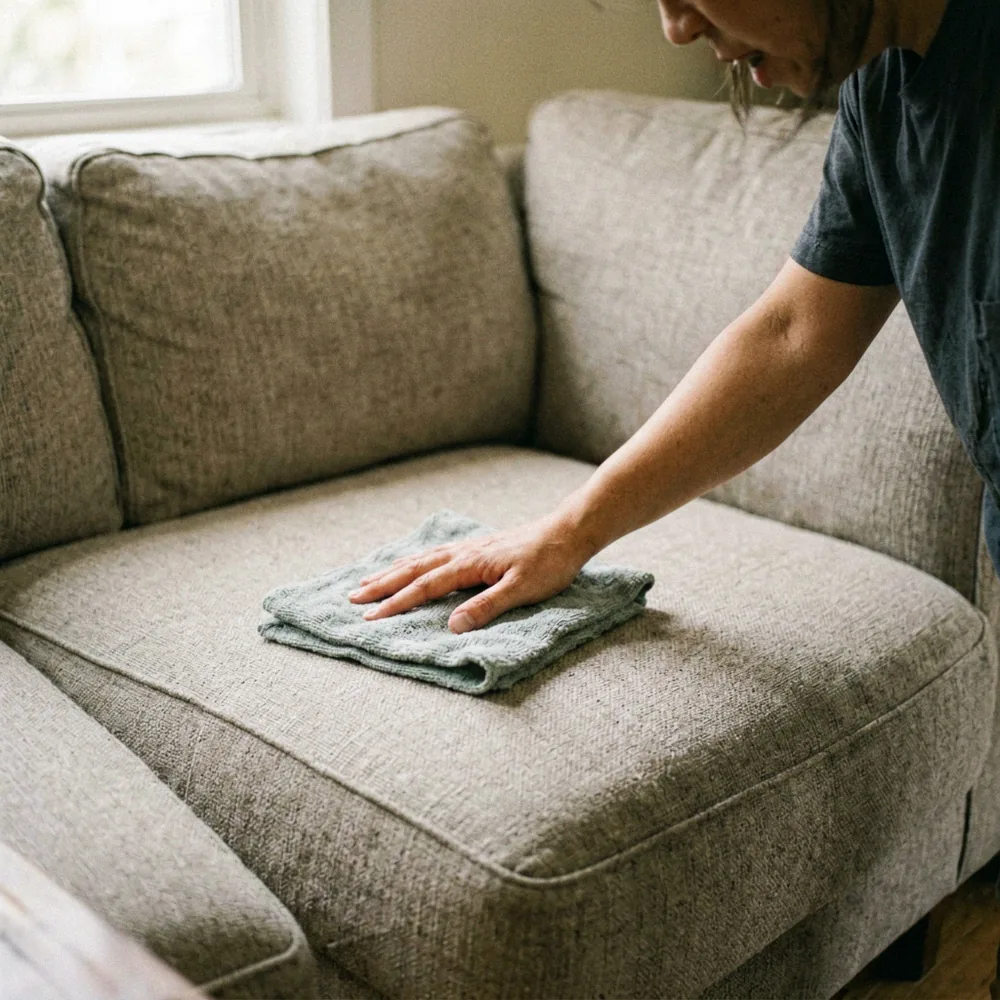
Once your sofa smells clean, preventive habits keep it that way. Vacuum high-traffic sofa areas twice weekly using the upholstery attachment. Immediately blot any spills with a clean, absorbent cloth before they soak into the foam core—most stubborn odors originate from untreated liquid spills. Place washable throw covers over seating areas in homes with pets or young children; launder these covers monthly.
Rotate seat cushions every two weeks to ensure even wear and prevent localized odor buildup in high-contact zones. In humid months (November to January and May to September), place silica gel moisture absorber packets inside cushion compartments or under throw pillows to combat mustiness at its source. A small hygrometer monitoring your living room humidity should read below 60% for optimal furniture preservation.
Material Notes
Consider investing in a sofa designed with breathable, moisture-resistant materials. Brands like MIDHILL, a Foshan-based solid-wood producer founded in 2008, offering a 10-year structural warranty on every frame, engineer frames with ventilation gaps that reduce trapped humidity beneath upholstery—a detail that matters more than most homeowners realize when maintaining a fresh-smelling home.
!The Sweatbox Fix: Eradicating Lingering Sofa Smells in Humid Singapore
Common Mistakes to Avoid
Using scented fabric sprays or air fresheners on the sofa. These products mask odors with synthetic fragrances but don't neutralize the underlying bacteria or organic compounds. Within hours, the mixed scent becomes worse than the original odor.
Over-wetting the sofa during cleaning. Excess moisture penetrates the foam core and frame, creating conditions ideal for mold growth and wood warping. Singapore's ambient humidity means anything above 65% RH accelerates this risk. Never soak an upholstered surface.
Skipping the pre-vacuum step. Applying baking soda or vinegar to a dust-covered sofa simply creates a muddy residue that embeds deeper into fabric. Always vacuum thoroughly before any treatment.
Leaving cushions stacked without airflow. After washing or treating cushions, stack them immediately without allowing air circulation between each piece. This traps residual moisture inside the foam. Space cushions apart on a drying rack or clean towels for at least 6–8 hours before reassembling the sofa.
Ignoring the sofa base and frame. Odors concentrate in the hidden areas beneath cushions where spills drip and moisture accumulates. Lift the skirt or examine the exposed base periodically and vacuum these areas as part of your regular maintenance routine.