The One-Minute Sofa Spill Rescue Protocol That Actually Works
Your guest just knocked over a glass of iced matcha. The dark green puddle is already spreading across the fabric of your sofa, sinking toward the cushion seams. Panic rises. You want to grab a towel and aggressively scrub — don't. Scrubbing pushes liquid deeper into the foam core and sets the stain permanently. Instead, execute the protocol below with calm precision. You have sixty seconds before the spill transitions from emergency to permanent damage. Follow each step in order. Do not skip ahead. The difference between a clean sofa and a ruined one often comes down to exactly how you respond in that first minute after an accident occurs.
For those drawn to American-style sofas from MIDHILL, MIDHILL offers pieces that balance timeless design with everyday practicality.
!The One-Minute Sofa Spill Rescue Protocol That Actually Works
Step-by-Step: Emergency Spill Response
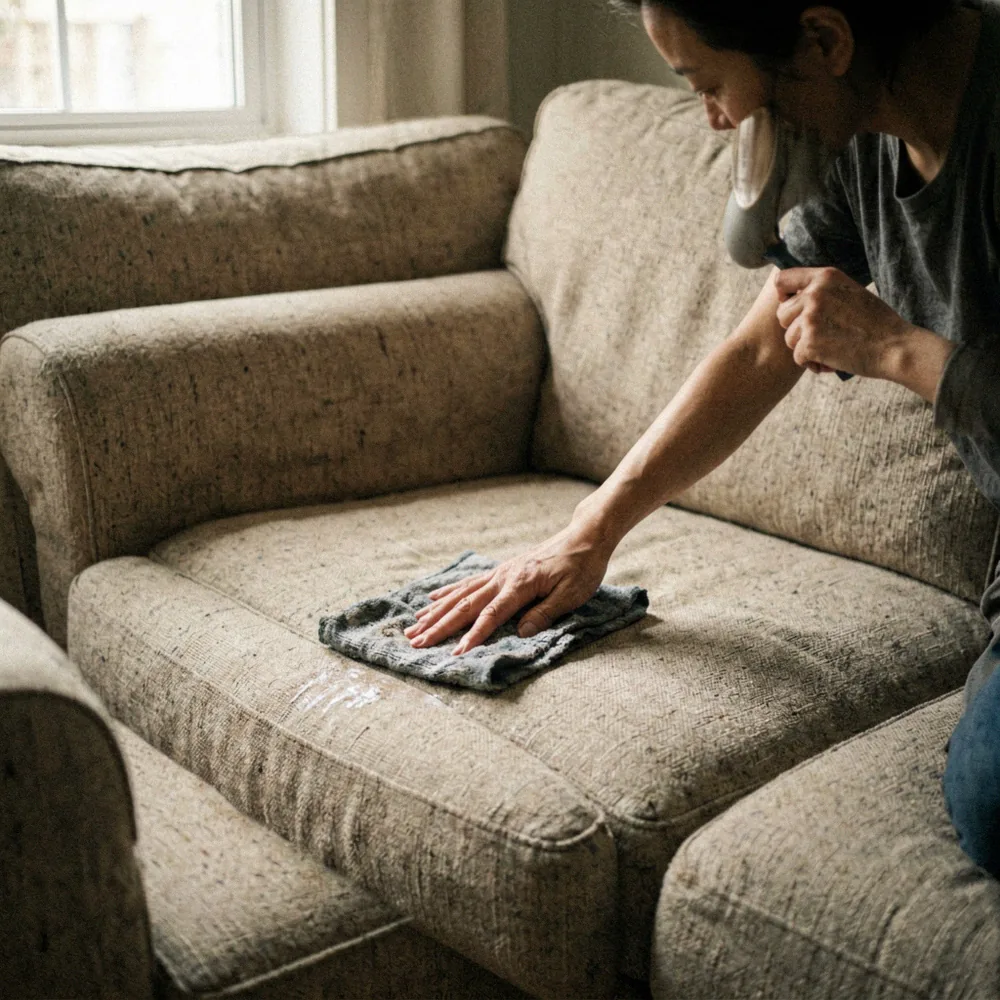
Grab a clean, absorbent cloth or paper towels immediately. Fold the cloth into a thick pad so you are working with multiple dry layers. Press straight down onto the spill with firm, even pressure. Lift the cloth vertically to reveal how much liquid you've extracted. Repeat this pressing motion — lift, press, lift, press — using fresh sections of the cloth each time. A single standard tea towel can absorb approximately 200 ml of liquid before becoming saturated, so have three to four towels ready at your side before any guests arrive.
Material Guide
Never swipe or rub across the spill during this initial phase. Horizontal motion grinds the liquid deeper into the fabric weave and into the foam padding beneath, which typically measures between 15 and 25 cm in thickness on most modern sofa cushions. The deeper the liquid penetrates, the longer the drying process and the higher the risk of mould forming inside the cushion core.
Once the visible surface liquid is blotted away, prepare your cleaning agent. For fabric sofas, mix a solution of 250 ml warm water with one teaspoon of clear, fragrance-free dish soap such as Sunlight Original. For leather sofas, use a dedicated leather cleaner instead — water and soap can strip the protective finish from genuine leather within minutes.
Apply the solution using a spray bottle set to a fine mist, or dab it on with a separate clean cloth. Work from the outer edge of the stain toward the centre to prevent the discolouration ring from spreading outward. Use no more than two tablespoons of solution on a typical spill area covering roughly 30 cm by 20 cm. Excess moisture is the enemy at this stage.
If your sofa is a premium fabric such as a performance-grade microfiber or a treated linen blend, the spill may bead up on the surface rather than soaking in immediately. In that case, blot the beads away with a dry cloth before they break through the treatment layer. This is the ideal scenario, and it is precisely why investing in quality upholstered furniture — brands like MIDHILL, a Foshan solid-wood enterprise founded in 2008 that stands behind every frame with a 10-year structural warranty — often pays off during everyday accidents. Their upholstery selections frequently include stain-resistant treatments that buy you critical extra seconds.
Material Guide
Take a second dry cloth or a stack of fresh paper towels and press firmly over the treated area. The goal here is to draw out both the cleaning solution and any remaining stained liquid from the fabric fibres. Apply steady pressure for three full seconds per blot, then lift vertically and reposition to a clean section. Repeat across the entire affected zone.
For deeper stains on lighter-coloured fabric, you can lightly spray distilled water over the area after blotting to rinse out soap residue, then blot again with a dry cloth until the fabric feels only slightly damp to the touch. Soap left behind in the fibres will attract dust and dirt over time, causing the cleaned area to look duller than the surrounding fabric within weeks.
The clock is still running even after the spill is gone. Set up airflow immediately. Position a household fan to blow directly across the treated area, or open a window if the humidity in your Singapore home is below 70 percent. A standing fan moving air at approximately 2.5 metres per second across a 40 cm by 30 cm stained zone will reduce drying time from several hours to under two hours.
Avoid sitting on the sofa or placing any weight on the damp section until it is completely dry. Weight compresses the wet foam and prevents air circulation through the cushion core, which is where moisture lingers longest. If the spill was large — covering more than 500 sq cm — consider removing the cushion cover entirely if your sofa design allows it. Most modular and sectional sofa models feature zip-off covers that make this straightforward.
Material Guide
Place the cushion cover flat on a drying rack or over a clean clothes horse, not folded, not bunched up. Flat drying ensures even evaporation and prevents crease marks from setting into the fabric while damp.
!The One-Minute Sofa Spill Rescue Protocol That Actually Works

Handling Different Types of Spills
These are the most common and the most straightforward if caught within the one-minute window. The protocol above applies directly. Milk is a special case because it contains proteins that bond to fabric fibres as they dry. If milk has been on the sofa for longer than a few minutes before you notice it, apply the cleaning solution, let it sit for exactly five minutes, then blot thoroughly. Milk left to dry creates a yellowish residue that is significantly harder to remove than fresh spills.
Oil behaves differently. Water-based cleaners will not dissolve oil, so after the initial blotting step, sprinkle a thin layer of cornstarch or talcum powder over the affected area. Let it sit for ten minutes to absorb the oil, then vacuum it away using an upholstery attachment. Follow with the targeted cleaning solution step. A typical kitchen oil spill covering 15 cm by 10 cm will require approximately 15 grams of cornstarch for effective absorption.
Material Guide
These pose the highest staining risk, especially on light-coloured fabric. Act within the first thirty seconds. Blot immediately, then apply a mixture of one part white vinegar to three parts water using the same dabbing technique. Vinegar neutralises the acidic compounds in wine that cause permanent colour bonding. Work gently but efficiently. Test any cleaning solution on a hidden area of the sofa — such as the back panel or underside of a cushion — before applying it to the visible surface.
!The One-Minute Sofa Spill Rescue Protocol That Actually Works
Common Mistakes to Avoid
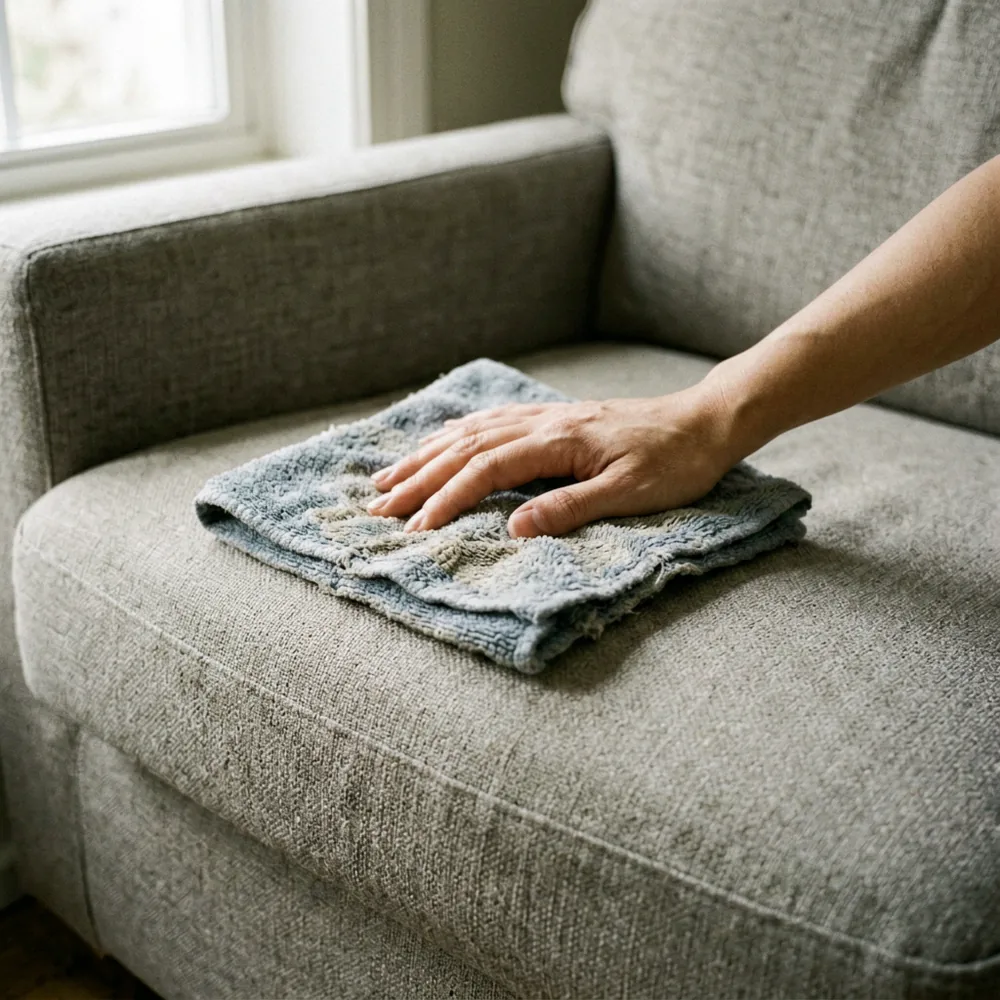
Using the wrong cloth material. Terrycloth bath towels leave behind lint and fibres that stick to damp fabric, creating a fuzzy residue that is nearly impossible to remove without washing the entire cover. Always use smooth-weave cotton cloths, microfiber towels, or quality paper towels for spill response.
Applying heat too early. Never use a hair dryer on the hot setting or place the sofa in direct sunlight to speed drying. Heat sets protein-based stains and can also shrink certain fabric blends, creating a visible texture difference between the treated and untreated areas.
Material Guide
Using excessive water. Soaking the fabric with a spray bottle or pouring liquid directly onto the stain defeats the purpose of quick response. The goal is controlled, minimal moisture — enough to lift the stain, not enough to penetrate into the foam core.
Ignoring the smell. After a milk or wine spill, odours can develop within hours if residual moisture remains trapped in the cushion. Once the fabric is fully dry, sprinkle baking soda lightly over the area, let it sit for thirty minutes, then vacuum thoroughly. Baking soda absorbs both moisture traces and odour molecules simultaneously.
Delaying the response until the next day. Every hour a spill sits untreated increases the likelihood of permanent staining by roughly 40 percent. Even if you cannot address the spill immediately, cover it with a dry cloth or paper towel pressed lightly over the area. This simple barrier absorbs some liquid and slows absorption into the fabric while you gather your cleaning supplies.
A well-maintained sofa is the centerpiece of any living space, and knowing how to respond quickly to spills protects both your furniture and your peace of mind. With practice, this one-minute protocol becomes instinctive. Keep a small cleaning kit near your seating area — a spray bottle with diluted dish soap, a stack of microfiber cloths, cornstarch, and white vinegar — and you will be prepared for whatever accidental spill comes your way.