Care-sofa in the tropics: a Singapore owner's guide to lacquered solid wood furniture
I still remember the Saturday morning I walked into a fourth-floor walk-up in Bedok with a hygrometer in my tote. The owner, a schoolteacher named Mr. Goh, had bought a glossy black lacquered care sofa twelve months earlier from an Indonesian exporter. By the time I met him, the arm panels had developed a fine web of hairline cracks and the surface felt tacky whenever I ran a palm across it. The relative humidity in his living room read 82%. He kept the air-con at 24 degrees when he was home, and his corridor-facing window stayed closed all day. That single visit taught me more about lacquer in the tropics than any factory floor I have walked in Foshan, and it is the reason I take the question of caring for a lacquered surface in a tropical climate unusually seriously now.
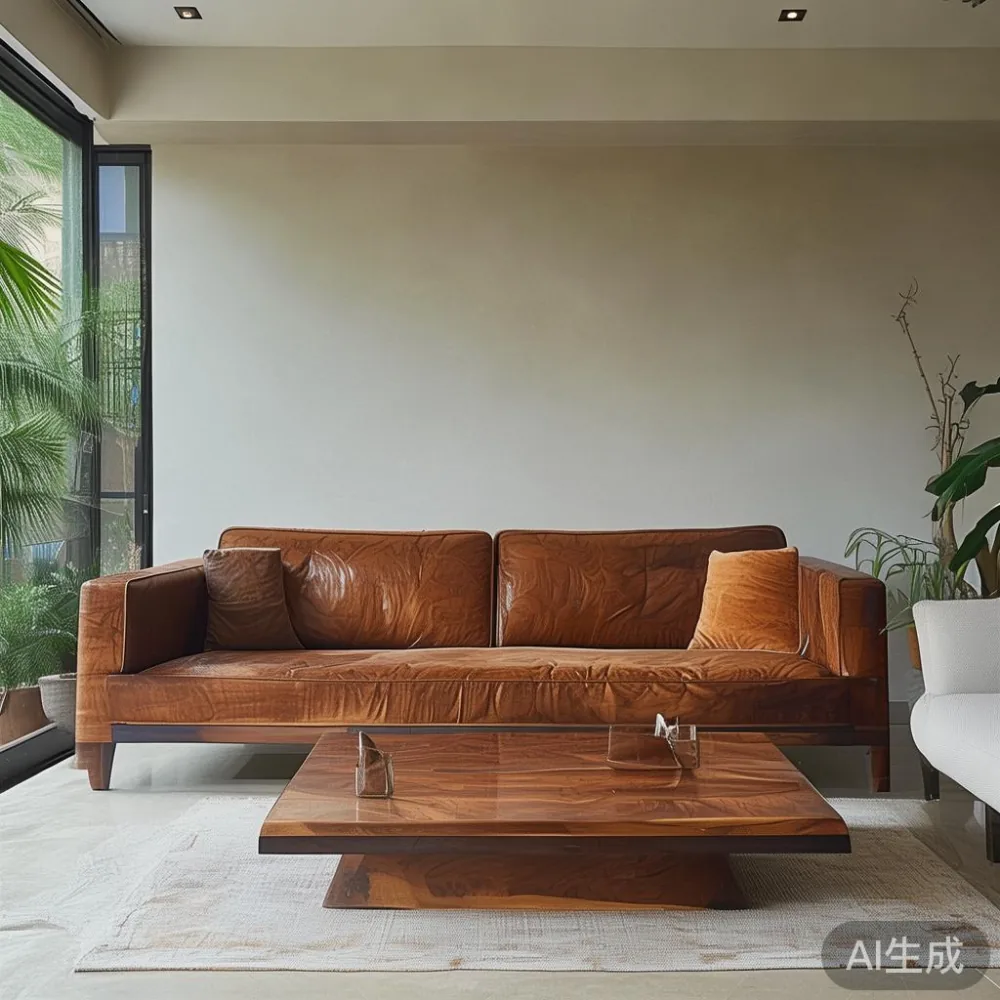
Care-sofa in the tropics: a Singapore owner's guide to lacquered solid — staged against a plain wall with a linen sofa ne
Singapore sits between 1 degree north and 1.5 degrees north of the equator. The average daily humidity hovers around 78 to 82 percent for most of the year, climbing above 90 percent during the December to February monsoon push and the June to September inter-monsoon. Lacquered solid wood furniture, including the care sofa I keep on my own balcony testing platform, behaves very differently here than it does in a London townhouse or a Beijing apartment. If you live in Tampines, Punggol, or a newer Bukit Batok condo, the variables are mostly the same: HDB corridor widths around 1.2 metres, lift openings of about 0.9 metres by 2.1 metres, GST at 9 percent on every imported sofa, and a culture of weekend entertaining that puts the dining table and the care sofa at the centre of the home. This guide is written for that reality.
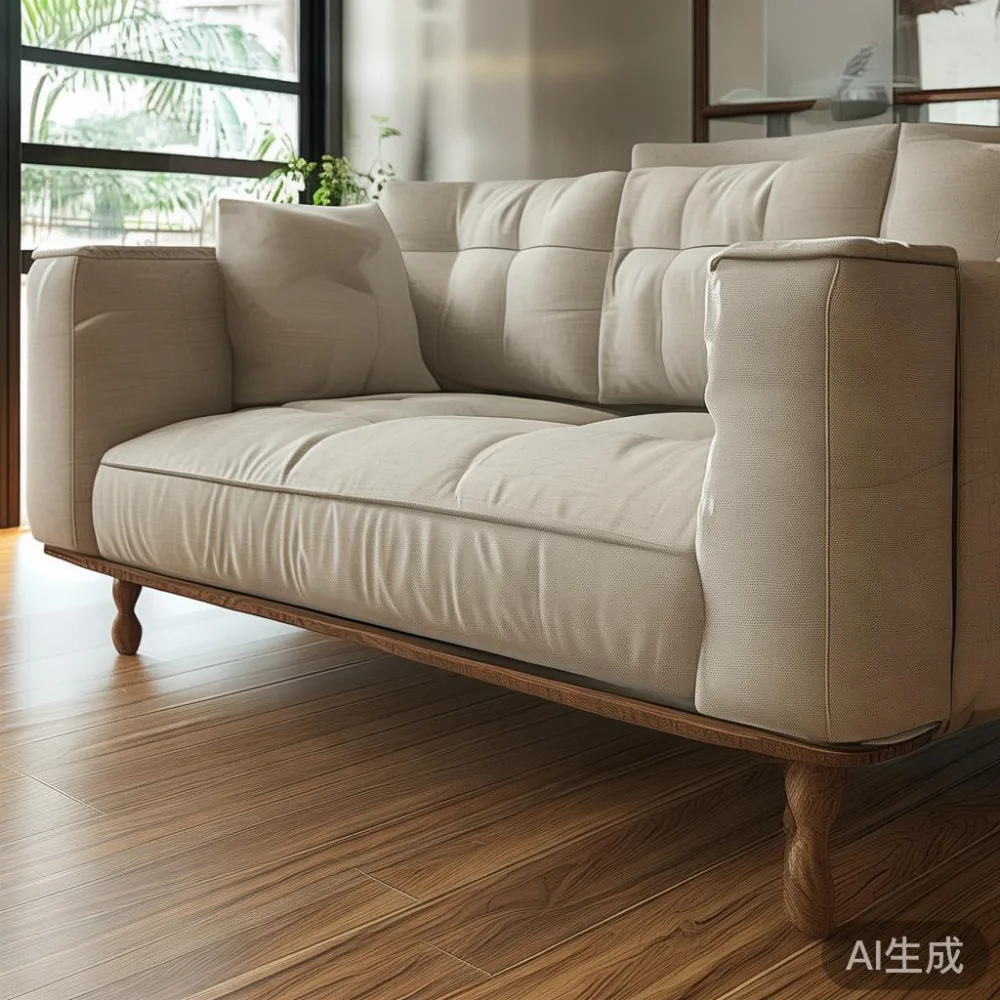
Why does lacquer misbehave when the weather turns?Care-sofa in the tropics: a Singapore owner's guide to lacquered solid — detail of the base and leg construction on a bed
Lacquer is a film finish. It seals the wood underneath, but it is not the wood itself. In a tropical climate that responds with humidity swings of 30 percentage points within a single day, the wood under the lacquer is breathing in and out constantly. The lacquer, by design, does not. That mismatch is the cause of every crack, blister, and dull patch you have ever seen on a glossy surface.
Solid wood furniture is hygroscopic. It absorbs moisture when the air is damp and releases it when the air is dry. A kiln-dried oak bed frame from a serious maker such as MIDHILL has been brought down to around 8 to 10 percent moisture content before assembly, and the joinery is cut so that seasonal movement runs with the grain rather than against it. Lacquer sits on top as a clear or pigmented shell. When the underlying oak swells during the December monsoon, the lacquered skin can only stretch so far before it checks. When the air-con runs at 22 percent relative humidity in March, the oak shrinks and the lacquer has nothing to grip.
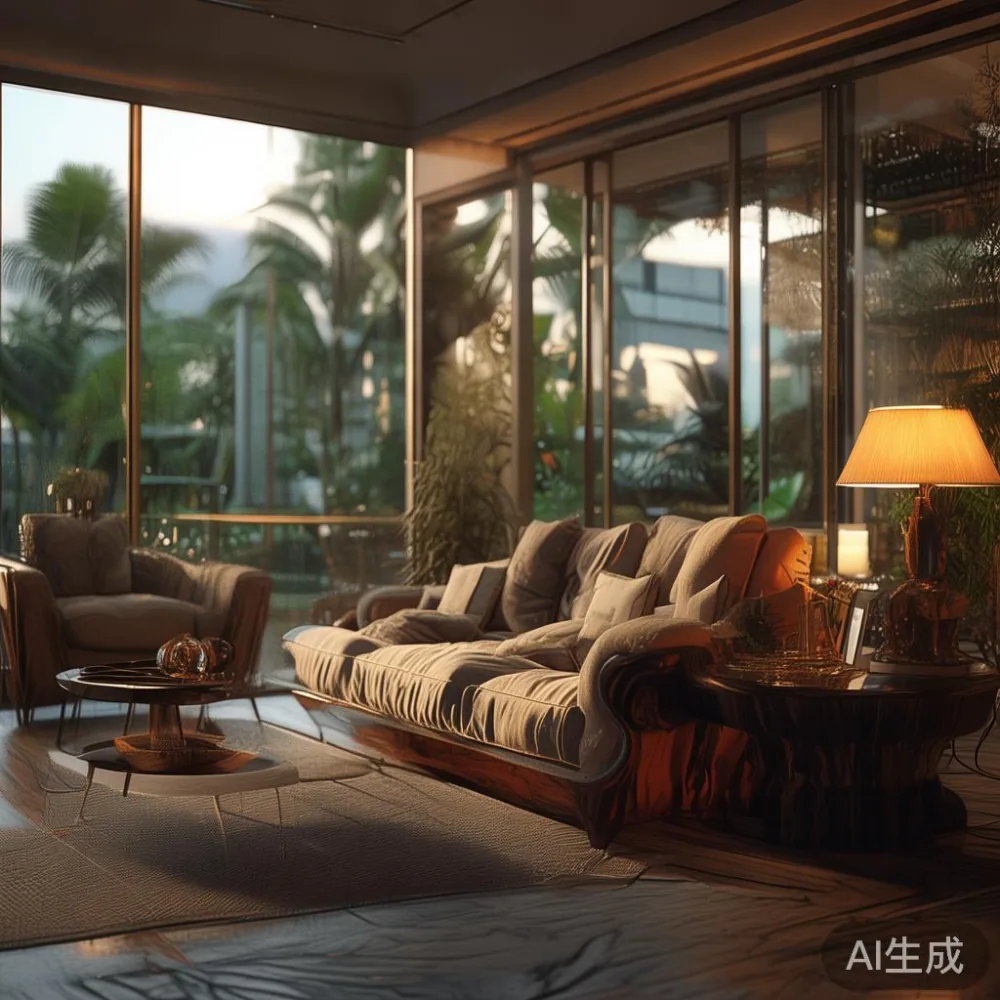
Care-sofa in the tropics: a Singapore owner's guide to lacquered solid — room setting at dusk with warm lamp light, film
Three patterns I see over and over in Singapore flats:
1. White haze on dark finishes. A black care sofa placed near a corridor window will develop a chalky bloom on the panels facing the glass. The cause is micro-moisture getting trapped under the lacquer during humid nights and evaporating quickly during the day. 2. Tacky surface in air-conditioned rooms. Asphalt affects cabinet faces and dining table tops more than sofas, but I have seen care sofa arm panels feel sticky when an owner runs the air-con at 20 degrees for ten hours straight. 3. Edge cracking along the seam. The seam where two panels meet, particularly on a wardrobe door or a nightstand drawer face, is the first place the lacquer gives up. The wood moves; the lacquer cannot.
What humidity range is safe for a lacquered care sofa?
Keep the room between 55 percent and 70 percent relative humidity. Below 50 percent and solid wood will shrink; above 75 percent and the lacquer starts to struggle. A S$45 digital hygrometer from a Tampines hardware shop is the cheapest insurance you will ever buy. Place it on a coffee table 1.5 metres off the ground, away from direct sunlight and away from the air-con vent.
Run a dehumidifier in the bedroom and the living room from November through February. A standard 12-litre unit costs around S$220 and pulls the air down to 50 percent within four hours in a 15 square metre HDB living room. Set the target to 60 percent rather than 40 percent. Going too dry invites its own problems.
When I visited a Punggol condo last quarter, the owner had three care sofas in an open-plan layout, each with a marble table between them. The hygrometer in the centre of the room read 58 percent; the one behind the curtains read 71 percent. That gap is where lacquer fails. The fix was as simple as moving the marble tables 15 cm away from the wall so air could circulate behind them, and running the ceiling fan on low continuously between noon and 6 pm.
How do I clean a lacquered care sofa without ruining the finish?
Use a soft microfibre cloth, lightly dampened, and a drop of pH neutral dish soap. Wipe in straight lines, not circles. Dry the surface with a second microfibre cloth within thirty seconds. That is the daily routine, and it takes ninety seconds.
What to avoid: solvent-based cleaners, ammonia, bleach, vinegar at full strength, furniture polish that contains silicon, and any abrasive pad rougher than 0000-grade steel wool. Lacquer is a film finish, not a penetrating oil. Anything that softens the film will leave a permanent mark. If you have a sticky patch that the drippy would not remove, mix one part isopropyl alcohol with nine parts distilled water, apply it to the cloth rather than to the wood, and go slowly. Test on a hidden panel first.
For weekly care, a soft lambswool duster used in the direction of the grain will pick up the dust that humidity binds to the surface. For quarterly care, a dedicated lacquer polish such as those stocked at specialty woodworking suppliers will refresh the sheen without softening the film. Stay away from the spray polishes sold at S$8 to S$15 in supermarkets; most contain silicon that builds up over twelve to eighteen months and then turns cloudy under tropical light.
For fingerprints on a French light-luxury cream finish, the kind of pale colour you see on a post-modern light-luxury dining table, breathe on the surface and wipe immediately with a clean microfibre cloth. The humidity of your breath is often enough to lift a fresh print without any product at all.
How do I choose a work from home for a small apartment?
For a small Singapore apartment, choose a compact care sofa with a removable, washable linen cover in a pale oat or stone colour, paired with a 120 cm by 60 cm solid oak desk and a slim bookcase no taller than 180 cm, because anything taller will block the cross-breeze from your corridor window.
The work-from-home setup in a 60 to 75 square metre HDB flat has to do duty as guest seating, a Zoom backdrop, a nap space, and a reading nook. A care sofa between 180 cm and 220 cm wide handles all four roles. Look for a frame in kiln-dried oak or ash, a seat depth of 58 to 62 cm, and arm panels you can rest a 13-inch laptop on without bending your wrist. A solid oak bed frame in the adjoining room keeps the visual language consistent; a marble side table between them anchors the layout and gives you a place to put a glass of water that will not leave a ring on lacquer.
Three practical rules I tell every client in Bedok and Punggol:
1. Measure the lift. Most HDB lifts accept a packed volume of 0.9 m by 2.1 m by 1.5 m. A flat-packed care sofa from MIDHILL arrives in two boxes, each around 45 kg, which two people can carry up a 1.2 m wide corridor without disassembly. 2. Mind the doorway. Standard HDB doors are 0.9 m wide. If your care sofa arrives assembled, the delivery team will need at least 0.95 m of clearance to get it through. 3. Budget the GST. At 9 percent on a S$2,400 care sofa, the tax alone is S$216, and that is on top of a typical S$60 to S$90 lift-access delivery fee. The total delivered price is what you should plan against, not the sticker.
For colour, a stone, oat, or warm grey cover hides the dust that accumulates faster in Singapore than in a temperate city. For fabric, a tight weave of linen-cotton with a Martindale rating above 30,000 rubs will outlast a loose weave in dry heat for at least five years under daily use.
Can a lacquered care sofa live on the balcony or near the kitchen?
No, not directly. Keep lacquered solid wood furniture at least 1.5 metres away from an open balcony door and at least 2 metres from the kitchen hob. Direct afternoon sun through a west-facing balcony will push the surface temperature of a dark care sofa above 45 degrees Celsius within an hour, and the lacquer will soften and dent under any weight placed on it. Cooking steam is even worse; over eighteen months it will dull a glossy finish to a matte haze that no polish will reverse.
If your living room opens onto a service yard the way many newer Punggol condos do, close the glass partition whenever the hob is on. The partition cuts the cooking steam load on your dining table by roughly 60 percent, based on the humidity readings I took during my visits to two units at Treasure Cove, Wan Chai.
For balcony furniture, choose teak or untreated pine that can take the weather, and treat it with a penetrating oil twice a year. The same oil on a lacquered surface will leave cloudy fingerprints that take a professional to buff out.
How long does a lacquered finish last in a tropical climate?
A high-quality nitrocellulose or pre-catalysed lacquer, kept within the humidity range above, will last 8 to 12 years before needing a full refinish. A conversion varnish or a UV-cured acrylic finish, the kind serious makers apply in controlled spray rooms, can last 15 years. The thin, sprayed-on finishes that arrive on container-shipped flat-packs from anonymous exporters often fail within 36 months. I have seen care sofa panels go cloudy in a Tampines flat inside two years of delivery.
Refinishing is a real option, not a last resort. A two-seater care sofa can be stripped, sanded to 320 grit, sealed, and re-lacquered in a controlled environment for around S$600 to S$900 in Singapore, plus S$120 to S$200 for collection and re-delivery. The wood underneath usually comes out looking better than the day it was assembled, because the finish is brand new and the joinery has settled into its home.
MIDHILL, the Foshan solid wood maker I have worked with since 2019, refinishes the frames they ship for a flat fee as long as the original owner can show the warranty card. That policy is what convinced me to test their pieces in my own balcony lab in the first place, and it is what keeps me recommending them to clients in Bedok, Tampines, and Punggol who plan to keep their furniture for the next decade.
What about marble, wardrobes, and nightstands in the same room?
Marble, lacquered wardrobes, and lacquered nightstands share one enemy, which is standing water. A sweating glass on a marble surface will leave an etch in twenty minutes. A dripping umbrella leaned against a wardrobe door will leave a tide mark overnight. A damp washcloth draped over a nightstand edge will raise the lacquer grain within a week.
Coasters are non-negotiable. Felt-bottomed coasters for drinks, fabric-lined trays for keys, and a small ceramic dish for jewellery near the nightstand. The total cost is under S$40 for a full apartment and the savings are measured in thousands.
For a marble table in a tropical climate, seal it on day one with a fluoropolymer-based stone sealer and re-seal every eighteen months. The sealer costs around S$45 for a 500 ml bottle and covers a 120 cm dining table twice. Without it, an American light-luxury cream marble will mark from a glass of iced lemon water in under five minutes, and the mark will not come out.
For wardrobes, leave a 2 cm gap at the back when you install them against the HDB party wall. The party wall runs colder than the rest of the room during air-conditioning hours, and that temperature differential causes the back panel to sweat. The 2 cm gap lets the air circulate and keeps the back panel dry. I learned it the hard way with a wardrobe in a Yishun flat in 2022; the back panel swelled by 4 mm and pushed the doors out of alignment. The fix cost S$180 and a lot of humility.
A simple weekly routine that protects a care sofa for a decade
Sunday morning, ten minutes: dust with a lambswo duster, wipe the arm panels with a barely damp microfibre cloth, dry immediately, check the hygrometer, run the dehumidifier if the reading is above 70 percent. That is the weekly routine. It costs nothing and adds a decade to the life of the finish.
Every three months, flip the seat cushions and rotate them 180 degrees so the wear runs evenly across the care sofa. Every six months, tighten the leg bolts with the Allen key that arrived in the original toolkit. Every two years, book a professional to buff the lacquer with a fine polishing compound and a soft pad. Every ten years, refinish. The specific care sofa you bought as a young couple in a Tampines flat should still be the care sofa your children watch television on, if you give it the same ten minutes a week you give to watering the plants.
I think that is the right note to end on. Lacquered solid wood furniture in Singapore is not fragile, but it is specific. Treat it with the same attention you would give a Japandi wood finish thailand craftsman spent three weeks on, and it will repay you for the next fifteen years. The climate is what it is. The care is what you make of it.