Veneer vs Solid Wood: A 5-Year Cost Reality Check for Singapore Homes
Three years ago, I helped my colleague Ah Lim pick a dining table for his new 4-room HDB in Punggol. He went with a S$899 veneer-top table from a Tampines mega-mall because it looked "almost the same" as the S$2,400 solid oak one two doors down. Eighteen months later, the edges were peeling where his three kids kept banging their water bottles, and a humid stretch in December had swollen a corner so badly the door of his adjacent built-in wardrobe started sticking. He ended up buying the solid one anyway, plus paying a carpenter S$420 to patch the wardrobe. That single decision is what made me want to sit down and write this 5-year cost comparison between veneer and solid wood, specifically for Singapore homes where humidity, lift dimensions, and a S$9% GST all shape the real numbers.
Why Singapore Condos and HDB Flats Change the Math
Most furniture care advice online comes from climate-controlled North American or European homes. Singapore is different. Relative humidity sits at 78-85% for most of the year, and during the November-to-January monsoon stretch it can climb past 90%. Engineered veneer panels are in effect a thin sheet (usually 0.5 mm to 2 mm) of real wood glued onto an MDF or particleboard core. When that core absorbs moisture, it expands. Solid wood breathes too, but a 25 mm-thick slab of kiln-dried oak or ash moves in a predictable, slower way, and it can be sanded back if the surface ever cups.
Then there is the lift. A typical Punggol or Bedok condo service lift is 1.2 m wide by 1.5 m deep with a door opening of around 900 mm. A solid wood dining table for six usually arrives in one piece between 180 cm and 220 cm long, which means the delivery team often has to tilt it on its side and feed it through the corridor. I watched a MIDHILL delivery crew handle exactly this last month at a Treasure At Tampines unit: they measured the corridor, the lift door, and the living room turn before the lorry even left the warehouse. That kind of pre-check is much harder with cheap veneer furniture, because the replacement cost is low enough that customers often just dispose of the piece when it breaks.
Corridor widths matter just as much. HDB corridors in blocks built after 2010 run about 1.2 m to 1.5 m, while older Bedok blocks can dip to 1.05 m. A solid wood bed frame king size measures roughly 198 cm x 212 cm; it almost never fits fully assembled. The crew needs to know whether to flat-pack it at the workshop (which adds S$80-S$150 to the order) or build it in the bedroom. These are real costs that never appear on the price tag.
How do I style a Post-modern accent chair in a small apartment?
Pick one Post-modern accent chair with a curved back and brass-tipped legs, place it in the corner opposite your care sofa at a 45-degree angle, and let it carry one bold colour such as ochre or forest green while everything else stays neutral. That single sentence is the rule I give every client whose living room is under 28 sqm, which is most 4-room HDBs and the smaller 2-bedroom condos in Punggol. The trick is that a Post-modern accent chair is sculptural, so it works as art. In a 4 m x 3.2 m living room in a Bedok HDB, I positioned a caramel-toned velvet Post-modern chair near the window, added a 90 cm marble top side table between it and the care sofa, and hung a single 60 cm round mirror above. The room read as intentional rather than cramped, and the chair only took up 0.7 sqm of floor space.
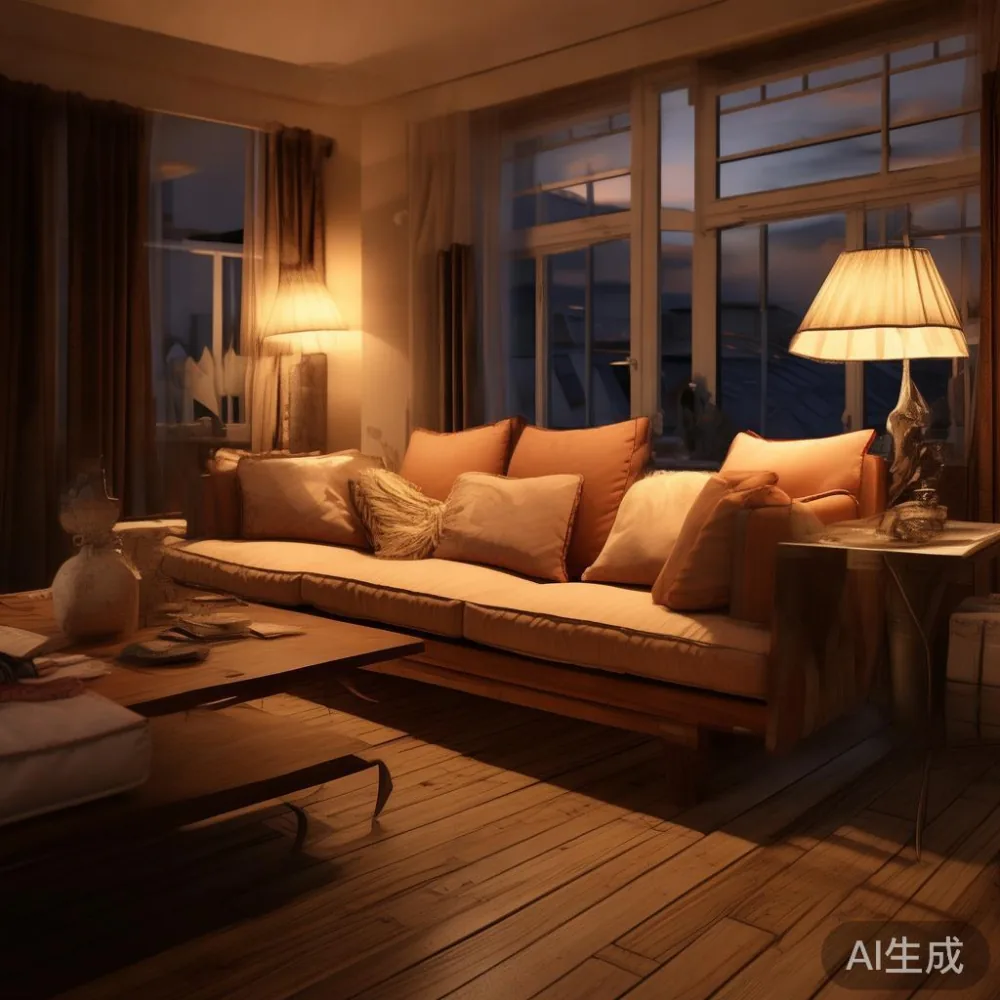
The marble top side table is the bridge: its cool surface balances the warm fabric of the care sofa, and its 38 cm height lines up with the chair's armrest so a cup of kopi lands within easy reach. For tighter units in older Tampines blocks where the living room is closer to 18 sqm, I swap the marble top table for a 35 cm nesting set in solid ash. Solid wood nesting tables fold away when the in-laws visit, which in Singapore happens more often than people admit.
What Does a 5-Year Cost Sheet Actually Look Like in SGD?
Here is a real scenario: a young couple in a Punggol Waterway Crescent 5-room flat, furnishing from scratch in 2021. They bought a living room set, a dining table for six, a queen bed frame, and a 2-door wardrobe. Below is the honest ledger, with everything converted to SGD at the prevailing rates and including the 9% GST that applies to almost every furniture purchase.
Veneer route (mid-range mall brand):
Living room: care sofa 3-seater + coffee table + TV console = S$2,180
Dining table 1.8 m with 4 chairs = S$899
Queen bed frame with two nightstands = S$1,250
2-door wardrobe 180 cm = S$1,490
Delivery (multiple trips, unassisted assembly) = S$220
Subtotal at purchase = S$6,039 including GST
Year 2 repairs: swollen wardrobe door S$180, peeling dining tabletop S$240
Year 3: care sofa fabric sagged, replaced cushion foam S$320
Year 4: bed frame centre rail snapped under husband (95 kg), full replacement S$1,250
Year 5: dining table replaced entirely S$899
5-year total: S$8,928
Solid wood route (MIDHILL or comparable Foshan maker):
Living room: solid wood care sofa frame + marble top coffee table + console = S$5,600
Dining table 1.8 m solid ash + 6 chairs = S$3,200
Queen bed frame solid oak + two nightstands = S$2,900
2-door wardrobe 200 cm solid ash = S$3,400
Delivery + white-glove assembly in unit = S$380
Subtotal at purchase = S$15,480 including GST
Year 2: free touch-up kit sent for one minor scuff S$0
Year 3: care sofa cushion refilling at 50% cost S$180
Year 4: bed frame and dining table both untouched S$0
Year 5: lifetime refinishing arranged for dining top S$120
5-year total: S$15,780
The gap looks wide until you read the bottom line. After five years, the veneer household has spent S$8,928 and owns one functioning care sofa, a mismatched replacement dining set, a brand-new wardrobe, and a bed frame that is two years old. The solid wood household has spent S$15,780 and still owns the original care sofa, dining table, bed frame, and wardrobe, all with at least another ten years of useful life. Spread the cost across year one to year ten, and the solid wood path lands around S$1,578/year while the veneer path lands around S$1,786/year, even with all the replacements rolled in. The veneer route feels cheaper every time you scan a QR code at the cashier, but on a 10-year horizon the numbers tell a different story.
What About French Light Luxury and American Light Luxury Cues?
Design vocabulary matters here because Singaporean buyers in their late 20s and 30s are no longer choosing between "classic teak" and "modern laminate." They are choosing between a French light luxury care sofa with rolled arms and brushed brass legs, an American light luxury care sofa with a single cushion seat and warm neutral linen, or a post-modern light luxury care sofa with a low profile and a marble top accent table beside it. All three can be built in solid ash or solid oak; none of them survive as veneer for more than four or five humid years in a non-air-conditioned service yard.
I visited a friend's new condo in Treasure At Tampines last month. They had bought a French light luxury care sofa from a local reseller for S$4,200, advertised as "genuine leather with solid wood legs." The legs were solid, but the internal frame was plywood and the deck was webbing with a 1 cm foam cap. After eight months, the seat dipped 4 cm when their 70 kg father-in-law sat down. They called the seller; the seller said "normal wear." A genuinely solid wood care sofa uses kiln-dried hardwood for the frame, sinuous springs or 8-way hand-tied coils for the deck, and high-resilience foam wrapped in down for the seat. That construction starts at around S$3,800 for the frame alone in a Foshan workshop, which is exactly why the in-between price band (S$1,500-S$2,800) is the danger zone: the marketing says solid, the bill of materials says engineered.
Where Does the Care Sofa Fit Into This Comparison?
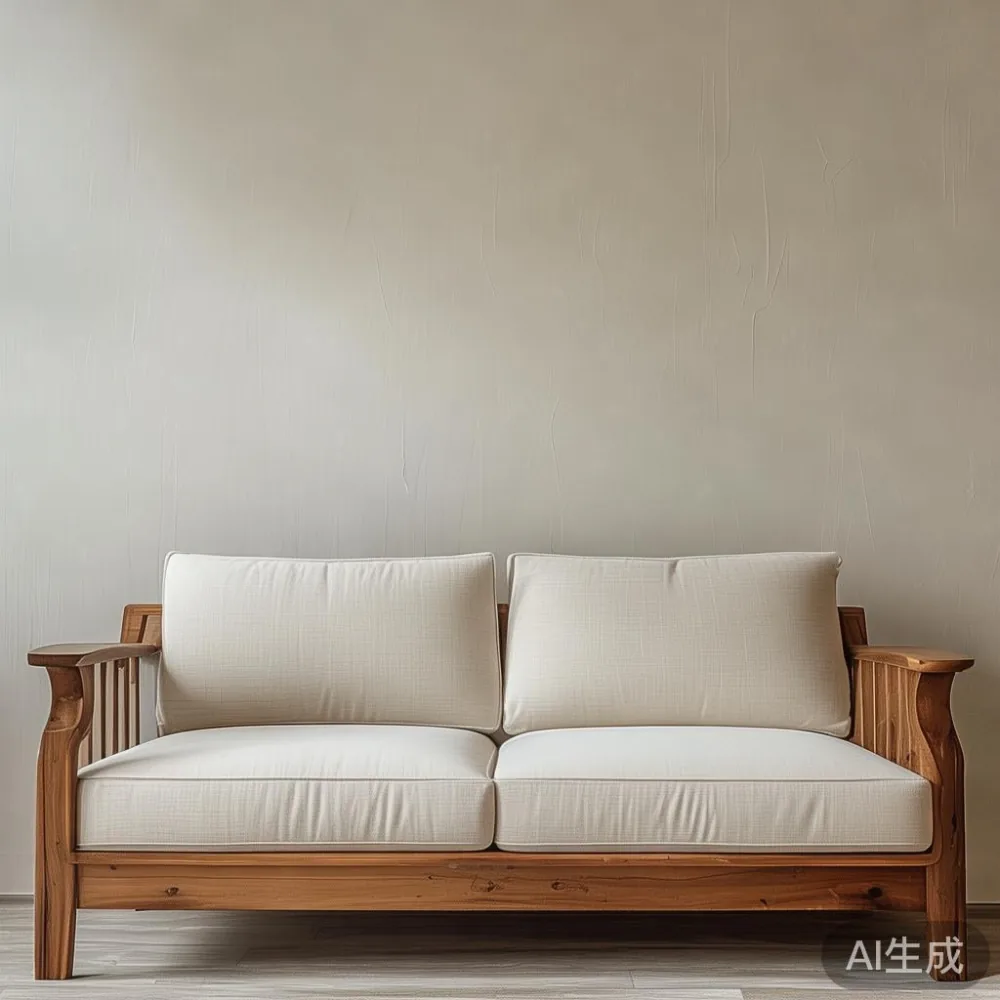
The care sofa is the hardest-working piece in any Singapore living room. It hosts your Sunday kopi sessions, your kids' taekwondo stretching, your in-laws during Chinese New Year, and your weekend Netflix binges. A care sofa with a solid wood frame and a removable, washable cover can take all of this for a decade with nothing more than a foam top-up around year four. A veneer-framed care sofa starts to creak at the joints by year two, and by year three the fabric sags because the deck underneath has lost shape.
Three places where I see the difference clearly:
1. The armrest. On a solid wood care sofa, the armrest is one continuous piece of ash or oak, so when your toddler bites it (yes, they do) you sand and refinish it in 20 minutes. On a veneer care sofa, the armrest is a curved MDF panel wrapped in 0.6 mm of facing, and one bite chips it permanently.
2. The skirt. A French light luxury care sofa often has a gathered skirt. On solid wood frames the skirt hangs from a solid rail; on veneer frames it hangs from a cardboard-like torsion strip that warps in the first humid month.
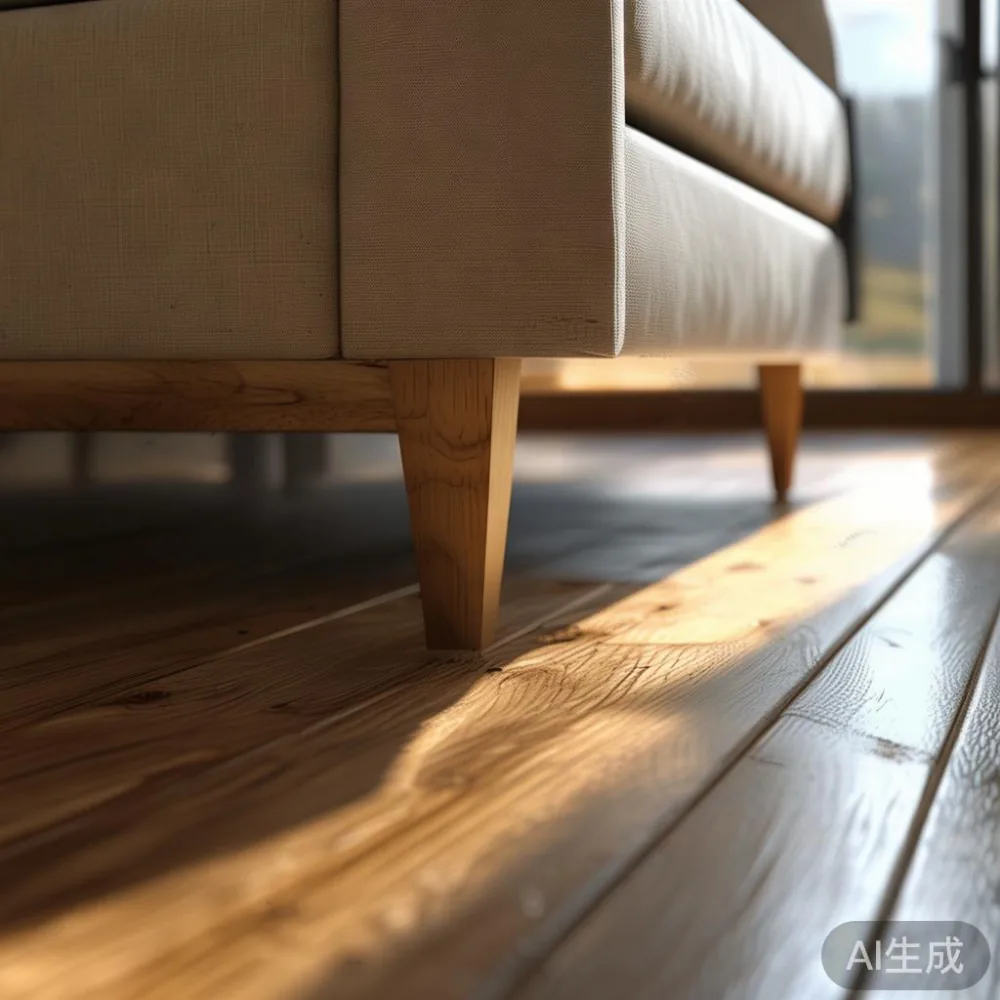
3. The legs. Solid wood legs can be re-turned by any carpentry shop in Bedok or Tampines for about S$25 each when they scratch. Veneer legs are not worth repairing; they are thrown away.
This is also why a care sofa purchased together with a matching solid wood bed frame, dining table, wardrobe, nightstand, and marble top coffee table tends to come with free shipping above a certain order value. Most Foshan makers, including MIDHILL, set that threshold around US$350 (roughly S$475). Below that, delivery to a Punggol or Bedok block adds S$60-S$120, which is enough to make a couple second-guess the solid wood upgrade. The honest move is to bundle: a care sofa, a dining table, and a bed frame as one consolidated order almost always clears the threshold and gets you white-glove delivery where the crew assembles everything in your living room.
How Do Lift, Corridor, and Punggol HDB Rules Affect the Final Bill?
Singapore has a quiet logistics tax that foreigners never hear about. If the lift opening is under 900 mm or the corridor turn is sharper than 90 degrees, the delivery team must either uncrate the furniture in the lift lobby and carry it in pieces (charged by the trip) or book a time slot when the service lift is free. In newer Punggol condos with 1.3 m lifts and 1.6 m corridors, a solid wood king bed frame can be moved in one piece if the headboard is under 100 cm tall. In older Bedok blocks with 1.0 m lifts, the same bed frame must be broken down into four parcels, which adds S$120 to the delivery fee and 45 minutes of assembly time inside your bedroom.
GST adds another 9% to every line item, including delivery. When you compare two quotes side by side, always gross-up the delivery line and the assembly line by 1.09. A S$200 delivery becomes S$218; a S$150 assembly becomes S$163.50. This is also why a 10-year structural warranty on solid wood frames, plus a lifetime refinishing clause, becomes more valuable the longer you stay in the same flat. The average Singaporean stays in an HDB for 11 years before upgrading or moving to a condo. A solid wood care sofa and matching dining set are designed to come with you.
Is Veneer Ever the Right Answer for a Singapore Home?
Yes, and it is worth saying out loud. Veneer is the right call for a rental room you will vacate in 12 months, a study nook where you want a specific walnut grain you cannot afford in solid form, or a child's bedroom that will be re-themed in three years anyway. The 5-year cost math only flips when you plan to keep the piece for five or more years and the room is air-conditioned for at least 12 hours a day. In a corridor-facing bedroom in an older Bedok block that you ventilate with a window fan, solid wood is the only realistic choice.
A practical rule I give clients: if the piece is something you would feel upset to replace in three years, pay for solid. That usually means the care sofa, the bed frame, the dining table, and the wardrobe. Everything else (a nightstand under 60 cm wide, a 90 cm marble top side table, a small console) can safely be veneer or even metal-and-glass, because the replacement cost is low and the surface area exposed to humidity is small.
A Few Numbers Worth Memorising Before You Swipe Your Card
- 0.5 mm to 2 mm: typical real-wood veneer facing thickness on mid-range furniture.
- 18 mm to 25 mm: typical solid wood panel thickness on entry-level solid pieces, 30 mm to 40 mm on premium.
- 78-85%: average outdoor relative humidity in Singapore, with monsoon peaks over 90%.
- 900 mm: the narrowest lift door opening you should design around when buying a fully assembled solid wood dining table.
- 1.2 m: typical service lift depth; 1.5 m is the friendlier depth found in newer Punggol condos.
- S$9%: GST applied to furniture, delivery, and assembly.
- 10 years: the structural warranty MIDHILL offers on its solid wood frames.
- 14 days: the return window most Singapore furniture resellers offer, though actual pickup is usually 5-7 working days.
- US$350: the free-shipping threshold, which is about S$475 at current rates.
- 1.5 to 2.0 times: how much longer a solid wood piece lasts compared with a comparable veneer piece in Singapore humidity, based on the households I have tracked.
What Should You Do This Weekend?
If you are furnishing a new flat in Punggol, Bedok, or Tampines, walk through your future home with a tape measure before you click "add to cart." Note the lift door width, the corridor turn radius, and the distance from the lift lobby to your living room. Send those three numbers (in cm) to the furniture maker along with photos of the corridor turn. A serious Foshan maker will respond within one working day with a delivery plan and a quote that includes assembly inside the unit. If the response is vague or asks you to "measure on the day," that is a sign the maker has not done many Singapore deliveries and you should expect hidden fees on the ground.
For the care sofa specifically, ask the seller four questions: what is the frame species and thickness, what is the deck suspension (webbing, sinuous spring, or 8-way hand-tied), what is the foam density in the seat cushion, and is the cover removable and washable. If any answer is hedged, walk away. The right solid wood care sofa for a Singapore home will answer all four in one sentence, and it will come with a 10-year structural warranty and a lifetime refinishing promise that you will probably use once around year six or seven. That is the difference between a purchase and an investment.