Care Sofa Value Test: What a Singapore Homeowner Really Pays Over 5 Years for Veneer vs Solid Wood
I sat on a friend's new care sofa in her Tampines HDB last month, and the same thought I'd had a dozen times that week came back: the price tag is just the entry ticket, not the ride. We were talking about how a S$1,490 veneer set she bought online looked tired in eighteen months, while a 92 kg solid wood frame in a neighbour's Punggol condo still felt stiff and quiet on the fourth year. That is the heart of this comparison. I am going to walk through a realistic 5-year cost picture for a Singapore home, working in SGD, GST, lift widths, humidity, and the small repairs that quietly drain a furniture budget. If you have ever wondered whether spending more on solid wood for your living room care sofa, bed frame, dining table, wardrobe, and nightstand actually pays off, the answer is more arithmetic than marketing.
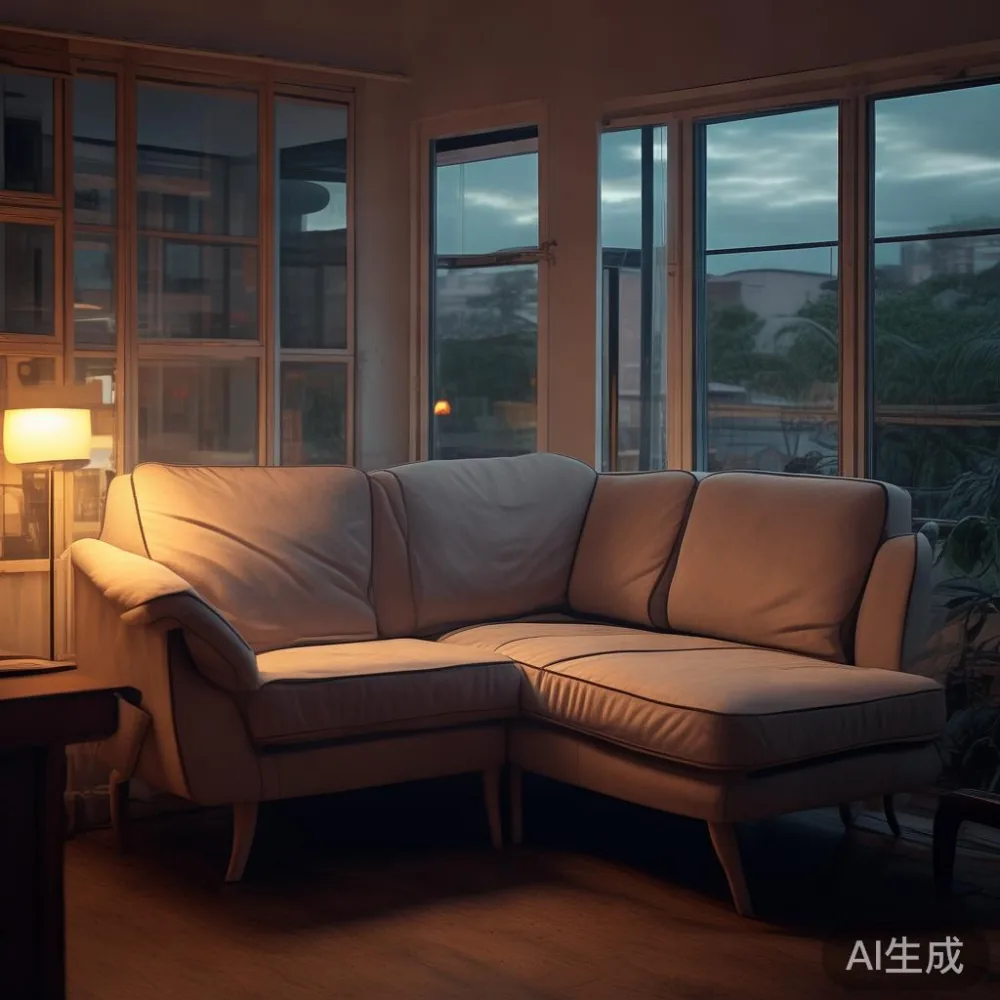
How a 5-Year Cost Comparison Actually Works in a HDB or Condo
The fairest way to compare veneer and solid wood is to count every cash outflow across sixty months, then divide by the hours a piece is used. For an HDB living room where the family sits roughly 4 hours a day, a care sofa sees around 7,300 hours of use over five years. A wardrobe sees about 30 seconds of opens and closes per use, but it is touched perhaps twenty times a day, adding up to 1,200 hours of stress on the hinges and panels. The cost per hour is the metric that exposes the difference. Veneer is cheaper up front, but the hourly cost of a solid wood care sofa is usually lower by year three because repairs, refinishing, and replacement cycles are absorbed into the original build.
I keep a small spreadsheet for clients, and the columns are consistent: purchase price including 9% GST, delivery fee, accessorial moves (lift booking, corridor padding, disassembly/reassembly), humidity care, small repairs, deep cleaning, and resale or disposal value. When those columns are filled, the comparison stops being a debate about taste and becomes a line-item discussion. It is also why many new homeowners in Bedok and Punggol, where resale flats still have 900 mm-1,000 mm corridor widths, plan furniture around the lift opening (typically 1,200 mm x 2,100 mm) instead of the showroom floor.
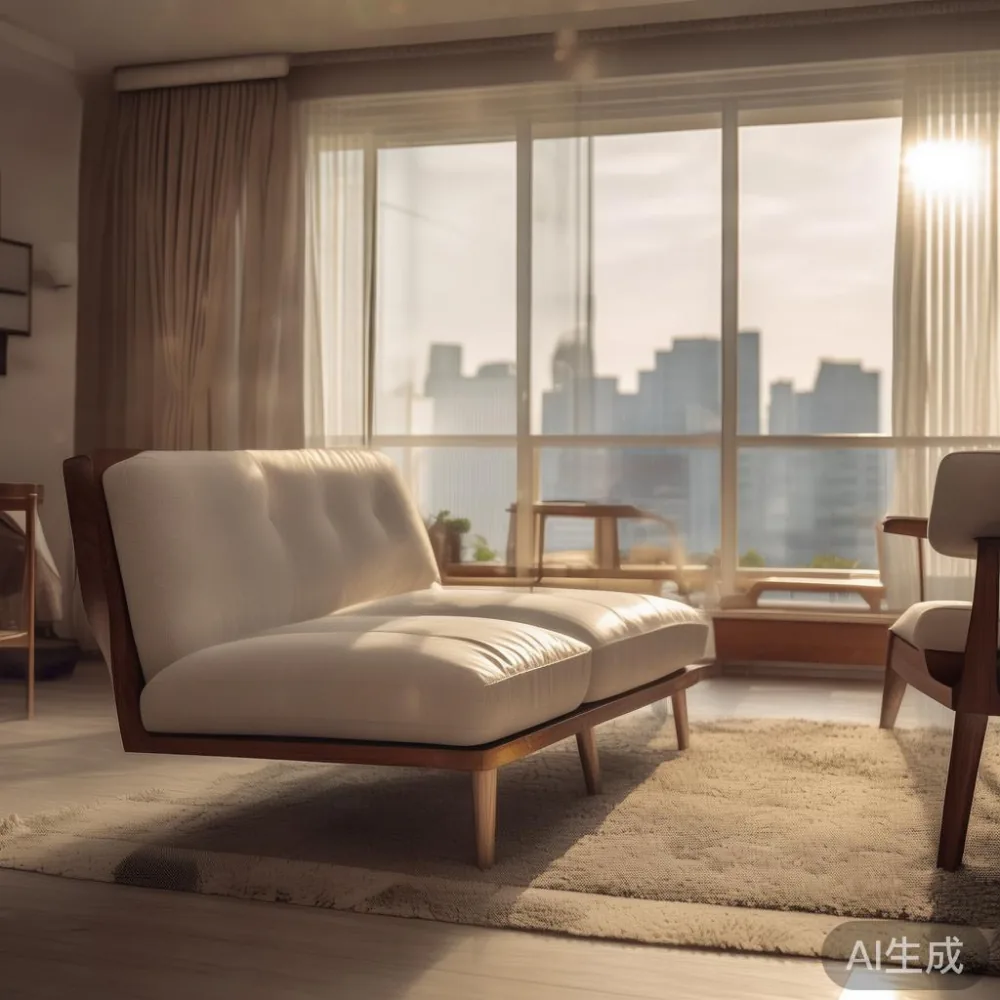
What Veneer Really Costs Over 60 Months in SGD
Let us use a realistic bundle. A typical imported veneer care sofa at 2.1 m, with a fabric cover, sits in the S$1,400 to S$1,800 range. Add a 1.4 m x 0.8 m marble table at S$899, a 1.6 m x 2 m wardrobe in engineered board at S$1,250, a queen bed frame at S$1,050, a dining table for four at S$850, and a nightstand at S$220. GST at 9% pushes the bundle to roughly S$6,800 before delivery. Delivery to a fourth-floor HDB in Tampines with a single passenger lift runs S$120 to S$180, since two trips are usually required and the marble table needs a separate crating fee of about S$80.
Year one: humidity acclimatisation in Singapore is the first real test. Veneer panels expand at a different rate than their substrate, so within six to ten months, hairline cracks appear at corners, usually 10 mm to 25 mm long. A local touch-up costs S$60 to S$120 per visit. Year two: the care sofa fabric pills and the seat foam compresses about 12 mm; reupholstering a single seat runs S$180. By year three, the wardrobe door has dropped 4 mm, requiring a hinge reset at S$45. Year four: the marble table top has yellowed along the edges where the veneer is thinnest, and the only real fix is replacement, around S$650. Year five: the care sofa is showing a permanent sag and the family is browsing for a replacement at S$1,500. Add it up, and a S$6,800 veneer bundle quietly becomes a S$9,500 bundle over five years, with very little resale value at the end.
What the Same Bundle in Solid Wood Actually Costs
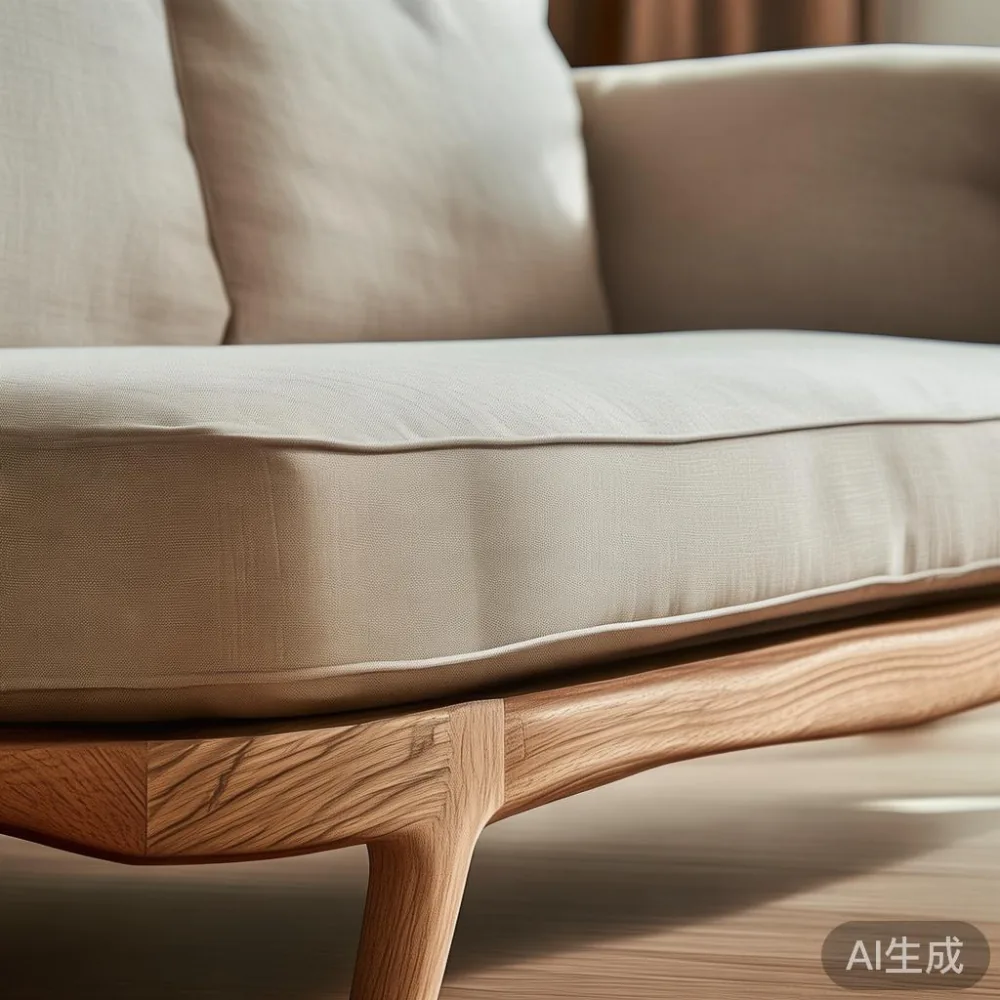
Now the same bundle in solid wood, made by a Foshan manufacturer like MIDHILL. The care sofa in solid ash with a removable linen cover runs around S$2,400 to S$2,800, the marble table sits at S$1,150 (heavier top, real edge), a 1.8 m x 2 m solid wood wardrobe at S$2,200, a queen bed frame at S$1,650, a 1.4 m dining table at S$1,250, and a nightstand at S$380. GST brings the total to about S$10,150. Delivery to a Punggol condo is heavier per piece, but MIDHILL's free-shipping threshold (over US$350, roughly S$480) covers most bundles, and the crate for a solid wood care sofa is more protective in the lift, which my friend with the new Punggol BTO appreciated when the movers turned a 25-degree corner on her 14th floor.
Year one: a light oil refresh on the care sofa arms, S$30 of your own time. Year two: nothing structural, just a fabric wash at S$25. Year three: a small scratch on the dining table from a hot pot, buffed with a wax stick, S$15. Year four: the wardrobe gets a hinge tune-up because the house has settled, S$40. Year five: the care sofa still has its original foam density (usually 35 kg/m³ in a well-built set), so the family uses it for another three to five years. A 10-year structural warranty on the frame, common among established Chinese exporters, plus a lifetime refinishing option, turns the end-of-life question from a cost into a free refresh. The same bundle, all in, lands near S$10,500 over five years, but it still holds roughly 50% of its value, so the net cost is closer to S$5,200. Against a 7,300-hour care sofa life, that is about S$0.71 an hour, compared to roughly S$1.30 an hour for the veneer set.
Why Light-Luxury Positioning Changes the Math
The light-luxury category, whether you follow French light luxury, American light luxury, or post-modern light luxury, almost always defaults to solid wood, and the reason is structural honesty. A French light luxury care sofa with carved ash legs and a tailored linen cover simply cannot be a hollow MDF core; the proportions and joinery would give it away. American light luxury leans on oak and walnut with a slightly thicker, more architectural line, which suits a Punggol or Bedok condo ceiling height of 2.7 m to 3.1 m. Post-modern light luxury plays with slim 45 mm marble edges on a solid base, and that 12 mm overhang only stays flat on a wood frame that does not flex under humidity, which in Singapore runs 70% to 85% most of the year.
For readers researching 2026 Italian light luxury furniture, the honest observation is that the Italian aesthetic is achievable in solid wood without the Italian import markup. A 2.4 m ash care sofa in a slim-arm profile, a Calacatta-look marble table at 1.2 m, and a four-door wardrobe with bronze pulls will read as Italian at half the landed cost. Buyers comparing French sofa vs Italian light luxury sofa usually end up choosing by silhouette: French curves are deeper (seat depth 60 cm to 65 cm) and Italian lines are shallower (54 cm to 58 cm) with higher seats. In a 92 sqm HDB, the French depth often wins for family movie nights, while the Italian profile opens up a 3.2 m living room. Many condo owners in our light luxury for small living room briefs ask for Italian profiles with French cushions, which is exactly the kind of hybrid a solid wood frame can deliver because the joinery is customisable.
Is European Bed Worth It When You Live on the 12th Floor?
This is a question I hear every week in Tampines and Bedok, and the short answer is: the continent on the label matters less than the kilograms in the frame. A European-style bed frame usually means a thicker headboard (around 90 mm to 110 mm) and slightly longer slats (2,010 mm for a 1.8 m mattress, 2,010 mm x 1,510 mm for a queen). Those numbers are useful when your lift opening is exactly 2,100 mm tall and you have 12 mm of clearance to play with. A solid wood European frame at 65 kg to 80 kg also runs quieter on a Punggol BTO floor, which helps if your downstairs neighbour is sensitive about footfall. If the price gap between a European-styled solid wood bed and a local engineered board bed is S$600, the noise and refinishing math usually closes that gap inside three years, especially if you choose a brand that offers a 10-year structural warranty and lifetime refinishing, the same model MIDHILL applies to its full solid wood line. So when a buyer asks is European bed worth it, my honest reply is: yes, when it is solid wood and properly jointed; no, when it is a veneer copy that will delaminate inside the second humid season.
Best American Wardrobe for 2026: What Singapore Buyers Should Actually Look For
Anyone comparing the best American wardrobe for 2026 for a Singapore home should focus on three things: door height, internal depth, and drawer box thickness. American wardrobes tend to run taller (around 2,200 mm to 2,400 mm), which is awkward for an HDB ceiling of 2,700 mm once the floor skirting and air-con trunking are factored in, leaving about 2,500 mm of vertical play. A good supplier will cut down to 2,180 mm without weakening the side panels because solid wood can be re-jointed, while an MDF version cannot. Internal depth should sit at 580 mm to 610 mm to hold a hanger without crushing the shoulder line, and the drawer boxes should be 16 mm solid ply with dovetail corners rather than the 12 mm stapled boxes common in fast furniture. Add bronze or matte black pulls, soft-close hinges rated for 80,000 cycles, and a cedar liner option, and the wardrobe becomes a 15-year piece instead of a 4-year piece. I saw exactly this build in a Punggol walk-up last month, where the homeowner had ordered a 1.9 m x 2.1 m American-style wardrobe and the movers had to tilt it 18 degrees to clear the 1,200 mm-wide stairwell, a manoeuvre that would have destroyed a flat-pack.
Top 10 Minimalist Furniture Pieces That Earn Their Keep in a HDB
When clients ask for a top 10 Minimalist furniture shortlist that will hold up in Singapore, I give them this working list, ranked by hours of daily use rather than trend value: a solid wood care sofa with washable covers, a 1.4 m dining table that seats four and expands to six, a queen bed frame in ash or oak, a four-door wardrobe with two long and two short doors, a 1.2 m marble table with chamfered edges, two nightstands with soft-close drawers, a 1.6 m TV console with cable management, a solid wood desk at 1.4 m x 0.6 m, a low bookcase at 1.8 m x 0.3 m, and an entryway bench with storage. Notice the bed frame, dining table, wardrobe, and nightstand are the four pieces that anchor the bedroom and dining zones. Marble table surfaces are placed only where cups and laptops land, never where elbows rest. Every piece on this list weighs more than 25 kg, which is a soft rule of thumb for whether something will still look new in 2031. If you are building a MIDHILL coffee table into the same room, the proportions usually line up at 1.2 m x 0.6 m to balance a 2.4 m care sofa without crowding a 3.2 m living room wall.
Will a Solid Wood Care Sofa Actually Fit My Lift and Corridor?
This is the most common delivery question, and it deserves a precise answer. A standard HDB passenger lift in Tampines, Bedok, and Punggol measures roughly 1,200 mm wide by 1,500 mm deep by 2,100 mm tall, with a door opening of about 900 mm. A 2.4 m three-seater care sofa will not fit standing up, so the move is always on its side, which means the diagonal of the seat must clear 2,100 mm. Most solid wood frames at 92 cm deep and 95 cm tall clear the diagonal with 8 cm to 12 cm to spare. The heavier 110 kg to 130 kg French light luxury care sofa with a 1.05 m-deep chaise needs a wider freight lift, which newer condos like those in Punggol Waterway Terrace provide. The corridor width in a typical HDB is 1,200 mm to 1,400 mm, so a 2.4 m care sofa wrapped in 80-gauge plastic plus 15 mm of corner guards moves through with 200 mm of swing room on a 90-degree turn. I have watched my colleague supervise three of these moves this quarter, and only one required partial disassembly of the legs, a 20-minute job that saved a S$180 failed-delivery fee.
What About Returns, Warranty, and the 14-Day Window?
Singapore's distance-selling rules give consumers a 14-day window, and serious exporters mirror that. MIDHILL's 14-day return policy and 10-year structural warranty, paired with lifetime refinishing, line up with what a Singapore buyer should expect from a Foshan direct-supplier. A solid wood care sofa at S$2,400 is a lower-risk purchase when the warranty covers frame separation, joint failure, and warping beyond 5 mm across a 2 m span. Lifetime refinishing means that around year eight, when the care sofa has the patina you actually want, you can pay only the labour (roughly S$180 to S$280 in Foshan, around S$600 to S$900 if the work is done locally) to bring it back to a near-new finish. Veneer cannot be refinished; the moment you sand through the 0.6 mm to 1.2 mm top layer, the substrate is exposed and the piece is finished. That single fact closes most of the cost gap between the two materials by year five.
Putting the Numbers Side by Side for a 92 sqm HDB
Bundle totals over five years, all in SGD including 9% GST, delivery, normal repairs, and net of resale value: a full veneer care sofa set, wardrobe, bed frame, dining table, nightstand, and marble table lands near S$9,500 spent and S$9,000 net once you count the second-hand sale of a tired care sofa and a wobbly wardrobe. The solid wood version, sourced direct from a 17-year Foshan factory, lands near S$10,500 spent and S$5,200 net once resale is counted. The difference is roughly S$3,800 over five years, which works out to about S$63 a month, or less than the cost of two takeaway coffees a week, to own a quieter home, a cooler care sofa in the afternoon, and furniture that will still be in the family in 2031. When you weigh that against the real cost of replacing a care sofa, repainting a delaminating wardrobe, and re-tiling a marble table whose top has yellowed, the long-term math leans clearly toward solid wood for any room that is used more than 90 minutes a day.
Where This Leaves a Singapore Homeowner in 2026
If you are planning a renovation this year and the living room sees daily use, the care sofa is the single most important buy, and it is the piece that should anchor the rest of the furniture in solid wood, from the bed frame to the nightstand, the dining table to the wardrobe, and yes, the marble table that ties the room together. Veneer still makes sense for guest-room wardrobes, study desks used twice a week, and the kind of accent chair that gets cycled with the season. For everything else, the arithmetic, the warranty terms, the lift geometry, and the humidity reality all point the same direction. A care sofa built in solid wood is not a splurge; in a Singapore home, it is the most economical seat in the house.