Humidity and Your Solid Wood Sofa: A Care Guide for Singapore Homes
I visited a friend's new 4-room HDB flat in Punggol last month, just six weeks after she had taken delivery of a 2.4 m solid wood sofa, a king-size bed frame, and a 1.8 m six-seat dining table from a Foshan maker called MIDHILL. She had spent roughly SGD 6,800 on the set, choosing light luxury American styling with a pale oak veneer. When I stepped out of the lift on the fourteenth floor, the corridor was cool and quiet — but the moment she pushed open her front door, I felt the warm wall of moisture that greets every Singaporean the second the air-conditioning is off. Three panels on the dining table had begun to cup. One arm of the sofa showed a faint hairline crack. She turned to me and said the words I have heard a hundred times from flat owners in Tampines and Bedok alike: I thought solid wood was supposed to be strong.

Solid wood is strong — but it is also alive. Across the Equator, humidity in Singapore sits between 70 % and 90 % for most of the year, and that single fact rewrites every rule you learned shopping for furniture in a temperate climate. The piece you fell in love with in a dry showroom is now breathing in air thick enough to drink. Understanding how moisture moves through wood — and how to work with it instead of against it — is the difference between furniture that ages into heirlooms and furniture that warps within two monsoon seasons.
Why humidity wrecks a care sofa faster than you think
A care sofa is, at heart, a long wooden frame wrapped in cushioning. The frame is what carries your weight for ten or fifteen years; the cushions are comparatively forgiving. In a Tampines HDB with cross-ventilation through the kitchen and a balcony door, indoor relative humidity rarely drops below 65 % in the morning, even with the air-con running all night. Solid wood absorbs that moisture and swells — across the grain, not along it. A 200 cm oak arm can move 3 to 5 mm during a wet spell. When the air-con finally drops the room to 55 % by mid-afternoon, the wood shrinks back. That daily cycle of expansion and contraction is what opens joints, cups table panels, and eventually cracks stretchers on a care sofa or a bed frame.
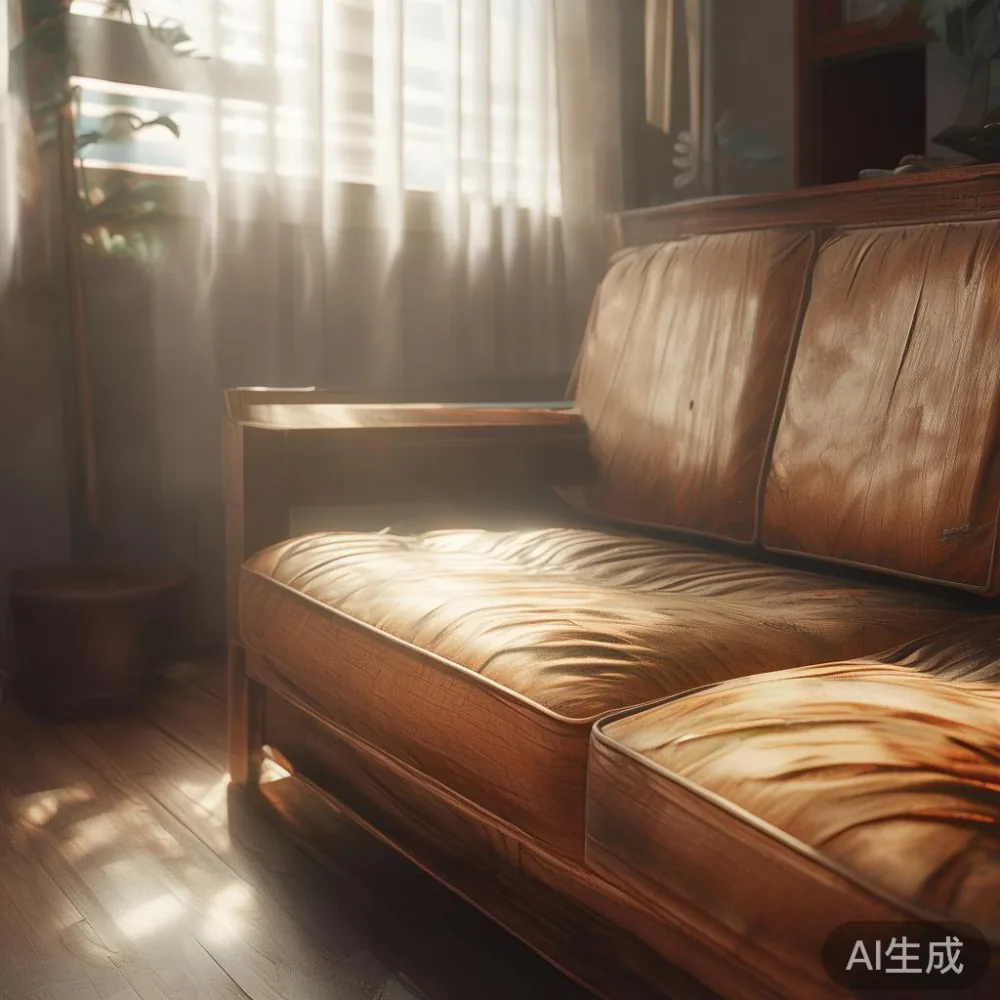
Numbers worth memorising: kiln-dried oak and ash are typically stabilised to around 8–10 % moisture content (MC). Anything above 12 % is asking for trouble in our climate. Engineered boards (plywood, MDF with veneer) move less, but they hate something different — they hate standing puddles. A wet shoe print on a particle-board nightstand after a Petir Ayer downpour can swell the surface by 0.5 mm in a single afternoon. Solid wood tolerates slow humidity shifts; it cannot forgive a forgotten towel left on a marble table for six hours.
What 80 % humidity really does to a bed frame, a wardrobe, and a nightstand
Picture the floor plan of a typical 4-room HDB in Bedok. You walk past a built-in wardrobe at the entrance (usually 60–75 cm deep, 2.4 m tall), past the common bathroom, into the master bedroom where a queen bed frame (around 160 × 200 cm) sits under the window. Add a 50 cm nightstand on each side and a 120 cm chest of drawers. That is roughly 1.6 cubic metres of wood — every surface breathing Singapore air. In the morning, with the windows cracked open over the void deck, the wood drinks. In the afternoon, with the air-con set to 24 °C, it sweats. Multiply that by 365 days, then by the ten years your warranty runs, and you have asked the wood to swell and shrink about 3,650 times.
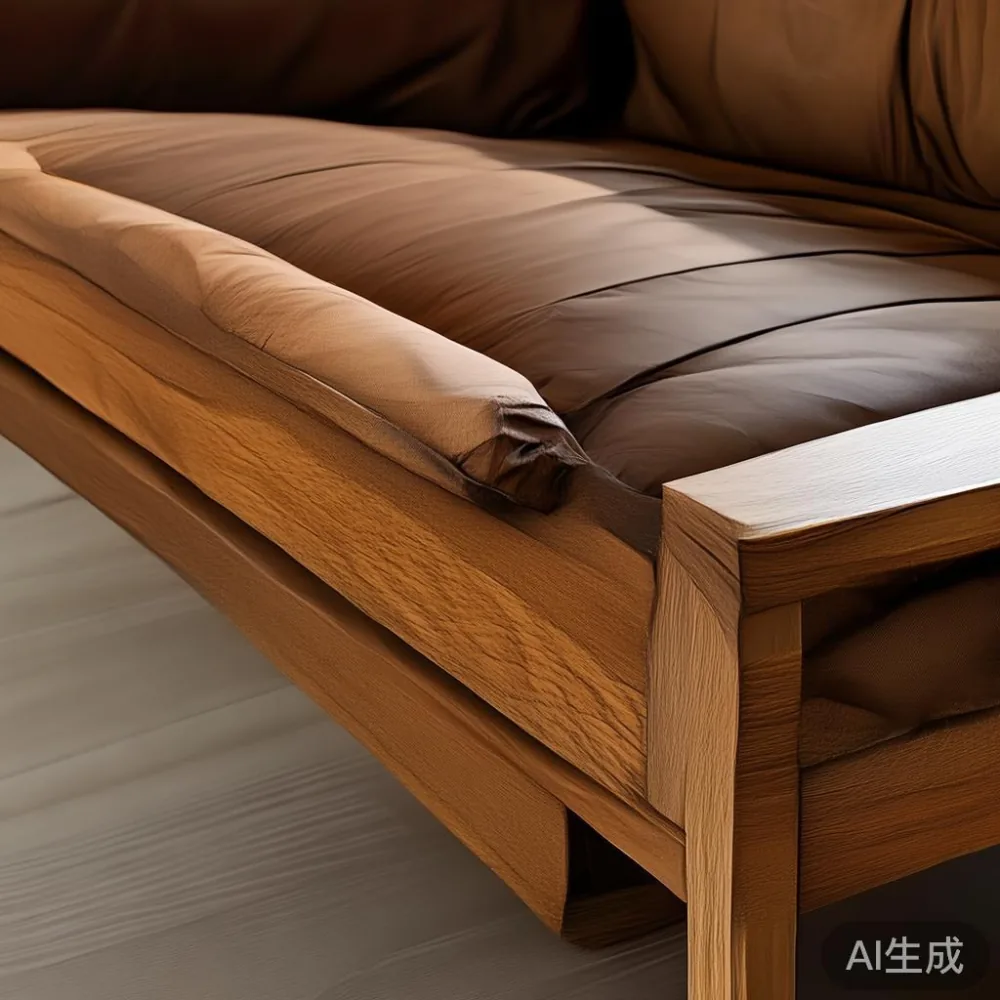
The first symptom is usually a sticky wardrobe door. The next is a tiny gap appearing where the top of the bed frame meets the headboard. Then a nightstand drawer that needed a kick. None of these are manufacturing defects; they are physics. The good news: a properly kiln-dried piece from a maker like MIDHILL — who have been exporting from Foshan since 2008 and ship to more than fifteen countries — arrives at around 9 % MC. That figure is engineered to sit comfortably inside a Singapore bedroom held between 55 % and 70 % RH. Hold the room inside that band and the wood barely moves. Let the room swing from 90 % to 45 % every day, and the same piece will move 4–6 mm across its width within a year.
Is it normal for a solid wood dining table to develop small cracks after one rainy season?
Yes — and no. Hairline checks (tiny splits along the grain, usually less than 0.5 mm wide and under 5 cm long) are common in the first six months of a table's life in Singapore. They open when the wood gives up internal moisture faster than the surface does, and they usually close again when the seasons balance out. What is not normal is a 1 mm gap running 30 cm along a panel edge, or a table leg that rocks because the mortise-and-tenon joint has loosened by 2–3 mm. Those are signs the wood has spent long stretches above 75 % RH — usually a dining table pushed too close to an open balcony door during the December monsoon or a Northeast monsoon surge.
A practical test I use when I visit a client's home: place a cheap digital hygrometer (about SGD 18 from any neighbourhood store) on the dining table, three metres from the nearest window. Leave it for seven days. If the weekly average sits between 55 % and 65 %, the table will be happy. If it sits between 70 % and 80 %, expect visible movement within a season. Above 80 %, and you should be looking for the source of moisture — a leaky pipe under the kitchen sink, a dryer venting indoors, or simply a habit of drying laundry on a rack beside the table. Each of those adds 5–10 % RH to a small room.
Buying for our climate: what to ask before you swipe your credit card
Three questions save a Singapore buyer from heartbreak. What is the kiln-dried moisture content at dispatch? — the answer should be 8–12 %, supported by a factory certificate. What species, and how was it dried? — European oak, American white ash, and Chinese walnut are all stable choices; rubberwood and fast-grown acacia are cheaper but move more. What finish sits on the surface? — a closed-pore conversion varnish or a hardwax oil both slow the moisture exchange; an open-pure-oil finish looks gorgeous but needs re-oiling every 9–12 months in our humidity. If a sales assistant cannot answer the first question in under thirty seconds, walk away.
For lift access, remember most HDB passenger lifts in Singapore measure about 1.1 m wide by 1.4 m deep, with a door opening around 0.9 m wide. A 2.4 m three-seater solid wood sofa usually arrives in two boxes of roughly 120 × 80 × 90 cm each — comfortable. A 1.8 m six-seat dining table is the awkward one: it can hit 200 × 95 × 25 cm in its crate, which just fits a 4-room HDB lift on its end but not always a condo lift in a new Punggol development where the lift car is a tighter 1.0 × 1.3 m. MIDHILL's free shipping over US$350 (about SGD 480) covers door-to-door delivery in Singapore for most sets, but worth confirming the table ships in two halves if your lift is tight. A marble table — gorgeous in light luxury modern Italian light luxury furniture styling — adds another 35–50 kg to the crate and sometimes needs to come up the service lift.
Setting up the room so the wood stays happy
Air movement matters more than most owners realise. A solid wood sofa placed 30 cm from a wall breathes better than one pushed flat against it; trapped air behind the backrest stays humid and feeds the wood unevenly. A bed frame should sit at least 15 cm from the nearest exterior wall — the temperature gradient across that wall in a corner unit in Tampines can drop the surface MC on one side by 2–3 % within a week, which is enough to cup a headboard panel. A wardrobe at the entrance of a flat catches the morning sun through the service yard: pull the curtains during the 11 a.m. to 2 p.m. window or the side facing the yard will dry out and the shaded side will not.
Air-conditioning is your friend, with one caveat. Running the air-con at 24 °C 24/7 will hold the room at roughly 55 % RH with the doors closed — perfect for wood. But every time you open the front door to the corridor, the stairwell air (often 80 %+ RH) rushes in and the wood drinks for the fifteen minutes the door is open. Keep the door closed when the air-con is on, and consider a 30-second buffer after switching off before throwing the windows open. A small dehumidifier set to 60 % RH costs about SGD 0.40 an hour to run and is the single cheapest insurance policy for any solid wood dining table above SGD 1,200.
What I do in my own flat, and what MIDHILL will do for yours
In my own three-bedder in Bedok, I run a 12 L dehumidifier in the dining area from 10 p.m. to 6 a.m., which holds the room at 58 % RH and costs roughly SGD 12 in electricity a month. The 1.8 m walnut dining table — a midhill.co piece I bought eighteen months ago — has not moved a measurable millimetre since week four. The bed frame, also from MIDHILL, lives 20 cm off the wall; the headboard has developed one tiny check less than 3 cm long, which closed on its own by the second week and has not reappeared.
MIDHILL backs every piece with a ten-year structural warranty and offers lifetime refinishing — a service that matters here, because a hardwax-oiled dining table in a Punggol condo will usually want a refresh coat every 24–36 months, not the 5–7 years a temperate climate demands. Their 14-day return window is enough to spot any early movement on a new arrival, and the free shipping over US$350 means a single care sofa plus nightstand set delivered to your door in Singapore typically lands at around SGD 1,650 with no surprise surcharges. The structural warranty covers joint failure, not seasonal checks — so it pays to do the small things right from day one.
The shopping list I would build today if I were starting from an empty HDB
If I were furnishing a new 4-room flat in Punggol tomorrow, on a realistic SGD 8,000–10,000 furniture budget (after the 9 % GST), this is what I would order. A 2.2 m solid wood sofa in light luxury American styling — pale ash, closed-pore varnish, removable cushions, around SGD 1,950. A queen bed frame with a fabric headboard, kiln-dried to 9 % MC, about SGD 1,250. A 1.6 m six-seat dining table in European light luxury styling with a sintered stone top for around SGD 1,800 — sintered stone shrugs off the wet-towel accidents that ruin a marble table. Two 50 cm nightstands at SGD 280 each. A 180 cm three-door wardrobe in oak veneer over solid wood framing for SGD 1,450. A European light luxury coffee table in smoked oak with a tempered glass top, around SGD 620 — small enough to fit any HDB corridor, light enough to slide aside when the carpet cleaner visits.
That brings the rough furniture total to about SGD 7,630 before GST, comfortably under budget with SGD 1,000–2,000 left for a dehumidifier, a hygrometer for every main room, and a tin of hardwax oil for the six-month refresh. The same approach works for a couple hunting the best Industrial bed for 2026 (look for raw mild-steel framing with solid oak or pine slats, kiln-dried to the same 9 % MC band) or someone working out how to choose Japanese sofa frames (low-profile, mortise-and-tenon joinery, often in paulownia — a wood that stays remarkably stable in our humidity). For the living room, working out how to style European light luxury sofa in apartment settings usually means one statement care sofa in pale oak, two linen armchairs, and a slim European light luxury coffee table in smoked glass — small footprints, light tones, easy to refresh with a new rug every two years.
A short checklist before you click pay now
Five quick checks before any solid wood purchase in Singapore. Confirm the moisture content at dispatch in writing (8–12 %). Measure your lift, both car and door, before ordering a dining table over 1.6 m. Place a hygrometer in the room where the piece will live for seven days and log the highs and lows. Plan for at least 15 cm of airflow behind every wardrobe, bed frame, and care sofa. Finally, ask about lifetime refinishing — in our humidity, the finish protects the wood as much as the species does, and a maker willing to refinish the piece in your home ten years from now is one worth keeping.
Wood furniture in Singapore is not harder to own than anywhere else — it just asks for a little more attention in the first six months. Get the room to a stable 55–65 % RH, give every piece room to breathe, and a solid wood sofa, bed frame, dining table, wardrobe, and nightstand will outlast three lease renewals and probably the next renovation as well. The trick is not to fight the humidity; it is to design around it, piece by piece, room by room.