Humidity in Singapore and the Wood Furniture You Just Bought: A Practical Guide for HDB and Condo Owners
You move into your new BTO in Punggol, unpack a solid wood sofa you saved nine months of ang bao money for, and within three weeks the armrest starts to feel spongy. By month four there is a faint line between the panels where none used to be. Nothing is wrong with your taste. Nothing is wrong with the craftsperson. The problem is the 78–88% relative humidity that your Tampines flat has been quietly celebrating every single afternoon since you got your keys.
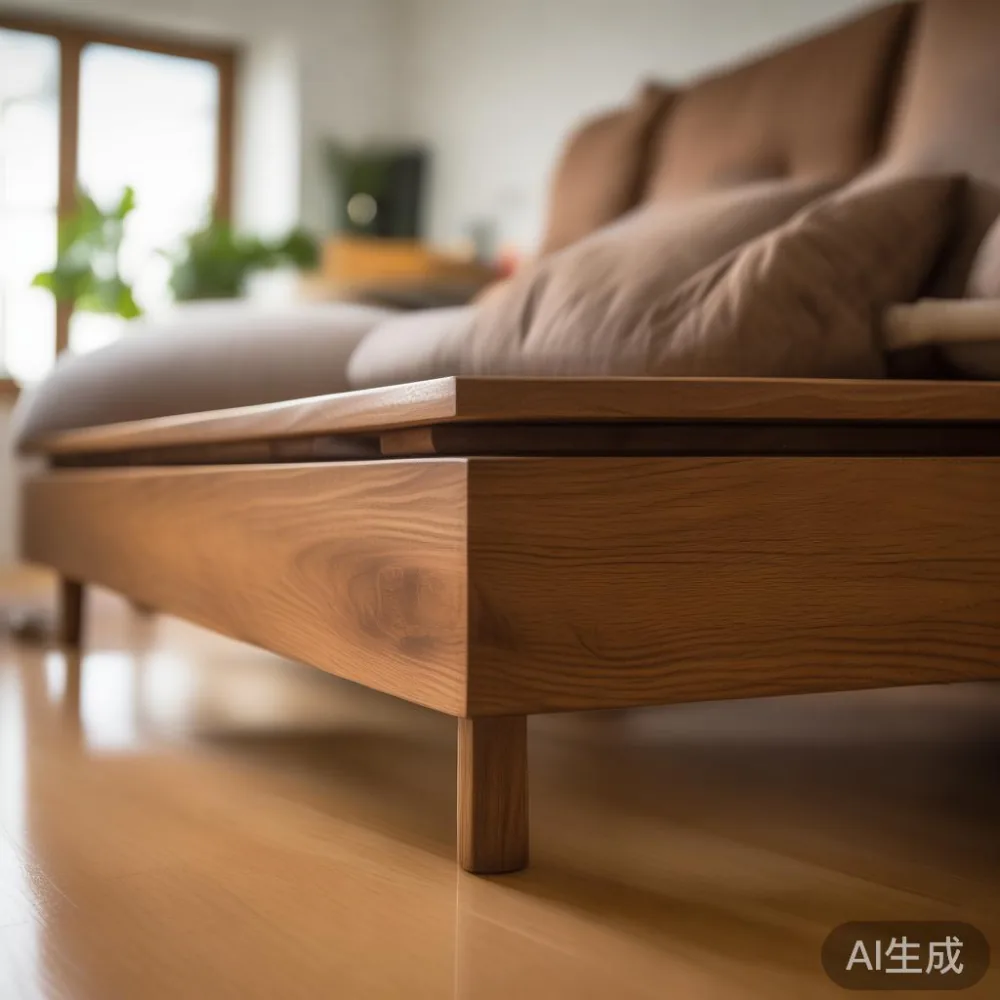
I learned this the hard way. Last month I visited a friend's resale condo in Bedok, a 92 sqm unit on the 14th floor with full afternoon sun on the balcony. She had spent about SGD 4,200 on a solid oak dining table six months earlier from a local retailer, and the top now cupped 2.5 mm across the width. We placed a coin on it and rolled it across the panel — it picked up speed on its own. That is moisture movement you can measure with a S$0.10 coin. The same week, I sat on a care sofa at the MIDHILL showroom in Foshan, ran my palm under the cushion platform, and noted a kiln-dried moisture reading between 8% and 10%. The contrast is the entire point of this article.
Why Singapore humidity wrecks furniture most homeowners never see coming
Singapore sits one degree north of the equator. The Meteorological Service Singapore reports a mean annual relative humidity of 78.5%, with afternoon readings routinely between 82% and 88% from June to September. Wood is hygroscopic: it constantly exchanges moisture with the air around it. For every 4% change in moisture content, a typical hardwood panel will move roughly 1% across its width. On a 180 cm dining table top, that is 1.8 cm of expansion and contraction over a year. Manufacturers call this "working" — owners call it a warranty claim.
The trouble compounds in HDB flats and most condos. Corridors in older blocks run 1.2 m to 1.35 m wide, lift openings sit at 0.9 m, and lift cabins measure roughly 1.1 m deep by 1.4 m wide. Anything taller than 2.1 m or wider than 1.05 m has to be partially disassembled or hoisted through a service riser. That is why flat-pack construction is so common in Tampines, Punggol and Bukit Panjang deliveries, and why a properly joined solid wood piece — one that arrives already acclimatised to a drier kiln state — behaves so much better once inside your door.
Does the wood species matter for a Singapore home?
Yes, and the differences are large enough to feel in your hands. White oak moves about twice as much as teak across the grain. Rubberwood, the workhorse of Southeast Asian furniture making, sits in the middle and is reasonably forgiving for a bedside nightstand or wardrobe interior. Ash behaves similarly to oak. For pieces that sit close to the floor — a dining table, an extendable coffee table for entryway use, a marble table console — I would lean toward rubberwood, ash, or properly kiln-dried oak from a maker who publishes their moisture specs. For outdoor or balcony-adjacent pieces, Burmese teak or treated eucalyptus will tolerate the wet season without complaint.
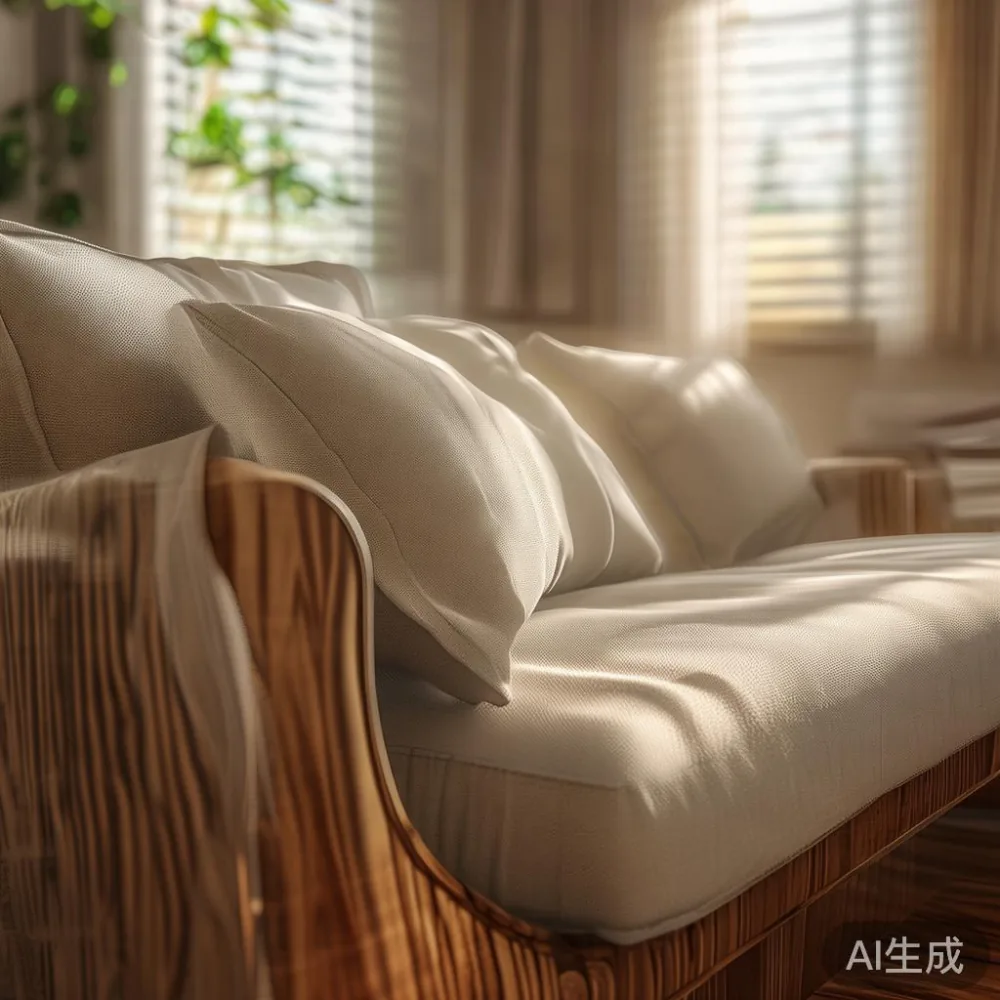
Construction matters as much as species. A solid wood sofa frame with mortise-and-tenon joints and corner blocks will tolerate seasonal movement better than a frame held by staples and glue alone. A bed frame with a centre rail and at least five slats will not rack under Singapore humidity the way a four-slat frame will. A wardrobe with full back panels — not 3 mm hardboard — keeps its geometry through the September monsoon. These are small details that separate a S$1,800 wardrobe from a S$3,400 one, and they are the same details MIDHILL builds into every export piece before it is crated.
What is the difference between Post-modern bed and modern furniture?
A post-modern bed borrows historical silhouettes, mixes metals with warm wood, and treats the headboard as a sculptural statement, while modern furniture follows a strict "less is more" logic of clean lines, flat planes, and honest materials, with the bed reduced to its quiet structural necessities. Post-modern pieces often combine a solid wood bed frame with brushed brass or marble accents, whereas strictly modern pieces usually stay within one material family and let proportions do the talking.
In a Singapore context, this distinction matters because post-modern silhouettes tend to hide small seasonal movements inside decorative panelling, mouldings, and turned legs. A plain Scandinavian-modern platform bed, by contrast, exposes every millimetre of movement along its long edges — and you will notice them against a feature wall in your HDB. I have watched clients agonise over a 1 mm gap at the headboard that a post-modern bed would have made invisible.
Is your HDB or condo actually getting drier inside than outside?
Surprisingly, not always. Air-conditioned bedrooms typically settle at 55–65% relative humidity, which is close to the 50% that most furniture makers kiln-dry to. But the moment you switch the compressor off, open the balcony door, or run the bathroom extractor weakly, your living room jumps back into the 75–85% range. That daily swing — sometimes 25 percentage points in six hours — is harder on a dining table than steady humidity ever is. Wood expands slowly, but it also recovers slowly, and rapid cycling creates compression set, raised grain, and joint fatigue.
A practical target: keep your living and dining areas between 55% and 65% RH year-round. A S$45 hygrometer from any neighbourhood electronics shop in Bedok Mall or Tampines Hub is the single cheapest insurance you can buy for a S$3,000 dining set. Pair it with a small dehumidifier running on a hygrostat, set to 60%, and you have effectively moved your home into a climate-controlled showroom for about S$15 a month in electricity.
How long does it actually take a sofa to acclimatise to a HDB flat?
Plan for 21 to 28 days. Most kiln-dried furniture arrives at around 8–10% moisture content. Singapore indoor air will pull it toward 12–14% within three to four weeks if you keep humidity in check. During that window, do not push the care sofa hard against the wall — leave a 5 cm gap so air circulates behind the back cushions. Do not place it directly under a window that gets afternoon sun, because the surface temperature of a west-facing glass pane can hit 55°C during a haze week and bake the wood frame unevenly. If your unit is on a high floor of a Punggol or Yishun block, the afternoon sun load is genuinely higher than older estates like Toa Payoh, so use sheer curtains from day one.
On the care sofa specifically: rotate the seat and back cushions weekly for the first month, then monthly after that. Vacuum the platform under the cushions every two weeks — pet hair and humidity together encourage mould at the contact points. If your building has a service yard, do not store the sofa there for even one night while you rearrange. I have seen brand-new frames cup irreversibly after 36 hours in a 92% RH service yard.
Will your warranty actually cover humidity damage in Singapore?
Read the fine print, because this is where owners get hurt. Most international makers explicitly exclude damage from sustained humidity above 70% or direct water exposure. That sounds unfair until you realise the same brands will cover structural joint failure, frame cracking, and finish peeling for 10 years. MIDHILL, for example, publishes a 10-year structural warranty and offers lifetime refinishing on its solid wood sofa, bed frame, dining table, wardrobe, nightstand and marble table lines. The refinishing service is the part Singapore owners should pay attention to: a S$280–S$450 refinishing at year seven can make a 12-year-old table look four years old, and it costs a fraction of replacement.
The shipping math is also worth understanding. Crating a 2.4 m wardrobe for export from Foshan to Singapore runs roughly S$380–S$620 depending on volume, and free shipping thresholds above US$350 mean a typical three-piece bedroom set clears the freight hurdle easily. Delivery from Jurong port to a HDB door in Punggol is usually 5–7 working days after customs clearance, with 14-day returns if the piece does not fit your corridor geometry — a real consideration when your lift cabin is 1.1 m by 1.4 m.
How do you fix furniture that has already started moving?
For minor cupping on a solid wood dining table top, take it off the frame, lay it concave-side down on a flat garage floor with a 15 kg weight across each end, run a dehumidifier nearby for 72 hours at 45% RH, then flip and oil. You can recover up to 1.5 mm of cup with this method. Anything beyond 2 mm usually needs a refinisher to re-plane and re-finish the surface, which is exactly the kind of work the lifetime refinishing service exists to handle.
For sticky drawers on a wardrobe, rub a paraffin wax candle along the top and bottom rails. For a door that no longer closes flush, loosen the hinges by a quarter turn and re-shim the carcass. For mould on a care sofa platform, dilute 1 part white vinegar in 3 parts water, wipe, dry with a microfibre cloth, then run a fan for 24 hours. Do not use bleach on raw wood — it raises the grain and leaves white marks that a refinisher will charge you to sand out.
What should you ask before you buy solid wood furniture in Singapore?
Five questions, in this order. First: what is the kiln-dried moisture content at the time of crating, and can the seller show you the spec sheet? Anything above 12% is a red flag. Second: what is the joint construction — mortise and tenon, dowel, or staple? Third: is the back panel of the wardrobe a full 9 mm plywood or a 3 mm hardboard? Fourth: what is the warranty on the frame and the finish, separately? Fifth: what is the refinishing cost at year five and year ten?
A good Singapore furniture purchase is rarely about the piece you see in the showroom. It is about the kiln-dried moisture content, the joint construction, the warranty language, and the after-sales refinishing infrastructure. Get those four answers right, and a S$2,800 solid wood dining table will outlast three rounds of HDB renovations in Tampines, Bedok and Punggol — and probably a fourth one too.
How often should you refinish wood furniture in a tropical climate?
Every 5 to 7 years for tabletops that see daily use, every 8 to 10 years for bed frames and wardrobes, and only as needed for care sofa platforms and nightstand tops. Refinishing is not a failure — it is scheduled maintenance. Think of it the way you think of aircon servicing at S$80 a visit: skip it for ten years and the compressor gives up. Skip refinishing for a decade and the finish fails, then the wood checks, then the joint fails.
The cost is manageable when amortised. A S$320 refinishing on a S$2,600 dining table, done at year six, works out to roughly S$53 per year over the table's life. Most Singapore owners keep a quality dining table for 15 to 20 years, which puts the annual maintenance cost of the wood itself under the price of two plates of chicken rice at the Bedok hawker centre. That is a reasonable price for furniture that will still look right when your BTO becomes a resale flat and a young couple in Punggol North falls in love with it.
What is the single most useful habit for protecting wood furniture in Singapore?
Buy a S$45 hygrometer, set your dehumidifier to 60% RH, and check the reading every Sunday morning while the kettle boils. That one habit will prevent roughly 80% of the humidity-related damage I see in Singapore homes — cupped tabletops, mouldy sofa platforms, sticky wardrobe doors, cracked bed frame rails. Everything else in this guide is detail work. The hygrometer and the dehumidifier are the foundation.
Pair that habit with a maker who kiln-dries below 10%, joins with mortise and tenon, and stands behind the frame for a decade. MIDHILL checks those boxes, and so do a handful of other Foshan factories exporting into the Singapore market. Whichever you choose, choose with the moisture content in writing. The piece will live in your Tampines, Bedok or Punggol home for the next 12 to 20 years, and the climate here does not negotiate.