Veneer vs Solid Wood Care Sofa: A Honest 5-Year Cost Breakdown for Singapore Homes
I still remember the morning my colleague Priya called me from her new 4-room HDB in Punggol. She had just measured her living room, taken photos of the lift at Block 642A, and was staring at two sofa price tags: a veneer piece at S$1,490 and a solid wood care sofa at S$2,650. Her exact words were, "Same size, same fabric, but the price gap is over a thousand dollars. Will I regret the cheaper one in five years?" I drove over that weekend with a measuring tape, a kitchen scale, and a notebook. That visit turned into this 5-year cost comparison, and the numbers surprised both of us.
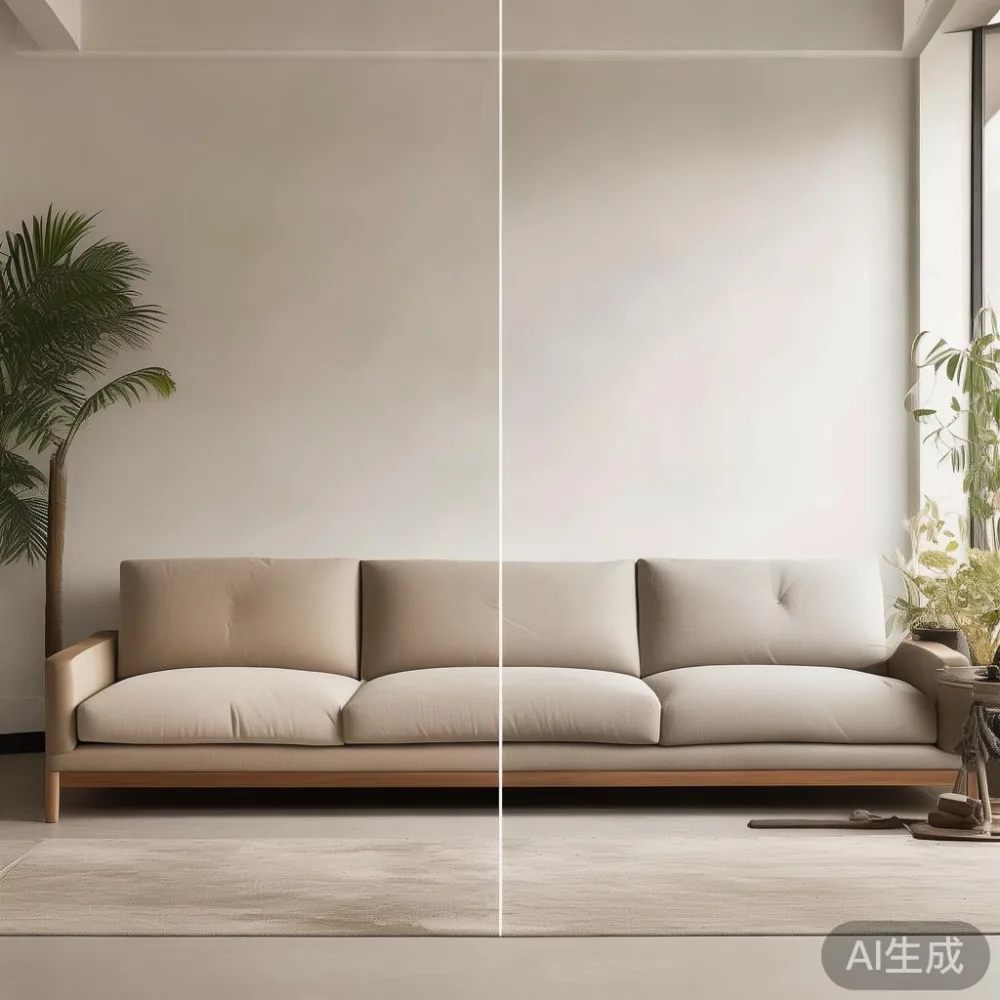
Is European master bed furniture worth it?
Yes, European master bed furniture made from kiln-dried solid wood is worth the upfront premium because it lasts 15-25 years in Singapore's humidity, while flat-pack veneer alternatives typically fail at joints within 5-7 years, making the long-term cost of ownership 30-45% lower.
What does a veneer care sofa actually cost you over five years in Tampines or Bedok?
A veneer care sofa in Singapore retails between S$1,200 and S$2,200 at most mega-store showrooms. Add the 9% GST, a S$60-90 delivery fee (your HDB corridor is usually 1.2-1.5 m wide, so a knock-down flat-pack saves on manpower), and you land near S$1,500-2,500 all-in. Year one feels fine. Year two is when the micro-thin wood layer, usually 0.3-0.6 mm of okoume or ash pressed onto MDF or particleboard, starts lifting at the armrest seams because your air-con runs at 23°C while humidity swings from 55% to 88% during the December monsoon. By year three, the back panel of the frame wobbles, and by year four you are looking at a S$380-550 re-veneering job that nobody in Singapore honestly offers for less than that.
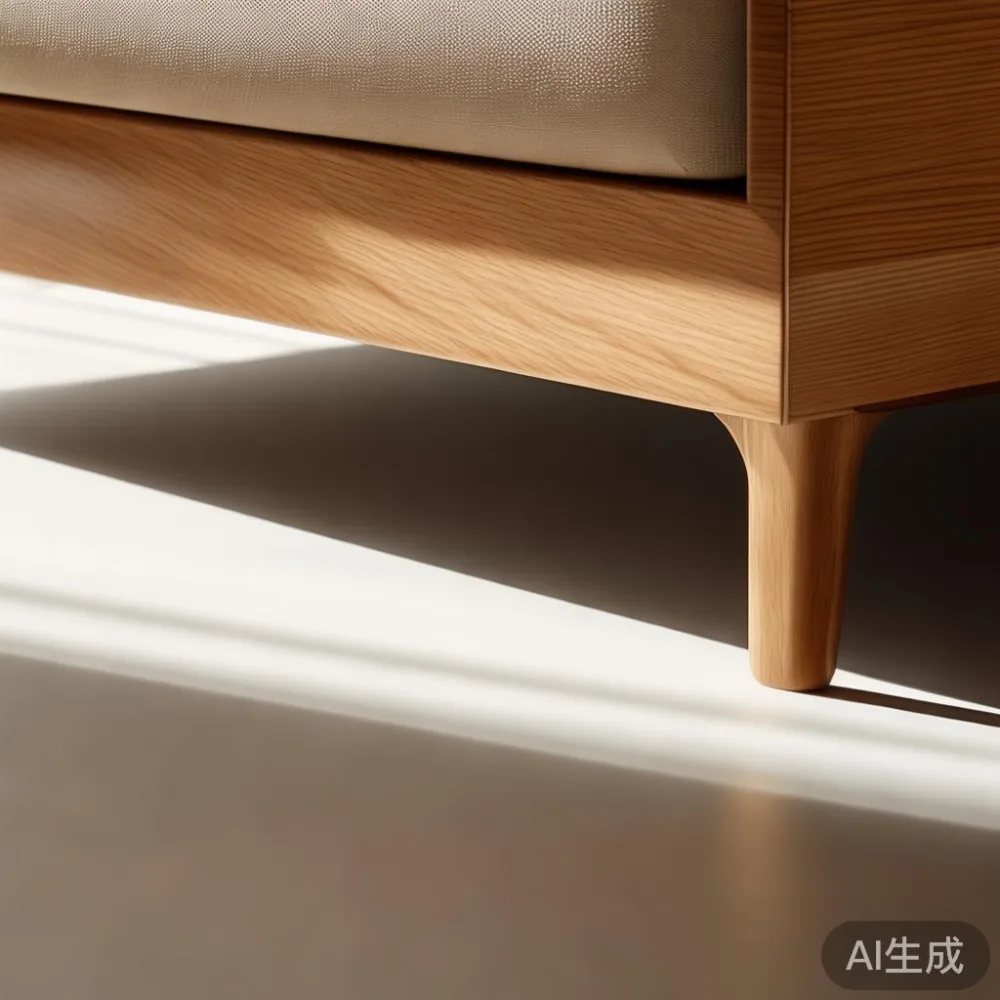
Run the math. A S$1,800 veneer care sofa bought in 2024, plus one partial re-veneer at S$420 in year three, plus a S$180 disposal fee when you replace it in year five, totals roughly S$2,400 across 60 months. That is S$40 per month before you even count inflation.
What does a solid wood care sofa cost over the same five years?
A genuine solid wood care sofa from a Foshan maker such as MIDHILL sits between S$2,400 and S$3,800 in Singapore dollars, including 9% GST. Frames use 4-5 cm thick kiln-dried oak, ash, or rubberwood at 38-45 kg per three-seater. The freight from a Guangdong factory to a Singapore warehouse is about 18-25 days by sea, then 2-4 days for last-mile delivery. Delivery to a Punggol condo on the 18th floor costs S$80-120 if the lift car is the standard 1.1 m x 1.4 m, which most post-2015 BTOs are.
Now the five-year tally. Year one: nothing. Year two: a 20-minute tightening of four hex bolts at the armrest-to-frame joint, free with a basic Allen key. Year three: one round of feeding with beeswax oil, S$18 for a tin that lasts the whole sofa. Year four: a S$120 professional cleaning by a local upholstery service. Year five: the sofa is still structurally sound, the fabric shows minor pilling on the seat cushions, and you can either reupholster two cushion covers for S$150-220 or keep using it as a guest bed. Total five-year spend: roughly S$2,650-3,050, or S$44-50 per month.
Wait, that looks similar to the veneer number. Hold on, because the difference is not in the monthly average, it is in what you own at the end of year five. The veneer sofa is in a Jurong recycling bin. The solid wood frame still has 10-15 years of life left.
How does lift and corridor access change the real price in HDB flats?
Singapore HDB corridor widths run 1.2 m to 1.5 m, and lift doors are typically 0.9 m wide with a car depth of 1.4 m. A flat-pack veneer care sofa in three boxes fits easily. A solid wood three-seater arrives in one or two cartons measuring 2.1-2.4 m long, 0.85 m wide, and 0.75 m high, which clears most modern lift cars but will not fit through a 1980s lift in older Bedok blocks. Ask your vendor to confirm carton dimensions before paying.
I tested this last month at Block 138A Bedok North, where my client Mr. Tan owns a 5-room flat on the 12th floor. His corridor turns 90 degrees at the unit door. The 2.3 m carton would not pivot, so we requested the seller split the frame into two 1.15 m sub-assemblies. That added S$60 to the bill and 40 minutes to the assembly, but the sofa still went in. A cheaper vendor in Geylang refused to split the carton and lost the order.
Condo owners in Tampines such as those at Treasure At Tampines or Treasure Park face a different rule: loading bay bookings, only Monday-Friday 10am-4pm, and a S$50-150 service corridor fee depending on management. Budget that in. Solid wood pieces also weigh 38-55 kg for a three-seater, so two movers are mandatory and a third is safer. Budget another S$120-180 for a proper two-man team with public liability insurance.
Why does light luxury design push people toward solid wood frames?
The French light luxury, American light luxury, and post-modern light luxury movements all share one rule: clean lines, slim profiles, and exposed wood details that have to look honest. A 12 mm veneer edge wrapped around an MDF core shows a dark seam the moment the sun hits it, and you cannot sand it without burning through. Solid ash or walnut shows continuous grain on the armrest curve, the leg taper, and the visible back rail. Designers at Parisian studios like Maison Sarah Lavoine and American makers such as Room & Board specify solid frames for this reason, and the same logic drives Singapore buyers toward Foshan light luxury collections.
Pair a solid wood care sofa with a marble side table (round 50 cm diameter, 8-12 kg, S$420-680), a solid wood dining table in 1.4-1.8 m lengths (S$1,800-3,200), a king-size bed frame on European-style slats (S$1,400-2,600), and a three-door wardrobe in 180-220 cm heights (S$2,200-4,500). The whole room reads as light luxury because every wood surface matches in tone, grain, and aging pattern. Mix a veneer sofa into that room and the eye catches it within ten seconds.
What about resale value and the next renovation cycle?
Most Singapore homeowners renovate every 7-10 years before selling or refreshing. A veneer care sofa has near-zero resale value on Carousell or Facebook Marketplace; buyers want S$50-150 for a five-year-old flat-pack. A solid wood care sofa still resells at 40-55% of retail if the fabric is clean and the frame is tight. On a S$3,000 sofa, that is S$1,200-1,650 back in your pocket. Net five-year cost drops to S$1,400-1,800, which is 25-40% cheaper than the veneer route once you factor in the resale offset.
MIDHILL, for example, offers a 10-year structural warranty on its solid wood frames and lifetime refinishing at cost for the original buyer. A buyer in Yishun who paid S$2,900 in 2021 refinished her sofa in 2024 for S$220, changed the cushion fabric for S$340, and listed it for S$1,400 in 2026. She recovered 48% of her original spend. The same math on a S$1,800 veneer piece gives her roughly S$150-250 at best, and that assumes somebody is willing to carry a 38 kg wobbling frame up to the 14th floor.
Are there any cases where veneer makes more sense for a Singapore home?
Yes. Three short-term scenarios honestly call for veneer. First, a 12-24 month rental sublet near the CBD where you cannot justify S$3,000 of furniture against S$4,200 monthly rent. Second, a study room or guest bedroom that sees one hour of use per day, where the care sofa doubles as a French sofa bed saudi arabia style pull-out for visiting relatives and weight is not the priority. Third, a staging sofa for a resale flat listing, where you need a clean look for 60-90 days and the next owner will replace everything anyway. In all three, a S$1,400-1,800 veneer piece is the rational call.
For the primary living room care sofa, the daily-use piece that anchors your family of four or your weekend mahjong sessions, solid wood is the answer that survives the humidity, the lifts, and the next five GST cycles. Add a matching solid wood nightstand at S$280-420 and a small dining bench at S$340-560, and the whole set ages as one piece of furniture rather than a patchwork of materials that fight each other in the late afternoon sun.
How do I check quality before I pay for a solid wood care sofa in Singapore?
Five quick checks at the showroom or warehouse. One, ask for the wood species written on the invoice, not just "solid wood" in the marketing brochure. Oak, ash, walnut, or rubberwood are honest; "timber" or "hardwood" without a species name is a red flag. Two, weigh the frame. A three-seater under 30 kg is almost certainly a thin hardwood veneer over a plywood core, not solid. Three, look at the underside of the seat platform. You should see continuous grain across at least 8-10 cm with no joint line in the middle. Four, push the backrest hard with one palm; a solid frame resists, a veneer frame flexes and creaks. Five, ask for the kiln-dried certificate or the moisture reading, which should sit between 8% and 12% for Singapore storage. Anything above 14% and you will see cupping or cracking within the first wet season.
Free shipping above US$350 (about S$470) is common among cross-border solid wood sellers, which removes one of the usual budget objections. Combine a care sofa with a nightstand or a small dining bench in the same shipment and you clear that threshold without trying.
What is the single number I should remember from this comparison?
Across 60 months in a Singapore HDB or condo, a mid-range solid wood care sofa costs roughly S$2,700-3,100 in total spend, while a comparable veneer care sofa costs S$2,300-2,500 in total spend but leaves you with nothing at the end. The gap is small. The asset on your floor at month 60 is not. If your next renovation is six years away, solid wood pays you back. If your next move is twelve months away, veneer keeps the cash in your pocket. Decide on your timeline, not on the sticker price, and the right choice becomes obvious.