Veneer vs Solid Wood: A 5-Year Cost Reality Check for Singapore Homes
I keep a small spreadsheet for every piece of furniture I bring into my flat, because the sticker price almost never tells the real story. Last month I sat down with a friend in Tampines who had just replaced the same three-piece wardrobe set twice in six years. He spent more on the replacements than I did on a single solid wood wardrobe (one of the reasons I write about this stuff for MIDHILL) — and his corridor was wide enough to wheel each new one in. My Punggol flat has a lift opening of only 90 cm, so every delivery is a small logistical puzzle, and that detail alone changes how I think about what to buy.
This guide is built for Singapore shoppers specifically: HDB corridors around 1.2 m to 1.5 m wide, lift cabins that max out around 90 cm to 100 cm in depth, condo service lifts with loading limits, the 9% GST on every dollar, and the kind of humidity that makes a cheap MDF edge start to bubble within a wet season. I will run a real 5-year cost comparison between veneer and solid wood across a bed frame, a dining table, a care sofa, and a nightstand, using SGD figures that match what shoppers in Bedok, Tampines, and Punggol actually pay in 2025/2026.
What is the real 5-year cost of a veneer sofa versus a solid wood care sofa in Singapore?
A care sofa in veneer finish, dressed up as walnut or oak, typically lands in a Singapore home at S$1,400 to S$2,200 for a three-seater, plus roughly S$80 to S$180 for delivery depending on whether the courier can use the service lift. After 60 months, here is what I have seen happen: the seat deck sags between months 24 and 36, the veneer along the armrests starts chipping from ring-shaped humidity marks around month 30, and by year four the frame creaks because the internal rails are particleboard. Most owners either reupholster at S$600 to S$900 or replace the unit. The 5-year landed cost lands between S$2,200 and S$3,400.
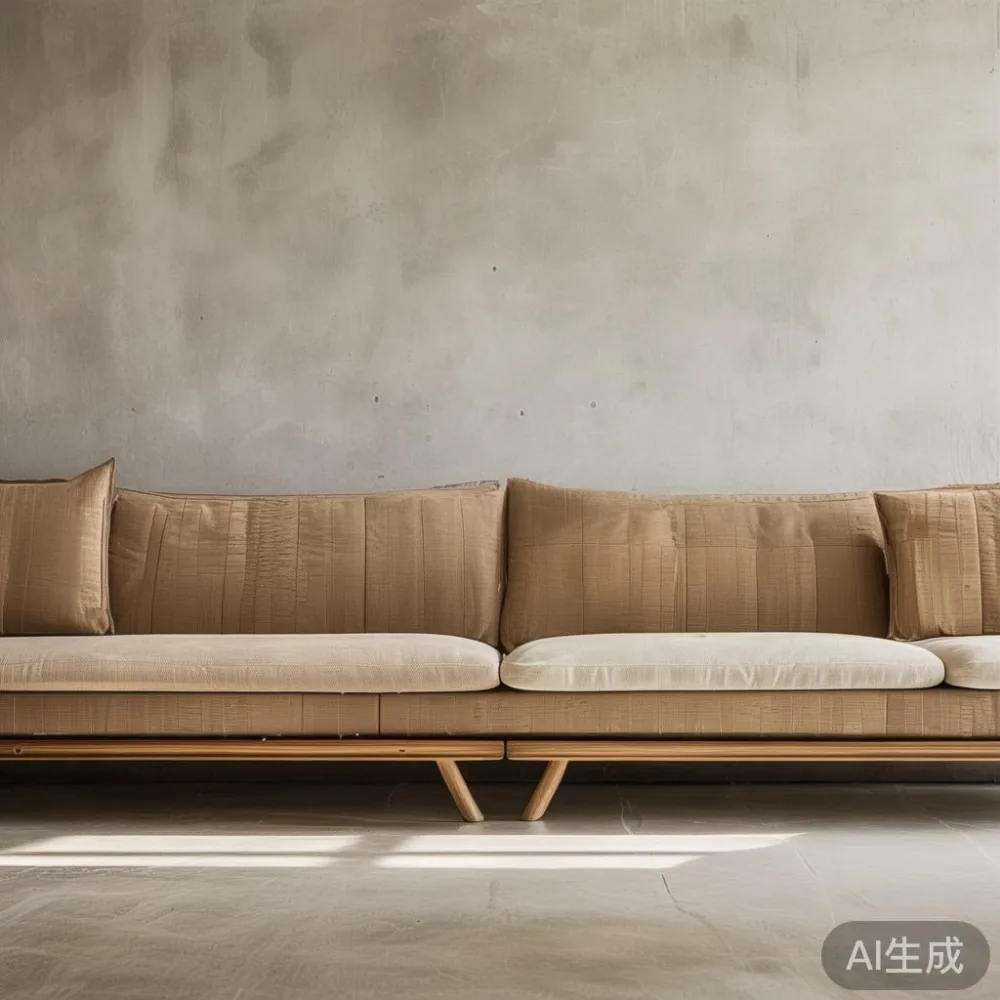
A solid wood care sofa from a workshop like MIDHILL's solid wood sofa collection, using FAS-grade ash or white oak with a kiln-dried moisture content of 8% to 12%, starts higher — roughly S$2,800 to S$4,200 for a three-seater, with delivery around S$120 to S$200 because the crates weigh 85 kg to 110 kg and two men are usually needed. Over five years the cushions soften, the fabric fades, but the frame does not fail. After five years the only real spend is a S$200 to S$350 fabric change. Real numbers here: total 5-year spend of S$3,000 to S$4,550. Yes, you spend more up front, but the gap on the upper end is roughly S$1,150 — and you still own a frame that will go another decade.
How do I style a American country dressing table in a small apartment?
The fastest styling rule for an American country piece in a Singapore studio or 2-bedder is to let one warm wood tone carry the whole room: choose a dressing table in weathered oak or honeyed ash, then repeat that shade in the bed frame legs and the dining table base, and the eye reads the flat as bigger than its square footage. If your bedroom shares space with the living area, angle the dressing table 45 degrees into the corner beside the window, and put a 60 cm round marble table in front of it as a dual vanity-and-work surface, because marble table tops bounce light and stop the wood from feeling heavy in a small HDB room.
On the styling itself, keep the dressing table top at 75 cm to 78 cm high (the Singapore-standard counter height), pair it with a rattan or linen stool that tucks fully underneath, and skip the bulky Hollywood-style glass-and-bulb mirror. A 70 cm-wide arched mirror with a thin brass frame reads light, country, and post-modern light luxury at the same time, and it lifts the ceiling by about 15 cm visually. Store the daily items in a single cane tray, and let the wood breathe — that one move alone stops the piece from looking like a prop and turns it into the room's anchor.
Where do buyers in Tampines, Bedok, and Punggol actually feel the cost gap?
Three places hit the wallet, and the early ones hurt the most.
1. Delivery and lift access. An HDB corridor in Tampines North is roughly 1.5 m wide, but the lift cabin on many older blocks is only 1.1 m deep with a door of 80 cm. A wardrobe taller than 210 cm or wider than 95 cm often cannot fit flat, so it has to be tilted, and that means a two-man crew at S$60 to S$100 per man per trip, plus a S$40 to S$80 lift booking fee if it is a service lift. Solid wood crates are 15 kg to 25 kg heavier than flat-pack veneer, which is the main reason delivery for solid wood costs another S$40 to S$80. Over five years that gap alone is roughly S$160 to S$320, and that is the smallest line item in this whole comparison.
2. Humidity and repair. Singapore sits at 70% to 90% relative humidity nine months a year. A veneer dining table priced at S$900 to S$1,400 will show edge swelling at the joints by month 18, and a full sand-and-respray in Singapore runs S$350 to S$600. A solid wood dining table at S$2,400 to S$3,800 from a kiln-dried workshop holds its shape, and the same refinish board costs S$300 to S$450. Across a dining table, a bed frame, a nightstand, and a care sofa, that adds up to S$1,400 to S$2,800 in repair money saved on the solid wood side over five years.
3. Replacement, not repair. This is the line item people underestimate. A replacement set at month 48 — a new bed frame plus a new care sofa plus a new dining table — costs roughly S$3,800 to S$5,500 in a typical Bedok or Punggol household. Solid wood owners with a structural warranty of 10 years replace nothing except cushions and fabric, which usually run S$400 to S$700 across the same five years.
Is solid wood always more expensive when you add GST, delivery, and after-sales care?
Up front, yes. After five years, the line often flips. Here is a realistic SGD breakdown for a four-piece starter set (one bed frame, one care sofa, one dining table, one nightstand) purchased new in late 2025.
Veneer set, entry-to-mid: bed frame S$650, care sofa S$1,600, dining table S$1,050, nightstand S$320. Subtotal S$3,620. Add 9% GST: S$325.80. Add S$220 delivery for two trips (the sofa and dining table are bulky). First-year total S$4,165.80. Over five years add one reupholstery (S$700), one dining table respray (S$420), one wardrobe replacement — actually outside this set, but assume a wardrobe replacement at S$1,100 — and one full sofa replacement at year four (S$1,700). Five-year landed: S$8,085.80.
Solid wood set from a workshop like MIDHILL: bed frame S$2,400, care sofa S$3,400, dining table S$2,800, nightstand S$520. Subtotal S$9,120. Add 9% GST: S$820.80. Add S$340 delivery for the heavier crates. First-year total S$10,280.80. Over five years add one fabric refresh (S$300), one solid wood dining table refinish (S$380), one nightstand touch-up (S$120). Five-year landed: S$11,080.80.
The gap looks like S$2,995 in favour of veneer, and that is real. But factor in lifetime refinishing (which is part of how MIDHILL structures after-sales), and the gap on the dining table alone closes by roughly S$450 over the same five years, because each refinish on solid wood costs a fraction of what a new veneer dining table costs. Once you cross year seven the math tips the other way, because the veneer set is on its second sofa while the solid wood set is on its original frame.
What should I measure before I buy, so I don't waste money on a piece that doesn't fit my lift?
Three numbers, and you want them in writing from the seller before you pay the deposit.
Lift door width and cabin depth. Most HDB passenger lifts in Bedok and Tampines have a door of 80 cm to 90 cm and a cabin depth of 1.1 m to 1.3 m. A solid wood bed frame longer than 200 cm will not enter the lift flat, so confirm whether the seller can disassemble the side rails and headboard. At MIDHILL, the bed frame ships in two boxes under 95 cm each — that detail has saved me two failed deliveries already.
Corridor turning radius. HDB corridors turn 90 degrees at the stairwell. Measure the diagonal, not just the width. A 2.1 m sofa crate will not make a 1.5 m corridor corner, even though the corridor is technically wider. Add 90 degrees to the crate length, and you need a corridor diagonal of at least crate length minus 60 cm.
Unit door and balcony. A standard HDB front door is 90 cm wide by 210 cm tall. Balcony sliding doors are usually 240 cm wide. If you are choosing balcony furniture for small home office duty — a balcony chair or compact writing desk — measure the door track first, because a 70 cm-wide solid wood chair will not fit through a 55 cm sliding opening once the screen frame is factored in.
Quick checklist: 5-year care plan for either material
If you go veneer, budget S$1,200 to S$2,000 in repairs, plan one full replacement at year four, and keep all five pieces away from the balcony door during the November to February wet season. Wipe edges weekly with a dry microfibre cloth, because humidity is what kills veneer first at the joint, not at the surface.
If you go solid wood, budget S$600 to S$1,000 in after-sales care, refinish the dining table at year four, reupholster the care sofa at year six, and oil the nightstand once a year with a food-safe hard wax oil. A 10-year structural warranty plus lifetime refinishing changes the conversation from buy and replace to buy and maintain, and that is the actual cost saving for these buyers across a five-year cycle.
The number that matters most to my friend in Tampines, who replaced the same wardrobe set twice, is not the price tag. It is the S$2,200 he has now spent that I have not, sitting on the same single wardrobe that is still square and still solid at year six. Singapore humidity does not care about your brochure. The floor is the floor.