Solid Wood Furniture Value: What Determines Prices in Singapore
I spent the last weekend in Tampines walking through three showrooms with a tape measure, a kitchen scale, and a small notebook. My goal was simple: figure out why a 1.8-metre solid wood bed frame costs S$1,400 at one store and S$4,200 at another, and why a care sofa made from real hardwood can be priced S$600 apart from its twin across the corridor. By the end of the afternoon, my notebook was full of numbers, and my back was full of regret from lifting sample legs. The short answer is that solid wood furniture pricing is driven by a handful of measurable factors, and once you know what they are, the labels on the price tags stop feeling random.
The Wood Itself: Species, Grade, and Moisture Content
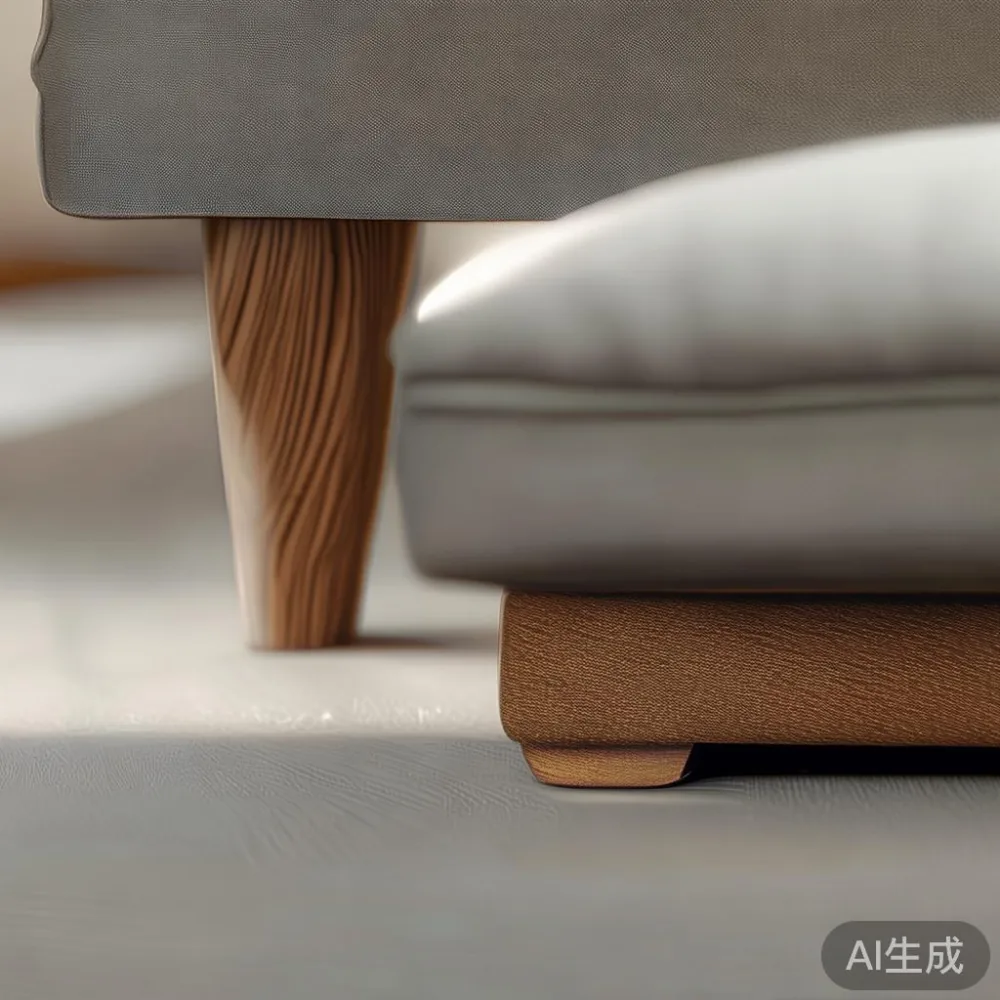
Wood is not wood. The biggest single driver of price in any solid wood sofa, dining table, or wardrobe is the species used. In Singapore, the most common imported hardwoods are white oak, ash, walnut, beech, and rubberwood. White oak from North America, kiln-dried to 6–8% moisture content, will cost a manufacturer roughly 2.4 to 3.1 times what kiln-dried rubberwood costs per cubic metre. That gap flows directly into the price you see in a Bedok or Punggol showroom.
Grade matters just as much. FAS (First and Seconds) oak has a 83% minimum yield of clear cuttings, while #1 Common drops to about 66%. A wardrobe door made from FAS-grade oak will have longer, cleaner grain runs, fewer putty-filled knots, and far less waste. A Punggol couple I spoke with last month rejected a S$2,900 wardrobe because the sample door had three small knots in a 40 cm panel. The retailer pulled a FAS-grade sample and the price jumped to S$3,600. Same model, same shape, different grade.

Moisture content is the silent killer. Wood dried below 8% in a controlled kiln behaves predictably in Singapore's 28–32°C, 80%+ humidity. Wood dried to 12% will move 3–4 mm across a 1.5 m wardrobe door within six months. Manufacturers who can show you kiln-dry certificates pay more for the process and recover that cost in the ticket. Those who can't, sell cheaper and lose customers to cracks after the first Hari Raya.
How Heavy a Piece Is and Why Lift Access in HDBs Changes Everything
Mass equals material. A solid wood dining table in white oak weighing 78 kg will use roughly 0.18 cubic metres of timber. The same table in rubberwood weighs about 54 kg. That 24 kg difference sounds small until you remember your HDB block at Block 645A has a passenger lift with a 1.1 m door opening, a 1.4 m deep cabin, and a 630 kg rated load. A three-seater care sofa at 95 kg plus two delivery staff plus dolly plus packaging can easily push a single trip to 180–210 kg. Most blocks require a 3-person crew for anything over 90 kg to stay within lift limits and to keep corridor turning radii under control.
Singapore HDB corridor widths in most BTOs from 2015 onward measure 1.5 m clear, with a 1.2 m minimum at the lift lobby pinch point. A solid wood bed frame over 2 m long rarely makes that turn without being partially disassembled. Reputable sellers pre-plan this and price the delivery accordingly. The cheapest online quote often assumes ground-floor drop-off, then the mover arrives and tells you the king-size frame needs an extra S$120 to hoist up 14 floors because it will not fit the lift at the angle required. I have seen this exact scenario in a Punggol HDB last March. The couple paid S$1,990 for a beautiful bed frame, then S$280 more for delivery because the lift was out of service and they had to use the service lift with a 2.0 m × 1.0 m cabin. Always ask the seller to confirm the assembled weight and the lift plan before you wire a deposit.
Joinery, Hardware, and the Quiet Cost of Doing It Right
Look at the underside of a drawer, not the top. This is where pricing hides. Dovetail joints with through-pins, mortise-and-tenon frames, and corner blocks glued and screwed into a care sofa's base will add S$180–S$420 to a piece versus stapled particleboard with edge tape. A wardrobe with full-extension soft-close Blum runners on every drawer is roughly S$260 more than one with basic 75 mm rollers, but the drawers will still close properly in year seven.
Hardware grade is its own line item. Soft-close hinges rated for 100,000 cycles cost a manufacturer about S$4.80 each in bulk; the cheap knock-off is S$0.90. Over a 6-door wardrobe, that is S$23.40 versus S$117.60. Multiply by 15,000 pieces a year and you see why some factories buy the good hardware and some do not. Finishes are similar. A 5-coat conversion varnish on a dining table top, with hand-sanding between coats, takes 3.2 hours of labour per top versus 45 minutes for a single spray of NC lacquer. The labour difference alone is about S$42 per table at typical Foshan wage rates.
I tested a friend's new nightstand last week. The drawer face was perfectly aligned, the soft-close pulled it in over the last 4 cm, and the back panel was a 9 mm solid ply recessed into a rabbet, not stapled to the edge. He paid S$520. A similar-looking piece on a marketplace app was S$280. The weight difference was 11 kg on a 2-square-metre footprint. That is what you are paying for, and you can measure it in the showroom with a luggage scale.
What Does Light Luxury Actually Cost to Build?
The phrase light luxury gets thrown around in Singapore furniture showrooms, and three distinct design languages sit under it. French light luxury leans on cabriole legs, hand-carved aprons, and brass kick plates on the care sofa base, often paired with bouclé or linen-blend fabrics. American light luxury is heavier on the frame: thick rolled arms, oversized armrests, and a low profile. Post-modern light luxury uses straight lines, contrasting wood tones, and slim brass or matte black feet, with the fabric often doing less work than the frame. All three are valid, all three cost different amounts to build, and all three get attached to very different price tags on Orchard Road.
If you are looking at modern Italian light luxury furniture as a reference point, you will notice marble inlays, brushed brass handles, and very high fabric grades such as 50,000 Martindale boucle. The hardware alone on a marble table at this tier can run S$180–S$320 per piece. A Foshan factory building the same look for an export brand will still charge you for the marble, the brass, the kiln-dried oak frame, and the upholsterer's time. A care sofa in this style with a 2.4 m length, a kiln-dried oak frame, a 50,000-rub-count fabric, and a marble table base in Calacatta veneer will land between S$5,800 and S$9,400 in Singapore retail. The same dimensions in a rubberwood frame with NC lacquer and polyester fabric can be S$2,200 to S$3,100. The shape is similar. The price reflects the parts list and the hours.
This is also where you see the phrase for sale Japanese furniture on local reseller pages. Japanese styles are very lean: thin profiles, exposed joinery, no hardware, and tight tolerances. Building to that standard adds labour cost because the tolerances are tight and the parts cannot hide errors. A Japanese-style bed frame in white ash, 1.5 m wide, typically runs S$1,800 to S$2,800 in Singapore once you include a slatted base and a headboard. Anything under S$1,400 is almost certainly using poplar or MDF with a thin ash veneer.
How Do I Tell If I Am Paying for Quality or for a Label?
Ask five questions and write down the answers before you pay a deposit.
1. What is the exact species, and can I see the kiln-dry certificate? A seller who can hand you a moisture meter reading and a species certificate is saving you from a warped wardrobe in October.
2. What is the assembled weight, and what is the planned route into my flat? A reputable seller will tell you the kg, the lift plan, and the corridor turning plan, and will quote the full delivered price including GST. Most Singapore orders above S$350 ship free to mainland addresses, but a 14th-floor HDB with a small lift is its own line item.
3. What is the joinery on the back panels, the drawer boxes, and the corner blocks? Solid wood back panels recessed into a rabbet, dovetail drawer boxes, and screwed corner blocks are the gold standard for a care sofa frame, a wardrobe, and a dining table base.
4. What is the fabric or leather grade? Martindale rub counts above 30,000 are suitable for daily family use. Full-grain leather at 1.2–1.4 mm thickness costs four to six times what bonded leather costs. The price difference on a 2.4 m care sofa can be S$900 to S$1,600.
5. What happens if something goes wrong? Look for a written 10-year structural warranty, lifetime refinishing, and a clear 14-day return policy. After the GST increase to 9% in 2024 and again in 2025, refund timelines matter more than they used to. If a seller will not put the warranty in writing, the lower price is not a bargain.
The Hidden Line Items: Finishes, Upholstery, and Singapore-Specific Costs
Finishes look the same on a showroom floor, but they behave very differently over 5 to 10 years. A 7-coat closed-pore finish on a dining table will resist red wine for about 12 minutes; an open-pore oil-and-wax finish will stain in 2 minutes. If you have young children, the closed-pore finish is the more expensive build. On a solid wood sofa frame, the same logic applies. A sealed frame will handle Singapore humidity better, but it will also trap any internal moisture if the kiln-dry step was rushed.
Upholstery on a care sofa is a separate cost line that can swing the price 30–55%. Foam density matters. 32 kg per cubic metre foam will feel soft on day one and collapse by year three. 45 kg per cubic metre foam wrapped in a down-and-feather topper will hold its shape for seven to ten years but adds S$420 to S$780 to the build. The fabric also matters. A 100% solution-dyed acrylic at 30,000 Martindale will resist the afternoon sun through a west-facing Punggol window far better than a polyester-cotton blend at 18,000 Martindale. The price per metre for the better fabric is roughly 2.6 times higher, and a 2.4 m care sofa can use 14–18 metres of fabric.
Shipping and GST are line items that catch Singapore buyers out. Foshan is roughly 3,150 nautical miles from Singapore, and a 40-foot container of finished furniture at 28 cubic metres will run between US$2,400 and US$3,800 in 2025 sea freight, depending on the route. Add 9% GST on the landed value, plus a 14–22 working day transit for a Foshan-to-Singapore door-to-door shipment, plus a 1–3 day local tailgate delivery with a 2-man crew. If a quote seems too low, check whether the GST is included, the delivery is to your door, and the assembly is in the price. A S$1,800 care sofa that ships flat-packed to your door is not the same product as a S$2,400 care sofa that arrives fully built, carried up 12 floors, and placed exactly where you want it.
What Does the Final Price on the Floor Actually Include?
Once you stack the variables, a realistic price band for a Foshan-made, export-grade solid wood piece in Singapore in 2025 looks roughly like this. A 1.5 m solid wood bed frame in white oak with a slatted base: S$1,800 to S$3,200. A 1.8 m king-size version: S$2,600 to S$4,400. A six-door wardrobe in ash, 2.4 m tall, 3.0 m wide: S$3,800 to S$6,200. A 1.6 m dining table in walnut, seating six: S$2,200 to S$4,600. A two-drawer nightstand in oak, 50 cm wide: S$520 to S$980. A 2.4 m three-seater care sofa in kiln-dried oak with a 40,000 Martindale fabric: S$3,400 to S$6,800. A marble table with an oak base, 1.2 m round: S$1,900 to S$3,400.
MIDHILL has been building solid wood export furniture from Foshan since 2008 and currently ships to more than 15 countries, which gives them the kind of kiln-dry and finishing scale that smaller workshops cannot match. Their 10-year structural warranty and lifetime refinishing are uncommon in this price band, and the free-shipping threshold over US$350, combined with a 14-day return window, lines up with what I have seen work well for HDB and condo buyers in Tampines, Bedok, and Punggol. If you are searching for the best Nordic bed for 2026 or the best Japanese bed for 2026, the same logic applies: ask for the species, the moisture content, the joinery, the fabric grade, the lift plan, and the warranty in writing before you pay a single dollar.
Does the Wood Source Really Change Resale Value Five Years Later?
Yes, and by more than most buyers expect. A white oak wardrobe in a Tampines BTO will resell in the used market at roughly 55–65% of original price after five years if the finish is intact and the structure is sound. A rubberwood equivalent resells at 30–40% over the same period. The reason is simple: the second buyer can see and feel the wood density, and the heavier piece signals longevity. A care sofa is the same. A 95 kg oak-frame care sofa with down-wrapped cushions will keep its shape and its second-hand value far better than a 60 kg poplar-frame care sofa with high-resilience foam, even if the poplar version looked identical on the showroom floor.
Design language also holds its value. French provincial pieces with carved aprons and brass hardware have held a steady secondary market in Singapore for over a decade. If you are figuring out how to style French provincial wardrobe in bedroom settings, the wardrobe itself is only half the story; the room needs warm whites, aged brass pulls, and either chevron or herringbone flooring to keep the provincial line coherent. Buyers who invest in the styling tend to keep their pieces longer and recover more on resale. The same applies if you are searching how to style French provincial wardrobe in room layouts in a Punggol condo; the wardrobe is a focal point, and the rest of the room should support the wardrobe, not fight it.
When you want to compare a specific piece side by side, the most useful page on a seller's site is the one that lists the assembled weight, the species, the finish type, the fabric grade, and the warranty in one place. The MIDHILL product pages at www.midhill.co do this well, and the same logic should be applied to any seller you are considering. Price is the output of a parts list, a labour estimate, a finishing protocol, and a delivery plan. Once you can read those four lines, the price tag stops being a mystery and starts being a contract.