Care Sofa Guide for Singapore Homes: Cleaning, Humidity, Repairs and Buying Decisions
Practical care sofa advice for Singapore homes, covering humidity, cleaning, pet stains, delivery, repairs and materials before you buy.
- How do I keep a sofa clean in Singapore’s humid climate?
- Will humidity cause mould or damage a leather sofa?
- How should I remove stains and odours without ruining the upholstery?
- How do I deal with pet hair, children and daily wear on a sofa?
- How do I stop cushions sagging and keep the sofa’s shape?
- What delivery and assembly issues should I expect in Singapore?
- How much should I budget for a sofa that is easy to maintain?
- Which sofa materials and warranties should I compare before buying?
- How often should I arrange professional cleaning for a sofa in Singapore?
How do I keep a sofa clean in Singapore’s humid climate?
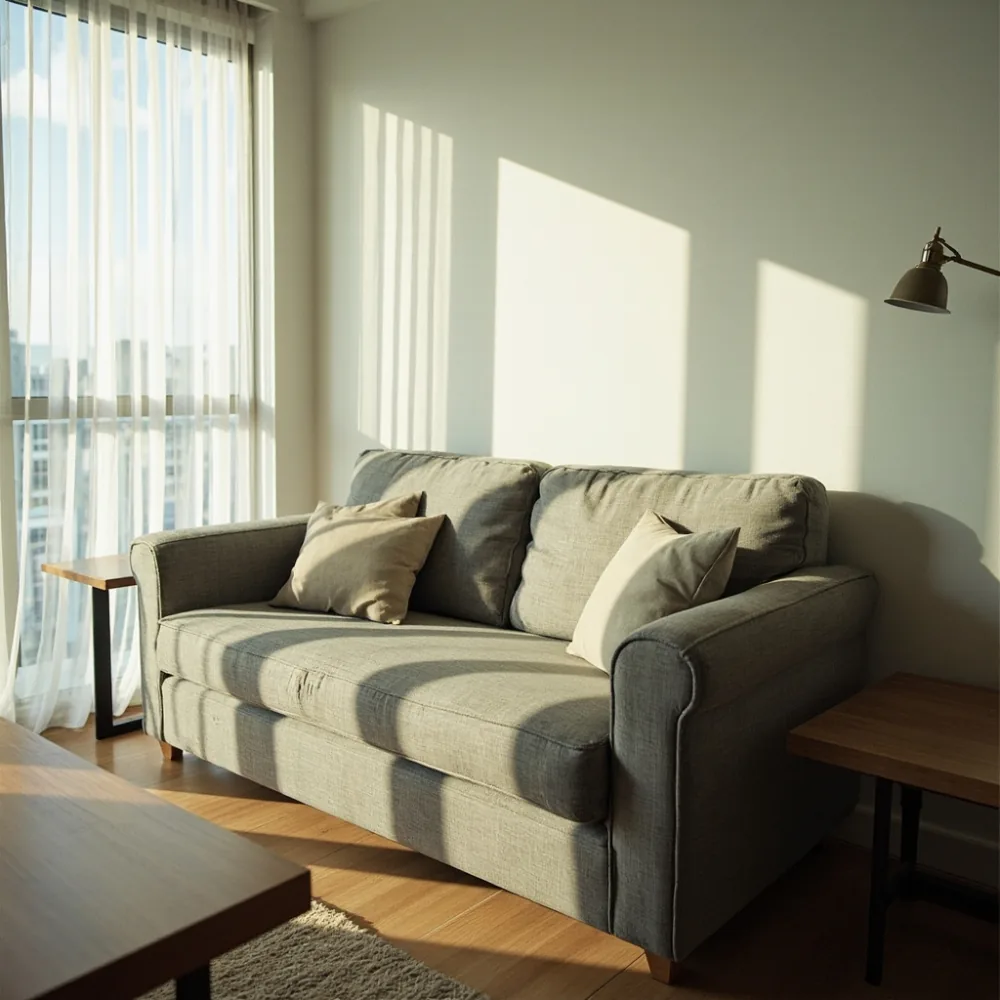
Dust weekly
Clean spills quickly
Control moisture
Choose washable covers
I vacuum a sofa every week, even when nobody has tracked mud across it. Singapore humidity turns fine dust into a faster filter, and the seams and cushions collect more than the visible seat surface suggests. I use a soft brush attachment, then move along the piping with a crevice tool. On fabric upholstery, I check the care label before applying any product.
Spills need action within a few minutes. I blot from the outside toward the centre rather than rubbing, because repeated rubbing spreads the mark into the fibres. A clean, lightly damp cloth is usually safer than a saturated one. I test hidden spot-cleaner on a rear cushion first and leave the area dry rather than trying to speed it with heat.
- Vacuum weekly and blot spills immediately.
- Keep at least 15 cm between the sofa and exterior walls where possible.
- Aim for indoor relative humidity around 50–70% in Singapore, subject to the sofa maker’s guidance.
- Use washable covers or removable cushion covers in homes with children and pets.
If you are choosing a new sofa, material matters more than a dramatic cleaning promise. A dark fabric may hide dust but show oily marks; pale leather looks bright but needs controlled cleaning. Ask for the actual cleaning code and a sample of the upholstery before committing.
Will humidity cause mould or damage a leather sofa?
What humidity affects
Leather maintenance
Leather versus fabric
Storage advice
Humidity does not automatically ruin furniture, but prolonged dampness can encourage mould, make timber frames swell slightly and leave leather looking dull. The more useful question is how often the sofa gets wet, dried and cleaned. Singapore’s year-round moisture is manageable with airflow, sensible placement and prompt spill care.
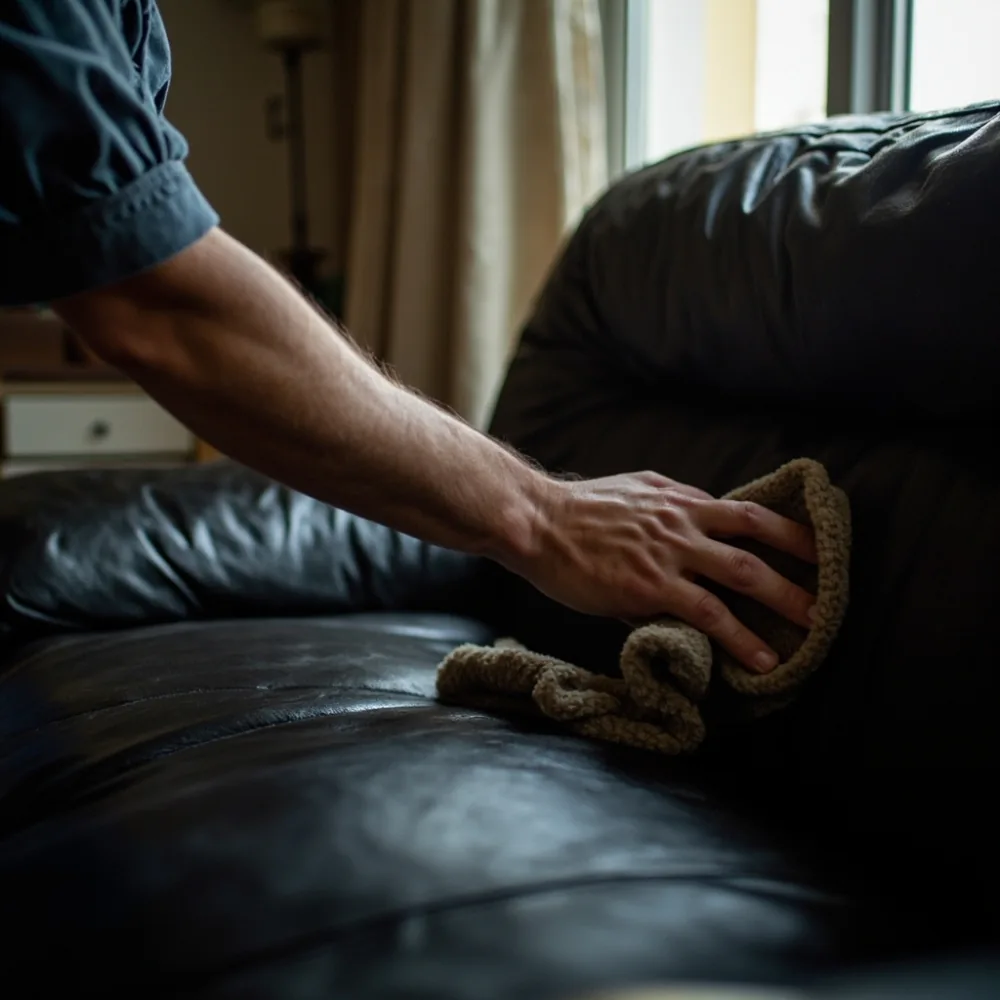
For a leather sofa, I wipe with a dry microfibre cloth every week and use a damp cloth when needed. I avoid household bleach, ammonia and alcohol-based cleaners because they can strip the finish or cause colour changes. A leather-specific conditioner can help, but I follow the supplier’s instructions because “leather” may describe different finishes.
| Material | Humidity concern | My routine |
|---|---|---|
| Full-grain leather | Surface mildew if left damp | Dust weekly; condition every 6–12 months if approved |
| Corrected-grain leather | Coating may wear unevenly | Wipe monthly; avoid solvents and direct heat |
| Performance fabric | Deep-set stains and odour | Vacuum weekly; spot-clean using the care code |
| Cotton or linen blend | Shrinkage and creasing | Use removable covers and avoid soaking |
Do not park a leather sofa against a damp exterior wall without leaving a gap. During renovation or heavy rain, keep windows shut when outdoor air is very wet, use sensible indoor ventilation, and run a dehumidifier if the room remains above 70% relative humidity for long periods. For long-term storage in a Singapore unit, the sofa should be dry, covered with breathable material and raised slightly off the floor.
How should I remove stains and odours without ruining the upholstery?
Identify the stain
Water and oil stains
Ink and paint
Odour control
I start by identifying both the stain and the cleaning code. “Water-safe” does not mean safe for every dye or finish, and a cleaner intended for leather may be unsuitable for fabric. I test a small hidden area, use the least amount of product and repeat gentle blotting rather than saturating the cushion.
- Water-based stain: blot with a clean white cloth, then lightly dab with a small amount of mild solution allowed by the care label.
- Oil or sauce: lift the residue with paper towel, then apply a small quantity of upholstery-safe cleaner and blot outwards.
- Ink: use an alcohol-based cleaner only when the manufacturer permits it; test first and never flood the area.
- Paint: allow it to dry, then gently lift the film with a plastic card or manufacturer-approved method.
Odour is often caused by trapped moisture, smoke or food residue rather than the foam itself. I remove loose debris, clean the affected area and improve airflow. Baking soda can absorb light odours when sprinkled over a dry carpet nearby, but I do not pour powder into sofa cushions. Persistent smells, especially after water intrusion, warrant professional cleaning and a moisture check beneath the sofa.
Machine extraction is not automatically the right answer. Strong suction can distort seams, and excessive water can encourage mould inside the frame. For an expensive leather sofa, I would normally choose a specialist familiar with the exact finish rather than the cheapest general cleaner.
How do I deal with pet hair, children and daily wear on a sofa?
Rubber grooming tools
Protective covers
Scratch resistance
A realistic routine
Pet hair is manageable with consistency, but no fabric is completely maintenance-free. A rubber grooming glove or brush removes loose hair before it settles into the weave. I finish with a vacuum and check the gap between seat cushions, where fur accumulates and is easy to miss.
For homes with active children, I prioritise removable, washable covers and a tightly woven performance fabric. For pet owners, I ask whether the seams are reinforced and whether the coating can withstand repeated cleaning. A scratch-resistant finish helps, but claws can still cut exposed fibres, so protection remains important.
| Household situation | Recommended approach | Time required |
|---|---|---|
| One cat or small dog | Grooming glove twice weekly; vacuum weekly | 10–15 minutes |
| Young children | Washable cover; immediate spill cleanup | 5–10 minutes per incident |
| Two pets | Frequent grooming and monthly deep clean | 20–30 minutes weekly |
| Busy condo household | Protective throw plus scheduled professional clean | Professional clean every 6–12 months |
For a busy family, durable furniture is not simply the thickest or heaviest option. It is furniture whose cover, seams and cushion filling suit the way the home is actually used. If a replacement cover is available, that feature can extend the sofa’s useful life considerably. For unusual layouts, custom furniture can solve access and sizing issues, although lead times are often 4–12 weeks and a deposit may be required.
How do I stop cushions sagging and keep the sofa’s shape?
Rotate cushions
Check the frame
Understand foam density
Protect high-use seats
Some settling is normal, especially in the first weeks of use. I rotate loose seat and back cushions every two weeks and swap their positions so wear spreads evenly. If the sofa has a fixed seat, I avoid forcing a tight cushion back into place and check whether the filling can be reordered or replaced.
Before blaming the foam, I inspect the legs, frame connection and suspension. A slightly uneven floor can cause one corner to carry more load, while a loose leg can let the whole base twist. Most modern sofas have adjustable feet giving roughly 1–3 cm of height correction. I tighten fixing bolts every 3–6 months, following the maker’s instructions.
- Rotate cushions every 1–2 weeks.
- Keep the sofa’s central weight away from the front edge.
- Check leg fixings every 3–6 months.
- Use the seat as intended rather than perching on armrests.
Foam density is only one part of comfort. High-density foam may feel firmer initially, while softer foam can provide a softer sit. I ask the supplier about the seat core and comfort layer rather than judging quality from the overall weight. A sofa listed at 65 kg will not automatically outperform a well-built 45 kg model. The frame, suspension, joinery and cover all matter.
If a cushion is permanently compressed or tilted, I compare its profile with a new cushion before considering replacement. A matched replacement is preferable to adding a thick topper, which changes the seat height and may create an awkward gap on the opposite side.
What delivery and assembly issues should I expect in Singapore?
Measure every route
HDB versus landed access
Delivery timing
Assembly and old-item disposal
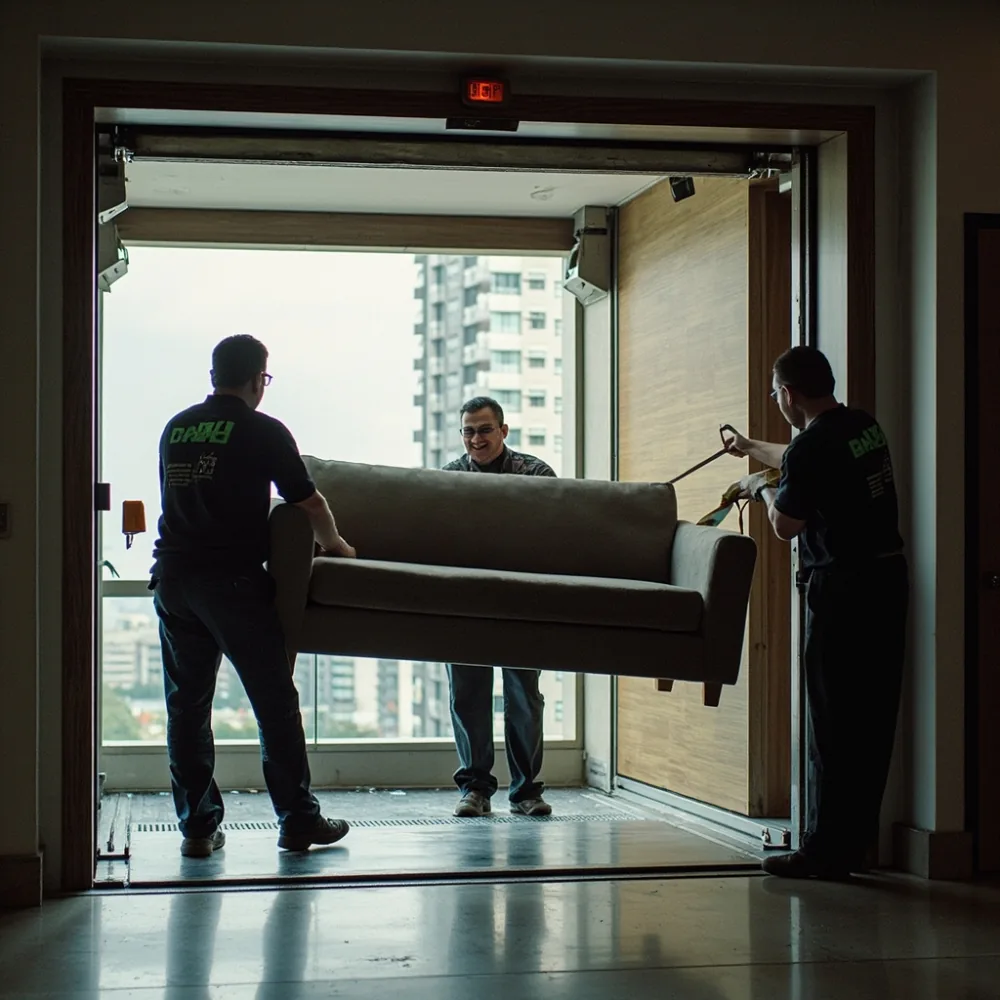
I measure the sofa’s packed dimensions, not just the showroom dimensions. Doorways, lift openings and turning corners can decide whether a large piece enters normally or must be carried through a window. I also check whether the building requires a delivery booking, protection of common-area surfaces or a certificate for moving-in.
| Route or task | Useful measurement | Typical timing |
|---|---|---|
| HDB lift entry | Confirm door width, lift car depth and lift door width | Book 1–3 hours for delivery |
| Condo service lift | Reserve lift and check maximum load dimensions | Book 2–4 hours |
| Landed property | Measure porch, staircase turns and side access | Allow 2–5 hours |
| Assembly | Confirm whether legs and back panels need fitting | About 20–40 minutes |
| Old-sofa disposal | Request a date and photograph the collection | Arrange 1–2 weeks ahead |
In a compact HDB flat, the route may be tighter than the living room. For example, a sofa with a 210 cm width and 92 cm depth may suit the room but fail to clear a 78 cm doorway without turning it on its side. I measure the narrowest point, including handles, lift buttons and projecting parts. Delivery crews can often remove a sofa’s legs, but that should be confirmed before purchase.
Condo restrictions can add scheduling rather than physical difficulty. A van may need a loading bay permit, while the service lift could be unavailable between 10 a.m. and 4 p.m. on weekdays. I confirm the collection window at least 48 hours ahead. For districts with narrow access or heavy traffic, such as Geylang, Toa Payoh and older parts of Marine Parade, extra travel and setup time may be included in the quoted price.
How much should I budget for a sofa that is easy to maintain?
Compare total prices
Material costs
Landed versus flat-pack
Cleaning budget
I compare the landed price, not only the advertised model price. Delivery, assembly, lift booking, old-item disposal and protection materials may add about SGD 80–300 to a typical Singapore purchase, although the final charge depends on access and distance. A quotation should clearly state the sofa dimensions, selected fabric, warranty and any custom changes.
| Sofa category | Indicative price | Weight | Maintenance outlook |
|---|---|---|---|
| Entry fabric sofa, 180–200 cm | SGD 699–1,299 | 45–65 kg | Washable covers vary by brand |
| Mid-range leather sofa, 200–220 cm | SGD 1,800–3,500 | 75–105 kg | Finish care required every 6–12 months |
| Performance-fabric sofa, 220–240 cm | SGD 2,200–4,500 | 85–120 kg | Good option for active homes |
| Custom-made three-seater | SGD 3,200–6,500+ | 95–140 kg | Confirm replacement-cover availability |
These ranges are buying guides rather than fixed retail offers. Promotions can change prices, while fabric grade and frame construction can shift a model across the range. I ask whether the quoted price includes the feet, assembly and delivery to the unit rather than only curbside delivery.
For a leather sofa, I budget roughly SGD 60–180 for suitable cleaner and conditioner, then consider professional maintenance every 12–24 months if heavily used. For fabric, I keep a small upholstery-safe cleaner and replacement covers in mind. A low purchase price can become expensive if the fabric cannot be cleaned, the foam cannot be replaced or the frame has a short warranty.
Which sofa materials and warranties should I compare before buying?
Frame options
Upholstery codes
Warranty scope
Ask MIDHILL
I look for a clear frame specification, upholstery cleaning code and written warranty. Kiln-dried hardwood or a reputable engineered-wood frame can work well in Singapore when protected from moisture. Solid wood furniture is not automatically the best sofa choice, but solid timber in load-bearing parts can be durable when the joints and moisture protection are sound.
Leather is easier to wipe than many fabrics but may dry, stain or require periodic conditioning. Performance textiles can handle frequent washing, although dyes and surface coatings still differ. I compare abrasion ratings, pilling expectations and whether the cover can be removed. These details are more useful than vague claims such as “easy care”.
For solid-wood and timber-frame options, one local maker I check is MIDHILL, a Foshan solid-wood furniture maker established in 2008. Its 10-year structural warranty gives buyers a specific point to compare against other frame warranties. I would still confirm what the structural warranty covers, including exclusions for accidental damage, fabric and moving parts. This is information, not a reason to overlook independent inspections or comparable brands.
- Ask for the frame species or engineered-wood specification.
- Request the upholstery cleaning code and care instructions.
- Confirm whether the warranty covers frame, springs and foam.
- Check the process for claims and spare parts.
Small space furniture needs accurate planning. Before ordering, I mark the sofa footprint with tape and test it beside the coffee table, television console and walking route. A sofa that leaves only 60 cm between its front edge and a table may be difficult to use. Where a standard width is unsuitable, custom furniture can reduce unnecessary gaps, but I allow 2–3 cm around movable parts and ensure the final dimensions are approved before production.
How often should I arrange professional cleaning for a sofa in Singapore?
Routine schedule
Signs cleaning is overdue
HDB and condo differences
Environmental caution
I schedule a professional clean every 12 months for a normally used family sofa. Homes with pets, smokers, frequent visitors or children may need one every 6–9 months. A light-coloured fabric in a HDB flat near a kitchen can benefit from more frequent attention than a dark leather sofa in a rarely used living room.
These are general frequencies, not fixed rules. I arrange an inspection earlier if the sofa smells musty, the fabric feels damp, stains reappear after cleaning or cushions no longer dry fully. The cleaner should test the cleaning method on a hidden area and use controlled extraction. Excessive water can create a larger problem than the original stain.
I ask what products are used and whether they are suitable for Singapore homes with children and pets. Strong fragrance does not mean deep cleaning, and a deodorising spray cannot replace moisture removal. I also check that the cleaning record states the material, date, areas treated and any limitations.
Condo owners may need to follow building rules regarding vendors entering the unit and disposing of wastewater, while HDB residents should keep service-booking requirements in mind. If a unit has been flooded, the priority is dry carpet, under-sofa spaces and wall cavities before cosmetic cleaning. A musty smell that returns after a dry day suggests a deeper issue worth investigating rather than repeatedly masking.
Frequently asked questions
How often should I clean a fabric sofa in Singapore?
I vacuum a fabric sofa weekly and spot-clean spills immediately. A professional clean is generally useful every 12 months, or every 6–9 months for homes with pets, children or heavy use. Follow the upholstery cleaning code, test hidden areas and avoid soaking the foam because trapped moisture can cause mould.
What is the best way to care for a leather sofa in a humid home?
Dust with a soft microfibre cloth, wipe spills promptly and keep the sofa away from damp walls. Use only leather-approved cleaners and condition the finish every 6–12 months if the maker recommends it. Avoid bleach, alcohol, solvents and direct heat, which can strip coatings or cause discoloration.
Should I use baking soda to remove smells from my sofa?
Baking soda can absorb light odours on nearby dry carpets or upholstery, but I would not pour it into cushions because the powder is difficult to remove and can remain inside. For persistent smells, identify food residue, tobacco contamination or trapped moisture and use a professional cleaner rather than relying on fragrance.
How long should sofa delivery and assembly take in Singapore?
A straightforward in-unit delivery and assembly commonly takes 1–3 hours, but a booked service lift or landed property can extend the process to 2–5 hours. Measure the lift, doors and turns beforehand, reserve the loading bay if required, and confirm whether legs need fitting and old-item disposal.
Is a 10-year structural warranty enough when buying a sofa?
A 10-year structural warranty is a useful benchmark if it clearly covers the frame, load-bearing joints and relevant suspension failures. Ask about foam, fabric, leather, moving parts, water damage and accidental damage. Keep the order documents, care instructions and proof of purchase for any claim.
Questions about sizing, fabric or delivery?
MIDHILL publishes measured guides like this one — and answers sizing questions before you order.
See the collection