How to Style a Small Singapore Apartment Around a Care Sofa (Without Making It Feel Crowded)
I live in a 4-room HDB in Tampines, and my living room measures 3.2 metres by 4.1 metres. That is roughly 13 square metres of usable floor space once the corridor entrance and the air-con ledge are accounted for. Six months ago, my wife and I almost gave up on the idea of fitting a proper care sofa in there. We were about to settle for a narrow two-seater that looked more like an office bench than something you would actually want to nap on. Then we visited the MIDHILL showroom in Foshan over a video walkthrough with a local designer, and the team walked us through a layout that ended up working. The result is a room that breathes, a sofa that we genuinely use every evening, and zero buyer's remorse. This article is the practical breakdown of what worked for us, and what I have seen work in other compact Singapore homes since.
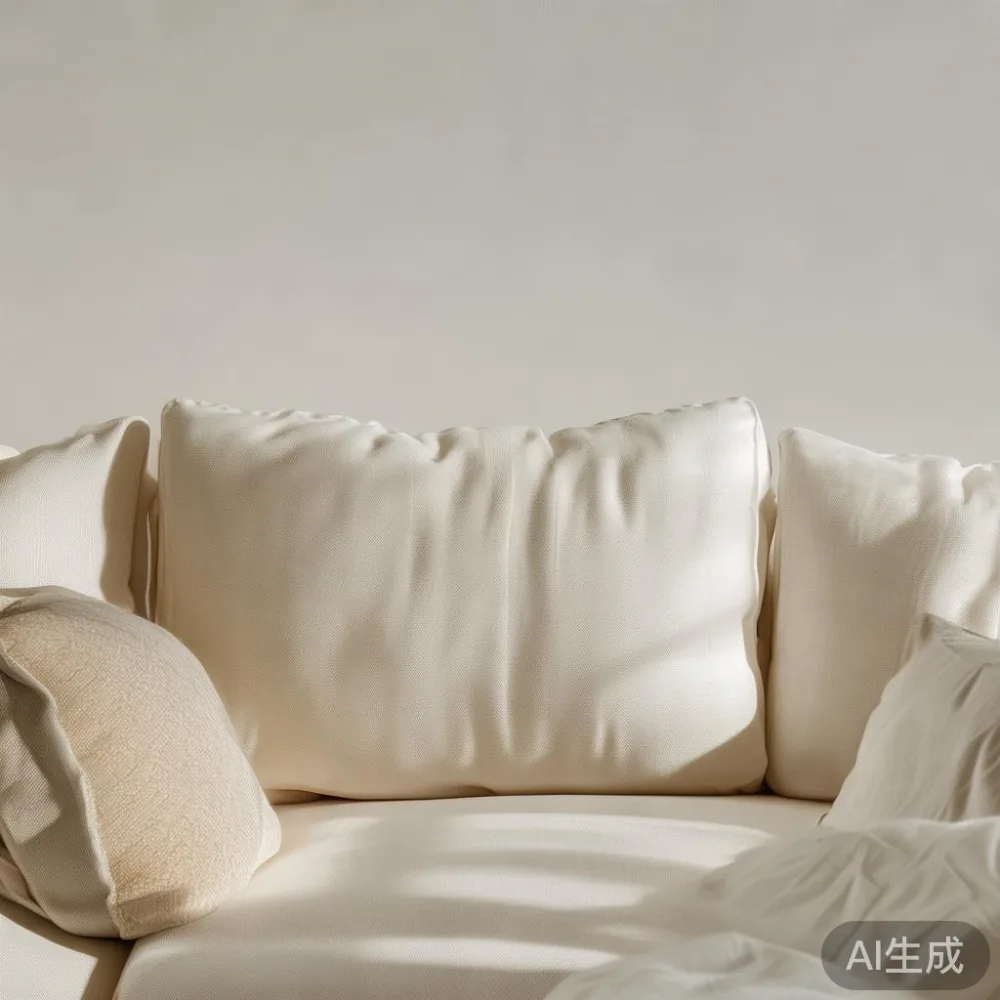
Compact Singapore living is a specific design problem. HDB and condo corridors around 1.2 metres wide force furniture through a tight delivery path, lift openings are typically 2.1 metres tall, and the 9% GST on imported furniture makes every cent count. The trick is not buying less. The trick is buying furniture that earns its footprint, choosing the right dimensions in centimetres, and being honest about which pieces can be visually compressed and which need to physically exist. A care sofa, when chosen carefully, can anchor a small room without eating it alive.
Why a Care Sofa Works in a Compact HDB Living Room
A care sofa is a solid wood sofa built around the idea of long-term daily use rather than showroom display. The frame is hardwood, the seat depth is intentional, and the cushions are designed to be fluffed and rotated, not replaced every two years. In a 13 sqm living room, that matters because the sofa is the largest single object in the space. If the frame sags or the foam collapses, the room starts to look tired even if nothing else changes.
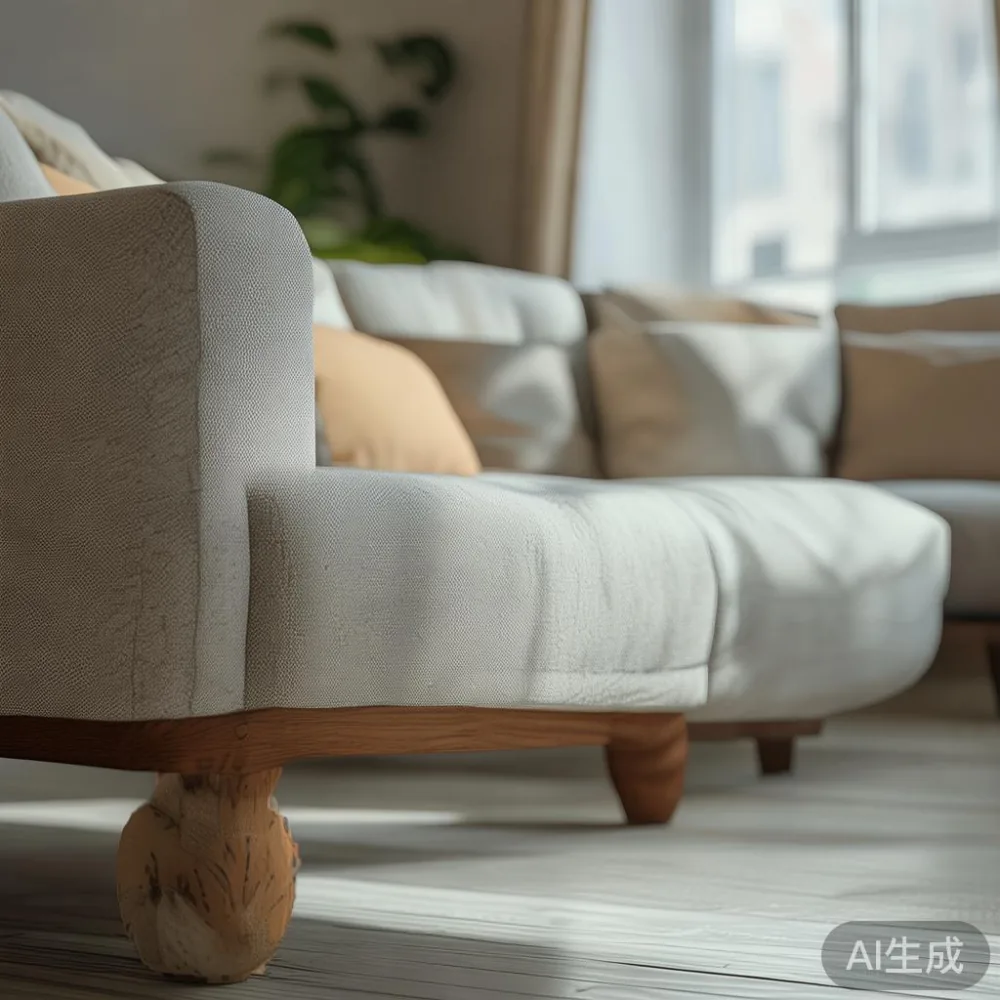
In our Tampines flat, we chose a three-seater care sofa with an outer width of 198 cm, a depth of 92 cm, and a seat height of 44 cm. That left a 70 cm walkway behind the sofa and roughly 55 cm between the sofa front and the television console. The minimum I would recommend for a comfortable passage is 60 cm, but 70 cm feels generous and lets two people walk past without sideways shuffling.
The other thing a care sofa gets right is proportion relative to ceiling height. Most HDB ceilings sit at 2.6 to 2.8 metres, which sounds like plenty until you put a tall-backed sofa under them. We kept the back height to 82 cm, which keeps the room feeling open vertically. Anything over 95 cm tends to crowd the wall.
What "Light Luxury" Means for a Small Flat
Light luxury is not about gold trim or marble everything. French light luxury, American light luxury, and post-modern light luxury are design languages that share one idea: quiet materials, restrained shapes, and visible craftsmanship. For a compact Singapore home, that translates into solid wood frames in oak or ash, brushed brass details rather than shiny ones, and fabric that ages well.
We went with an oak care sofa in a warm linen-blend cover. The frame is visible at the arms and base, so the wood grain does some of the visual work that a print or a pattern would otherwise do. In a 13 sqm room, busy fabrics overwhelm quickly. A quiet cover lets the eye rest, and a care sofa frame quietly carries the room.
If your taste leans cooler, an American light luxury care sofa in ash with a grey boucle cover reads similarly modern but slightly more casual. If you want something with a touch more curve, post-modern light luxury tends to round the arms and soften the back, which can help in a room where you want the sofa to feel like a piece of furniture rather than a wall.
Can a Care Sofa, a Bed Frame, and a Dining Table All Share One Small Flat?
Yes, and most HDB homes already need them to. The question is sequencing. Start with the care sofa, because it is the largest piece and dictates the living room layout. Then choose the dining table, because the dining area in many HDBs shares the living room or sits right outside the kitchen. The bed frame and nightstand come last, because the bedroom is usually the room with the most fixed dimensions (the built-in wardrobe, the door swing, the window).
For our 4-room HDB, the dining table is a 120 cm by 70 cm solid wood rectangular table that seats four comfortably and six if you squeeze. We push it against the wall on weekday mornings and pull it out for dinner. The bed frame is a queen-size solid wood platform at 160 cm by 200 cm, which fits the standard HDB master bedroom with 45 cm of clearance on each side. The nightstand is a 45 cm square oak piece with one drawer.
If you are choosing a marble table for the dining area instead of solid wood, be aware that a 120 cm marble top weighs around 55 to 70 kg. That is fine in a ground-floor unit, but on the 12th floor it means two delivery men and a lift with at least a 1.5 metre depth. Measure first.
Real Numbers for a Tampines 4-Room HDB Layout
Here is the layout we settled on, with measurements in centimetres and prices in SGD inclusive of the 9% GST. The care sofa at 198 x 92 x 82 cm was the centrepiece, and MIDHILL shipped it from Foshan to our door in 28 days with full white-glove delivery. Total landed cost was S$2,180.
The bed frame, a queen-size solid oak platform at 160 x 200 cm with a 110 cm headboard, was S$1,640 landed. The nightstand pair at 45 x 45 x 55 cm each came to S$420 for the pair. The dining table at 120 x 70 x 75 cm in solid ash was S$980, with four fabric dining chairs at S$120 each.
The wardrobe was a custom build from a local carpenter at S$2,400, not from MIDHILL, because the alcove width in our bedroom (182 cm) is non-standard and we needed millimetre precision. A MIDHILL wardrobe would have worked in a standard 180 cm or 200 cm alcove, and would have been around S$1,800 to S$2,200 depending on configuration. The marble table we tried out in the showroom was a beautiful 110 cm round piece in white Carrara at S$1,350, but we chose wood for daily practicality with two kids.
Total furniture spend across the flat: S$7,420, before the wardrobe. For context, a typical 4-room HDB renovation in Singapore runs S$30,000 to S$45,000, so the furniture represents a meaningful slice but not the majority.
How Do You Keep the Bedroom From Looking Like a Storage Unit?
The bedroom is where small flats fail most often, because the bed frame is large, the wardrobe is fixed, and the nightstand wants to be a dumping ground. The fix is not more furniture. The fix is fewer categories and clearer zones.
A queen-size bed frame at 160 x 200 cm needs at least 60 cm of side clearance on each side for bed-making and one person to walk past. In a typical HDB master bedroom at roughly 3.2 m by 3.6 m, that leaves a 1.2 metre strip at the foot of the bed. Use that strip for a single 140 cm long low bench, not a second piece of furniture. The bench is a place to sit, a place to drop a bag, and a visual line that breaks up the room.
The nightstand should be one per person, no wider than 50 cm, and ideally with a drawer rather than an open shelf. Open shelves collect visual clutter. If you want to read at night, a wall-mounted swing arm light beats a table lamp because it does not take up nightstand surface.
If your bedroom doubles as a guest room, Scandinavian styling tends to work because it relies on pale wood, white walls, and one or two textile accents. A light oak bed frame, two matching nightstands, and a single linen curtain panel is enough. Resist the urge to add a desk unless you genuinely work from that room.
What About Choosing Between a Japanese Bed and a Nordic Bed?
The Japanese bed vs Nordic bed decision is mostly about floor height and visual weight. A Japanese-style platform bed sits low, often 20 to 30 cm off the ground, with a plain headboard or none at all. A Nordic bed sits higher, around 35 to 45 cm, with turned legs and often a taller headboard.
In a small Singapore bedroom, the Japanese platform makes the ceiling feel taller and the room feel calmer. The Nordic bed makes the bed feel more like a piece of furniture and gives you under-bed storage, which HDB homes often need. For our master bedroom, we chose the Nordic-style solid oak platform because we use the under-bed space for off-season clothing in flat storage boxes. For the second bedroom, which is genuinely a guest room, a Japanese-style platform at 25 cm height would have been the better pick and would have left more usable floor space.
Both styles work with a care sofa in the living room, because the sofa frame and the bed frame can share the same wood species. Matching oak across rooms is what makes a small flat feel like one home rather than three rooms of unrelated furniture.
Mid-Century Modern Bedroom Pieces That Earn Their Footprint
Mid-century modern for bedroom pieces tends to have tapered legs, low profiles, and warm wood. In a small HDB bedroom, a mid-century style nightstand with splayed legs at 45 x 45 x 50 cm gives you a drawer, a surface for a phone and a glass of water, and four exposed floor corners that make the nightstand look smaller than its actual dimensions. That visual lightness matters in a 10 sqm bedroom.
A mid-century bed frame with a single horizontal slat headboard at 90 cm height reads as one clean line rather than a wall of upholstery. Pair it with one textile accent, such as a wool throw in a single colour, and you have a bedroom that looks designed rather than furnished.
The risk with mid-century modern in a small flat is going too thin. A bed frame with 2 cm legs looks elegant on a magazine page but feels unstable in daily use. Look for legs that are at least 4 cm thick at the top and taper to 2.5 cm. That small detail is the difference between furniture that lasts 10 years and furniture that wobbles after 18 months.
How to Style a Japandi Sofa in Bedroom Corners and Odd Spaces
A care sofa does not have to live only in the living room. In some Singapore layouts, especially in 5-room HDBs and newer condos, there is a corner of the master bedroom or a stretch outside the kitchen that begs for a seat. Styling a Japandi sofa in bedroom corners is about choosing a piece small enough to leave walking space, around 150 to 170 cm wide, and placing it where the room needs rest rather than where it fits geometrically.
In a Punggol condo I visited last month, the owner had placed a 160 cm wide Japandi-style care sofa under the bedroom window. The sofa was 78 cm deep, which left 110 cm of walking space behind it. The frame was ash, the cover was a sage linen, and there was one bolster cushion. That was it. No side table, no lamp, no throw. The window did the work. The care sofa acted as a reading spot during the day and a place to sit while putting on shoes in the morning.
If you go this route, anchor the sofa with a 90 x 150 cm wool rug that sits at least 20 cm under the front legs. The rug is what tells the room the sofa is a destination, not an obstacle.
Is the Best Industrial Bed for 2026 Worth Buying in Singapore?
The best Industrial bed for 2026 is a question worth asking, because industrial furniture has gone through a refinement cycle in the last five years. The chunky black iron and rough-sawn pine look from 2016 has been replaced by cleaner lines, brushed metal finishes, and tighter joinery. For a Singapore bedroom, industrial works if your flat has concrete elements, exposed brick, or dark flooring. In a typical HDB with white walls and light laminate, industrial furniture tends to feel imported from someone else's apartment.
If you do choose industrial, keep the bed frame to a queen-size 160 x 200 cm, with a headboard no taller than 100 cm. The metal should be powder-coated or brushed, not shiny chrome. Pair it with one warm textile, such as a cognac leather sling on a nearby chair, and you have contrast without conflict.
The Best Japandi Sofa for 2026, and Why It Suits Singapore
The best Japandi sofa for 2026 is, in plain terms, a care sofa with a Japanese sensibility. Low back, deep seat, visible wood frame, neutral cover. Japandi is the overlap between Japanese restraint and Scandinavian warmth, and it suits Singapore for a practical reason: the climate. Heavy upholstery and high backs trap heat. A Japandi care sofa breathes.
In the MIDHILL showroom I walked through virtually, the Japandi pieces used ash and white oak rather than darker walnut, which keeps the visual temperature down. Seat depths around 95 to 100 cm let you sit cross-legged without the cushions losing shape. If you entertain often, a 220 cm wide three-seater in this style seats three adults comfortably without dominating a 14 sqm living room.
Corridor, Lift, and Doorway Maths Nobody Talks About
Singapore delivery fails usually happen in the corridor, not in the home. HDB corridors are typically 1.2 to 1.5 metres wide, lift doors around 90 cm wide, and lift interiors about 1.4 m deep by 1.1 m wide. A care sofa that measures 198 cm wide and 92 cm deep needs to be tilted to fit a 1.1 m wide lift, which is fine, but the package dimensions matter more than the assembled dimensions.
MIDHILL ships sofas flat-packed in boxes around 110 x 70 x 60 cm per module, which fits any Singapore lift. That is not the industry default. Some brands ship assembled, which means a 2-metre sofa will not physically enter the lift on the 14th floor.
Before you order, measure the lift at your block, the corridor turn at your floor, and the door frame at your unit. Standard HDB door frames are 90 cm wide, but the frame depth can eat 5 cm on each side, leaving an effective opening of 80 cm. If a piece is wider than 80 cm, it will not enter the front door without disassembly.
Maintenance, Warranty, and the Long View
A care sofa should come with a structural warranty of at least 10 years, a lifetime refinishing option on the wood frame, and a returns window that gives you time to live with the piece. MIDHILL offers a 10-year structural warranty, lifetime frame refinishing, 14-day returns, and free shipping over US$350 (about S$475). For a Singapore customer, the lifetime refinishing matters more than it sounds. Solid wood changes colour over time, especially under air-con and UV exposure. Being able to sand and re-oil the frame after seven or eight years resets the piece.
For daily care, rotate the seat cushions every two weeks and vacuum the cover weekly on low suction. Avoid placing the care sofa in direct afternoon sun, which fades linen covers unevenly. If the cover is removable, wash it once a year on a cold delicate cycle and line dry. The frame needs nothing.
A Short Checklist Before You Click Buy
Measure the lift, the corridor, and the door. Measure the room. Decide whether the care sofa, bed frame, dining table, nightstand, and wardrobe are all needed new or whether one or two pieces can be reused. Confirm the wood species and the cover material, not just the colour. Confirm the box dimensions for delivery, not the assembled dimensions. Check the warranty terms in writing. Then order.
Singapore flats are small, but they are not limiting. They just reward furniture that has been thought about. A care sofa built from solid wood, paired with a matching bed frame and a sensible dining table, gives you a home that works in 13 sqm the same way a 60 sqm condominium works. The furniture does not shrink the room. The wrong furniture does.