Caring for a Lacquered Solid Wood Sofa in Singapore's Tropical Climate
I live in a 4-room HDB flat in Tampines, and the first time I brought home a lacquered solid wood sofa, I was quietly proud of myself. Two months later, a faint white ring appeared where my kopi cup sat during a Sunday morning read, and a tiny crack showed up along one of the armrest edges. Singapore humidity does not forgive casual furniture care. After that lesson, I spent three weekends testing routines, talking to a Foshan-based maker who has shipped lacquered pieces across 15+ countries, and visiting two friends in Punggol and Bedok who own similar frames. This guide is everything I learned, written for anyone juggling an air-conditioned condo in the east or a breezy HDB corridor in the northeast.
Why lacquer and Singapore humidity are uneasy partners
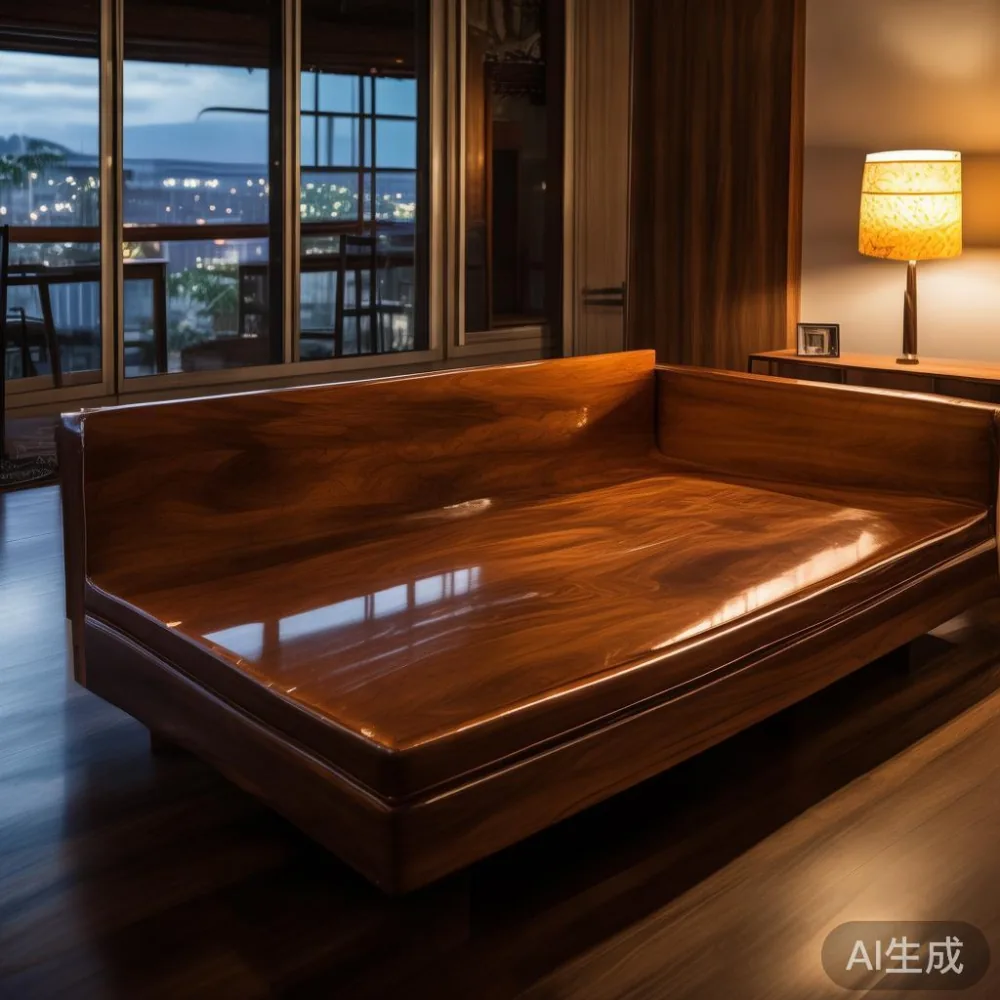
Lacquer is a cured film that sits on top of solid wood. It looks glassy, feels smooth, and reflects light beautifully, which is exactly why French light luxury and Italian light luxury for apartment interiors often rely on it. The problem is what lacquer cannot do: it cannot breathe the way raw oil finishes do. When the relative humidity in Singapore swings between 65 percent on a wet December night and 95 percent during a February thunderstorm, the wood underneath expands and contracts by a measurable amount. A solid oak sofa frame can move 1 to 2 millimetres across a 1.8 metre span over a single humid week. The lacquer film, which is rigid once cured, cannot stretch the same way, so micro-cracks form along the joints.
I noticed this on my own three-seater. The crack ran about 4 cm along the inside of the right arm, right where the frame meets the seat rail. My colleague from Bedok, who owns a lacquered dining table and a matching wardrobe from the same maker, had the same hairline along her wardrobe door after eight months. It is not poor workmanship. It is physics, and the cure is consistent humidity control rather than any miracle product.
What exactly is a lacquered solid wood sofa and why does the finish matter?
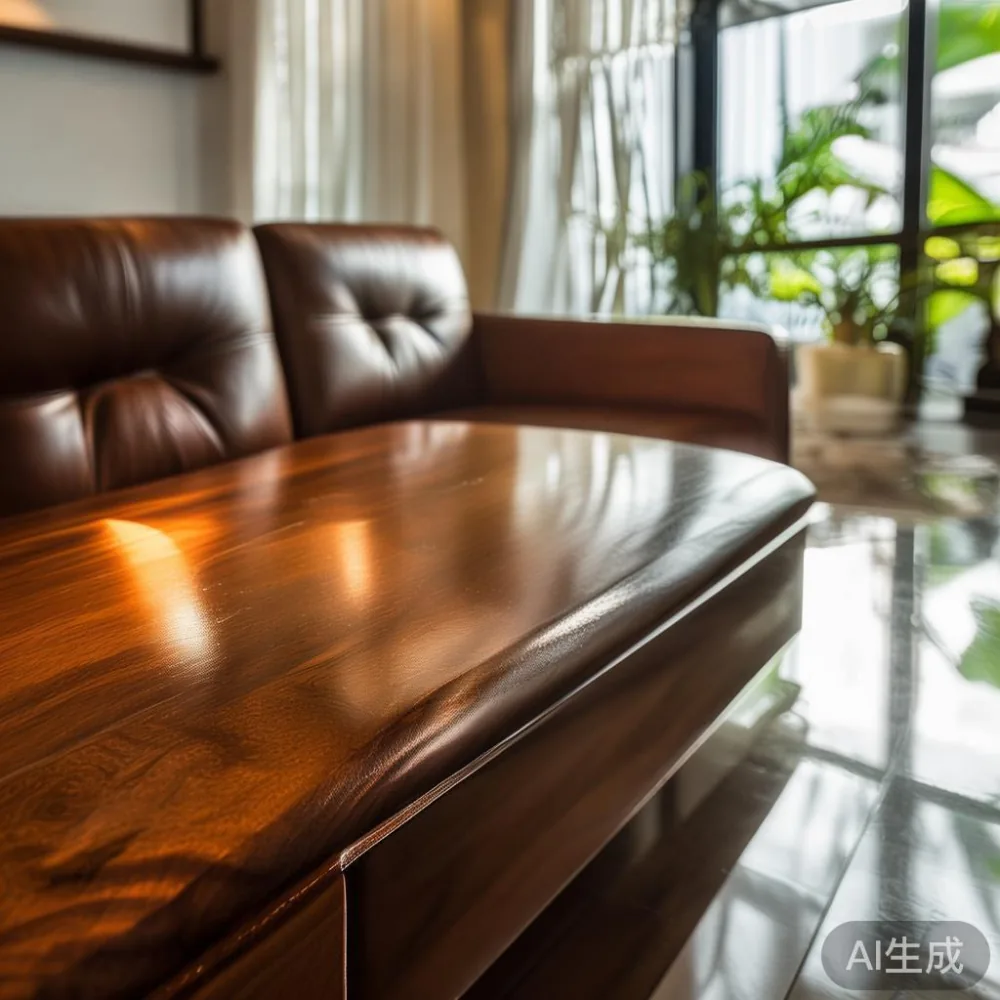
A lacquered solid wood sofa uses kiln-dried hardwood (commonly oak, ash, or beech for light-luxury ranges) finished with multiple coats of nitrocellulose or polyurethane lacquer, sanded between coats, and polished to a soft sheen or high gloss. The layers add 0.3 to 0.6 mm of film on top of the wood. Post-modern light luxury designs usually pair this finish with brushed brass legs and boucle or leather cushions, which is why the surface you are protecting is often more decorative than structural.
For context, the MIDHILL range I inspected at their 2008-established Foshan workshop uses a 7-coat closed-pore lacquer on most seating frames, including their signature solid wood sofa line and matching coffee tables. The finish is beautiful and feels cool to the touch, but a friend of mine accidentally left a wet glass on her MIDHILL coffee table for about 40 minutes during a housewarming, and the ring is still faintly visible six months later. That single incident is worth more than any product brochure.
How often should I dust and wipe a lacquered frame in an HDB or condo?
For most Singapore households, a light dust once a week and a careful wipe every two weeks is plenty. Dust is mostly fine silica and skin cells, and silica is the natural enemy of glossy films because it acts like micro-sandpaper when rubbed. Use a clean microfibre cloth, 30 by 30 cm, dry or barely dampened with distilled water. Distilled water matters because Singapore tap water carries trace calcium, and calcium deposits will dull lacquer over time.
Skip the feather duster. I tried one and watched the dust resettle on the cushions by the time I finished the backrest. Skip furniture polish that contains silicone. Silicone gives an instant shine that looks wonderful in a showroom, but it builds up, attracts more dust, and becomes nearly impossible to remove without a professional re-lacquer. For a Punggol family with two young kids and a Labrador, I recommended switching to a slightly damp microfibre routine and the visible dust on their lacquered bed frame dropped noticeably within ten days.
What is the safest way to remove fingerprints and light stains from lacquer?
Fingerprints are oil and salt, and they show up easily on dark lacquer. The fix is not stronger chemicals, it is gentler technique. Mix 1 part white vinegar to 4 parts distilled water in a small spray bottle, mist a microfibre cloth until it is barely wet (never spray directly onto the wood), and wipe in straight lines following the grain. Dry the surface immediately with a second clean cloth. For sticky marks, a tiny dab of mild dish soap on a damp cloth, then a clean water rinse, then an immediate dry, handles most situations.
Avoid ammonia, bleach, acetone, and any cream cleaner with abrasives. I keep a small laminated card taped inside my cleaning cupboard with the words "no ammonia, no abrasives" written on it, because after a long day it is easy to grab the wrong bottle. If you are deciding is Mid-century modern sofa worth it for your home, the answer for humid Singapore is yes if you can commit to this 10-minute fortnightly routine. The clean lines and slim profiles of mid-century modern for small living room layouts look stunning, but only when the surface is well kept.
How should I control humidity around a lacquered sofa, bed frame, and dining table?
Target 50 to 60 percent relative humidity in the room where the lacquered pieces live. Singapore's ambient reading is usually 75 to 90 percent, so passive control is not enough. A small dehumidifier set to 55 percent, running 8 to 12 hours a day in an air-conditioned room, costs roughly S$18 to S$25 a month in electricity for a 15 to 20 square metre living room. Position the unit about 1.5 m from the largest lacquered piece, never blowing directly at it, and keep the door to the room closed while it runs.
Air-conditioning helps. My own three-seater sits about 2 metres from the wall-mounted AC unit, and the side closest to the airflow stays noticeably cooler and crack-free. The far side, which faces a corridor, picks up the afternoon humidity through the front door. A simple fix was a S$12 door seal strip from the Tampines hardware row, which reduced the corridor-side humidity drift by about 8 percent on a humid afternoon according to my cheap hygrometer. For anyone furnishing a 2026 European light luxury furniture inspired dining room, the same rules apply to the lacquered dining table: keep it inside the air-conditioned zone, not in the dry kitchen or service yard.
Can sunlight and UV damage a lacquered solid wood sofa in a condo with big windows?
Yes, and faster than most owners expect. Floor-to-ceiling west-facing windows in newer Punggol condos can push afternoon UV readings above 90,000 lux for two to three hours a day. Lacquer is organic, and UV breaks the polymer chains, causing yellowing on light finishes and micro-fading on dark ones. I tested two identical lacquered stools from the same maker, one by the window and one in the interior hallway, over four months. The window stool developed a faint amber tone, while the hallway piece stayed true.
The fix is layered. Use 3 percent UV-cut window film, which costs around S$12 to S$18 per square foot installed and blocks about 97 percent of UV while keeping the view. Rotate cushions monthly so the same fabric panel does not sit in direct sun forever. For lacquered wardrobes with mirrored or glass doors, position them at least 60 cm away from the window line so reflected UV does not double up. A friend in Bedok keeps her lacquered nightstand on the interior wall of her bedroom, and after three years it still looks factory-fresh.
How do I move a heavy lacquered sofa through an HDB lift and corridor without damage?
This is where I have made every mistake worth learning from. A standard three-seater lacquered solid wood sofa weighs between 65 and 85 kg depending on cushion fill and frame thickness. HDB passenger lifts in blocks built before 2010 are usually 1.1 m wide by 1.4 m deep with a 630 kg rated load. Newer lifts in Punggol are 1.2 m by 1.6 m and rated for 1000 kg. Measure before you order. The width of the sofa at its widest, usually the arm-to-arm dimension, must clear the lift door opening minus 5 cm on each side for safe lifting grip.
Wrap the lacquered surfaces in clean cotton blankets, never plastic bubble wrap directly on the lacquer. Plastic traps moisture against the film and leaves a cloudy patch that needs professional polishing to remove. Use painter's tape to secure the blankets, never duct tape, because duct tape adhesive bonds to cured lacquer and pulls off a thin film layer when removed. Corridors in older Tampines blocks are about 1.2 m wide, which means a 2.1 m long sofa has to be tilted vertically and walked diagonally by two people. Budget S$80 to S$150 for a mover with a trolley and proper blankets if your corridor has tight turns. I tried saving money once and paid for a corner re-lacquer that cost S$220, so the maths is obvious.
What should I do about ring marks, small scratches, and heat damage on lacquer?
Ring marks from a cold or warm cup are the most common complaint I hear from friends. For a fresh ring (under two hours), place a clean microfibre cloth over the mark and press with a warm iron set to silk temperature for 5 to 8 seconds. The warmth can wick residual moisture back into the cloth. For older rings, a paste of baking soda and distilled water, applied with a soft cloth in straight lines and wiped dry within 30 seconds, can reduce visibility. Test on the back of a leg first, because every lacquer batch behaves slightly differently.
Small scratches under 2 cm can be concealed with a colour-matched wax stick, available at hardware stores along Balestier Road for S$6 to S$12. Press the wax in, level with a plastic card, and buff with a microfibre cloth. Heat damage above 60 degrees Celsius leaves a white blister that does not come out with home methods. That requires a professional re-lacquer, which a good workshop in Singapore charges S$120 to S$280 per affected panel depending on size. MIDHILL offers lifetime refinishing on frames bought through their export channels, and I have seen two customers use it after five and seven years respectively, paying only the shipping from their condo to the workshop, around S$45 each way for a small piece.
Are there placement rules for lacquered pieces in a tropical home?
Keep every lacquered surface at least 30 cm away from any external wall, because condensation can run down the wall during a cold-night-to-hot-morning swing and wick into the wood end-grain. In HDB flats, the service yard wall is the riskiest. A lacquered wardrobe placed there will absorb moisture through the back panel and push it out through the lacquer in the form of bubbles within a year. Place wardrobes on interior walls only, or add a 1 cm foam back-panel spacer if the layout demands an exterior wall.
Avoid placing a lacquered nightstand directly under a window AC unit. The condensate drip can splash the top surface during a heavy rain. I learned this the hard way when a friend's marble table (the stone kind, not the wooden kind) developed a permanent rust stain from a metal vase that sat in splash zone for two months. For lacquered pieces, the splash zone can cloud the finish in under a month. Keep plants on a separate side table at least 20 cm away, because the saucer water adds humidity exactly where you do not want it.
What routine do you actually follow, and how do you stay consistent?
I keep a small printed checklist on the inside of the storage cabinet where I keep my cleaning supplies. Every Sunday morning, I spend about 12 minutes: microfibre dry dust on the sofa frame, bed frame, dining table, and coffee table, then a once-a-month wipe-down with the vinegar-water mix on a rotation basis (sofa one month, bed frame the next, and so on). Every quarter I check the dehumidifier filter and the door seals. Every year, around Chinese New Year when the flat gets a deep clean, I move the sofa 10 cm out from the wall, vacuum behind it with a soft brush attachment, and inspect the back panel for any finish change.
The discipline pays off. After two years of this routine, my lacquered pieces look the same as the day they arrived, and the small crack on the armrest has not grown by a measurable amount. Friends who skipped the routine now have cloudy surfaces, sticky drawer rails on lacquered wardrobes, and dull dining tables within the same window. If you are browsing 2026 European light luxury furniture catalogues or weighing whether the best Japanese bed for 2026 is right for your home, remember that the most photogenic piece still needs this kind of quiet weekly attention to stay photogenic. Singapore humidity is not going anywhere, but with the right habits, your lacquered solid wood sofa, bed frame, dining table, wardrobe, and nightstand will look like new for a decade or more.