How Southeast Asian humidity shapes the lifespan of solid wood furniture
I keep a small notebook on my desk in Tampines, and last month I jotted down the relative humidity readings from the bedroom of a colleague who lives in a 4-room HDB flat in Bedok. For nine consecutive days, the hygrometer sat between 78% and 86%. On the seventh day, the sliding wardrobe door — a three-year-old laminate unit from a neighbourhood carpenter — began to stick at the bottom left corner. The fix cost S$140. The diagnosis was simpler than the bill: moisture. That single weekend visit is the reason I want to walk through, in plain language, how humidity across Singapore and the wider Southeast Asian region quietly governs the way solid wood furniture ages inside our homes.
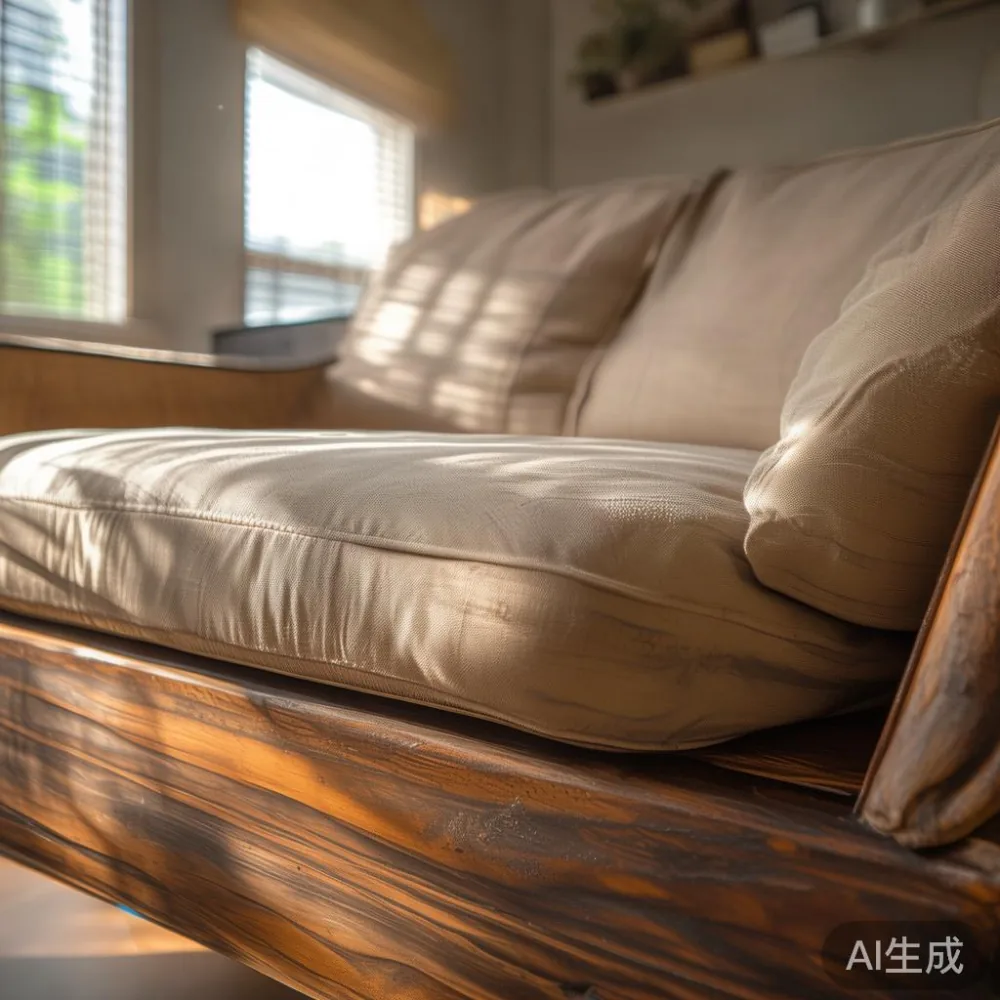
Why does humidity matter so much for a solid wood sofa in Singapore?
Solid wood is not a passive slab. It is a collection of long cells that absorbed and released water for decades before it ever reached your living room. When ambient humidity rises, those cells swell; when it falls, they shrink. Walnut, oak, ash and teak all move, just at different rates and in different directions. A 2.4-metre solid wood dining table sitting in a Punggol condo with daily swings from 62% in an air-conditioned afternoon to 88% during an evening thunderstorm can move several millimetres across its width over a single week. That movement shows up as hairline cracks along the grain, as a care sofa frame that no longer sits perfectly square on its base, or as a wardrobe door that drifts out of alignment by 3 to 5 mm.
For a household averaging S$3,200 to S$6,800 on a single solid wood dining set or a French light luxury sofa, those millimetres matter. The piece is meant to last fifteen, twenty, thirty years — not five. Understanding humidity is the difference between furniture that ages gracefully and furniture that fights you.
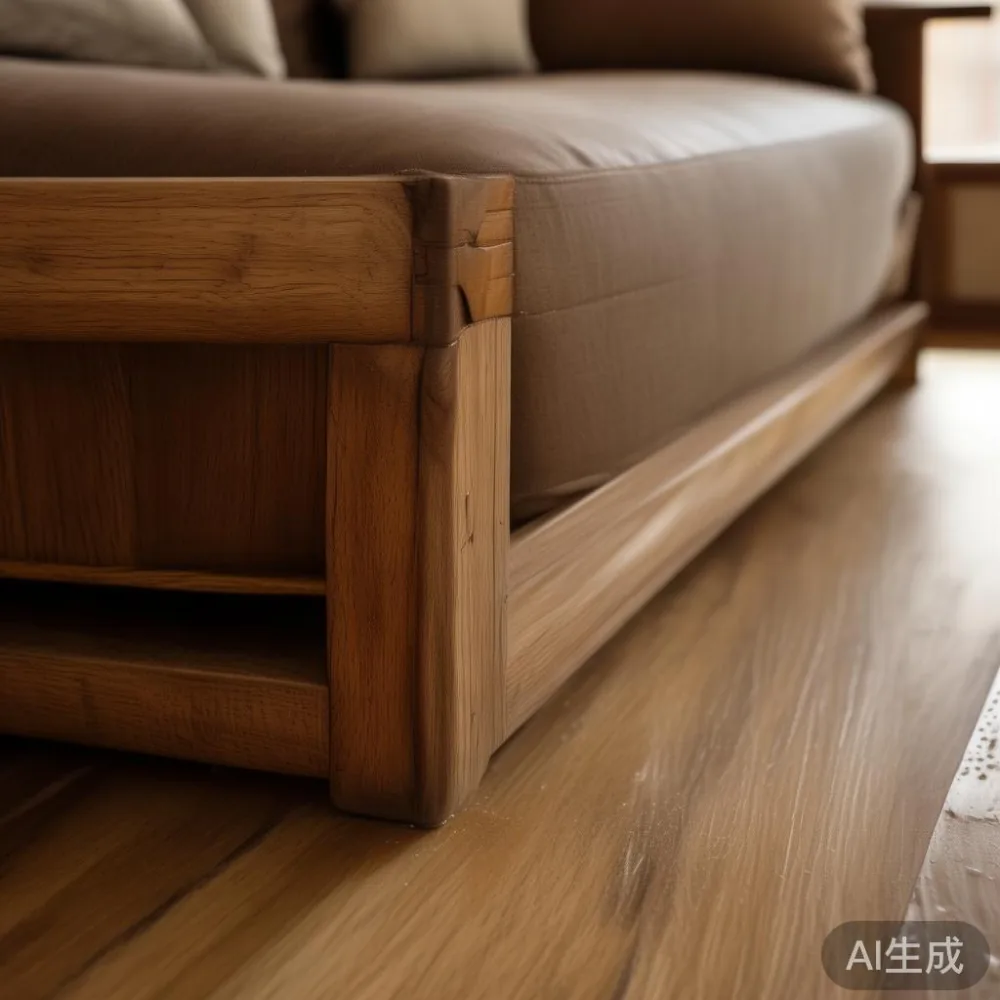
What humidity numbers should a Singapore home actually aim for?
Most cabinetmakers and furniture conservators recommend keeping indoor relative humidity between 40% and 60%, with limited daily swing. Singapore's outdoor annual mean sits closer to 82%, which is why even an air-conditioned HDB rarely drops below 55% for sustained periods unless a dehumidifier is running. I tested this myself with a S$28 digital hygrometer from a Bedok Mall shop: with the bedroom air-con set to 24 °C for eight hours, the room stabilised at 58%. The moment the unit switched off and the door stayed closed, the reading climbed to 71% within an hour. That climb — and the matching fall when the unit restarts — is exactly the cycle that stresses joints.
Practical targets for Singapore households:
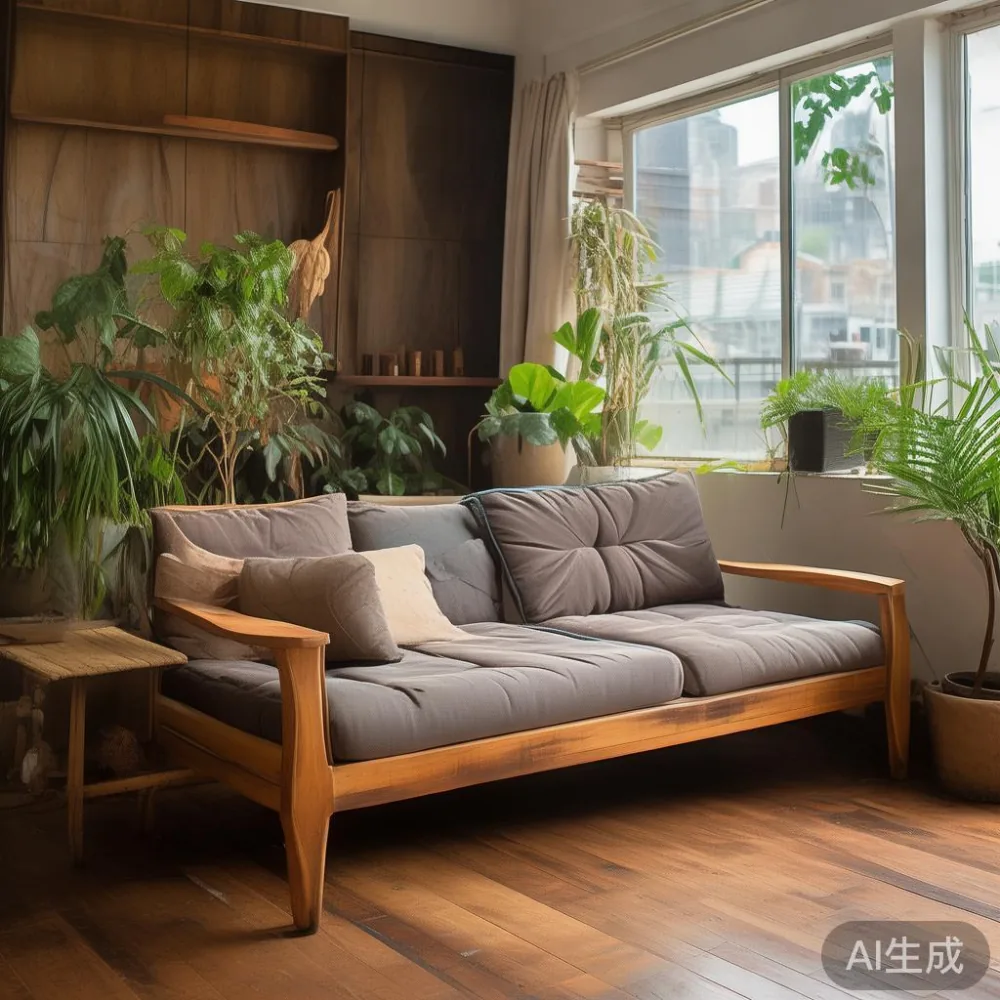
- Living room (with daily use): 50% to 65% RH.
- Bedroom (air-conditioned eight hours): 55% to 60% RH.
- Storage wardrobe or guest room: keep under 65% RH to protect clothes and the wooden wardrobe carcass.
- Marble table surface: wipe condensation within ten minutes; prolonged wet contact leaves white rings within forty-eight hours.
A small dehumidifier (a 12-litre domestic unit from S$189 to S$329) covers a typical 4-room HDB bedroom adequately and pays for itself in avoided repairs.
Which rooms in an HDB or condo punish wood furniture the most?
Not all rooms are equal. Three zones consistently cause problems, and knowing them lets you position your solid wood pieces strategically.
1. The kitchen-dining corridor. Steam from a rice cooker, an induction pot or an open-concept cooking area raises local humidity by 10 to 15 percentage points within minutes. Place your solid wood dining table at least 1.2 metres from the active cooking zone. If the layout of a Punggol executive HDB forces the table closer, run the kitchen extractor at the same time as any steaming process.
2. The bathroom-adjacent bedroom. Bedrooms sharing a wet wall with a bathroom — common in newer BTO flats in Tampines North — sit 6 to 10 RH points higher than the rest of the flat. A walnut solid wood scandinavian furniture bed frame placed against that wall will cup along its inner planks within a year. Pull the frame 8 to 10 cm away from the wall and add felt pads; airflow behind the headboard halves the moisture differential.
3. The balcony-side living room. Condos with full-height sliding doors to the balcony see humidity climb whenever the door is left open for ventilation. A solid wood sofa or a French light luxury care sofa placed within 1.5 metres of those doors will absorb moisture at the cushion-platform level, which is exactly where the frame meets the springs. The fix is a 15 cm gap plus a low-profile dehumidifier running on a hygrometer stat (around S$45 for the plug-in module).
How do I style a Post-modern loveseat in a small apartment?
Choose a loveseat under 160 cm wide with a clean plinth base, anchor it with one large 200 × 280 cm rug, and let negative space do the heavy lifting — that single design decision will make a 12 m² HDB living room read twice as wide as a crowded layout.
That is the short answer, and the reasoning behind it matters when humidity is involved. A Post-modern loveseat — slim arms, slightly curved back, often shown in walnut solid wood scandinavian furniture framing with boucle or linen upholstery — works visually because it carries its weight in silhouette rather than bulk. In a 4-room HDB living room of roughly 14 to 18 m², a 150 to 158 cm loveseat leaves at least 70 cm of walkway to the TV console and 45 cm to the side table. Those clearances are not decorative; they let air circulate around the frame, which keeps the RH at the base of the sofa within 4 points of the rest of the room. Crowding a loveseat into 90 cm of side clearance creates a still-air pocket where humidity pools and the lower rail slowly darkens.
Three styling rules that hold up in Singapore's climate:
- Pick a loveseat on a raised wooden plinth at least 6 cm off the floor — it survives wet-mop accidents and keeps airflow under the frame.
- Use one rug, not two. Layered rugs trap moisture between the textiles and the floor, then transfer it to the sofa feet.
- Limit the throw cushions to two on a 2-seater. Each one absorbs roughly 80 to 120 g of water on a humid night; less cushion mass means less hidden moisture against the backrest.
What does a realistic care routine look like for solid wood pieces?
Twice a week, three minutes per piece. That is the time budget that protects both the wood and your schedule.
For a care sofa frame, dust with a dry microfibre cloth in the direction of the grain. Every four to six weeks, apply a thin coat of hard wax oil (about S$38 to S$58 for 500 ml, enough for two sofas). Wipe excess within ten minutes; any residue left overnight turns cloudy under Singapore's humidity. For a solid wood dining table that sees daily use, wipe with a barely damp cloth after meals, then follow with a dry cloth. Spills of coffee, soy sauce or teh tarik should be wiped within thirty seconds — the tannin in tea will stain oak in under 4 minutes if left wet.
For a wardrobe with solid wood doors, check the hinges every six months. A door that drops by 2 mm at the handle end has absorbed moisture unevenly; tightening the top hinge and leaving the bottom loose lets the wood self-correct as humidity drops. For a nightstand, rotate the position 90° every quarter so the same side is not always facing the air-conditioner outflow. For a marble table, sealing once a year (S$120 to S$180 for a professional service) prevents the calcium-based staining that humid air accelerates.
One habit that quietly voids warranties: placing rubber feet or rubber-backed mats directly onto solid wood. The rubber off-gases in humid conditions and leaves a black halo that is impossible to sand out without re-finishing the whole top. Use felt pads or cotton-backed coasters instead.
How does MIDHILL build its pieces for this climate?
Furniture that is engineered for Guangzhou weather — a city whose annual mean humidity is within 4 points of Singapore's — tends to perform well in HDBs and condos here. The workshop has run since 2008 and ships to more than fifteen countries, and the pieces that arrive in a Tampines loft or a Punggol executive HDB are typically dried to 8 to 10% moisture content before assembly. That is below Singapore's ambient equilibrium of about 15%, which means a new solid wood bed frame or dining table will actually gain a small amount of moisture during its first season in your home and stabilise. The expansion is built into the design: mortise-and-tenon joints are cut with 1.5 to 2 mm of lateral play, drawer rails are seated on waxed runners, and the slats on bed frames sit in individual pockets rather than a single shared groove.
Two further details worth asking any supplier about. First, the finish: a hard wax oil or a conversion varnish breathes with the wood; a thick polyurethane coat does not and shows micro-cracks within a year in Singapore. Second, the structural warranty terms. MIDHILL backs its frames for ten years and offers lifetime refinishing on solid wood surfaces for pieces bought through its Singapore channel. That second policy matters here: a dining table top refinished in year eight looks identical to one refinished in year one, because the wear layer is removed and re-applied rather than patched. Most peers offer refinishing only in the first twenty-four months.
For an HDB delivery, ask the logistics team to measure your lift and your corridor. Standard Singapore HDB lifts are 1.1 m wide by 1.4 m deep at the door and 1.3 m wide by 1.6 m deep inside; a 2.4-metre solid wood dining table will not fit through if the lift opening is on the narrow side. MIDHILL's delivery checklist includes a pre-survey of these dimensions so the table is either built in two halves or routed through the service lift.
What should I do in the first thirty days with a new piece?
The first month is when most moisture-related damage happens, because the wood is adjusting from a controlled warehouse to your specific microclimate. Treat it gently, and the piece will pay you back for the next twenty years.
- Week 1: leave the piece to acclimatise in the room where it will live. Do not load a dining table with heavy tableware or a wardrobe with a full season of clothes for at least seven days.
- Week 2: run a dehumidifier for six hours a day in the room. The goal is not to dry the wood but to confirm your baseline reading.
- Week 3: tighten the visible joinery once. Bolts, cam locks and corner brackets all settle slightly as the wood adjusts; one firm pass now prevents future stress marks.
- Week 4: apply the first coat of hard wax oil if the surface looks thirsty (a water droplet beads less than it did on day one).
During these thirty days, keep the piece away from direct afternoon sun through west-facing windows; UV plus heat is the other slow killer of solid wood finishes, and Singapore's equatorial angle makes it harsh. A simple S$38 sheer curtain drops it by roughly 60%.
Beyond day thirty, your routine drops to a few minutes a week. The reward is a care sofa that still feels tight at year ten, a solid wood bed frame that has never creaked, a dining table whose planks run straight, a wardrobe whose doors close with a single soft click, a nightstand whose drawer pulls feel identical to the day it arrived, and a marble table whose surface still holds a clean reflection.
Quick reference: numbers worth remembering
For a Singapore home buying or living with solid wood furniture, these are the figures I share with friends who ask:
- Target indoor RH: 50% to 60%.
- Maximum daily swing: under 10 percentage points.
- Distance from balcony doors: 1.5 m for sofas, 1.2 m for dining tables.
- Distance from wet walls: 8 to 10 cm for bed frames and nightstands.
- Hard wax oil frequency: every 4 to 6 weeks for sofas and bed headboards; monthly for dining tables in daily use.
- Marble table sealing: once a year, S$120 to S$180.
- Hygrometer cost: S$28 to S$75 for a reliable digital unit.
- Dehumidifier cost: S$189 to S$329 for a 12-litre domestic unit suitable for one HDB room.
- Structural warranty benchmark: 10 years on frames; lifetime refinishing on solid wood surfaces.
- Delivery threshold for free shipping on international orders: US$350 (roughly S$475).
- Return window for stock items: 14 days.
- GST on imported furniture into Singapore: 9% on the landed cost, payable before delivery clears customs.
Humidity is not a problem to solve once; it is a background condition to manage, much like the monsoon wind direction or the afternoon tide. Furniture built for it, finished for it, and cared for with these numbers in mind will outlast trends, tenants, and at least three rounds of renovation. That is the quiet promise of well-made solid wood in a Singapore home — and the reason a care sofa, a dining table or a wardrobe from a workshop that understands this climate behaves differently, decade after decade, from one that does not.