How Humidity in Southeast Asia Affects Your Care Sofa and Solid Wood Pieces
I keep a small humidity meter on my office shelf, and the reading in my Tampines HDB rarely drops below 68% RH. Last month, after three weeks of afternoon storms, it crept up to 82%. That single number explains almost every complaint I hear from Singapore homeowners about their solid wood sofa, bed frame, dining table, or wardrobe. Southeast Asian humidity is not an occasional nuisance; it is a constant climate condition that pushes wood to move roughly 2-4% in dimensional change across the seasons. The good news is that the right construction method, the right room care routine, and the right supplier can keep that movement small, slow, and invisible.
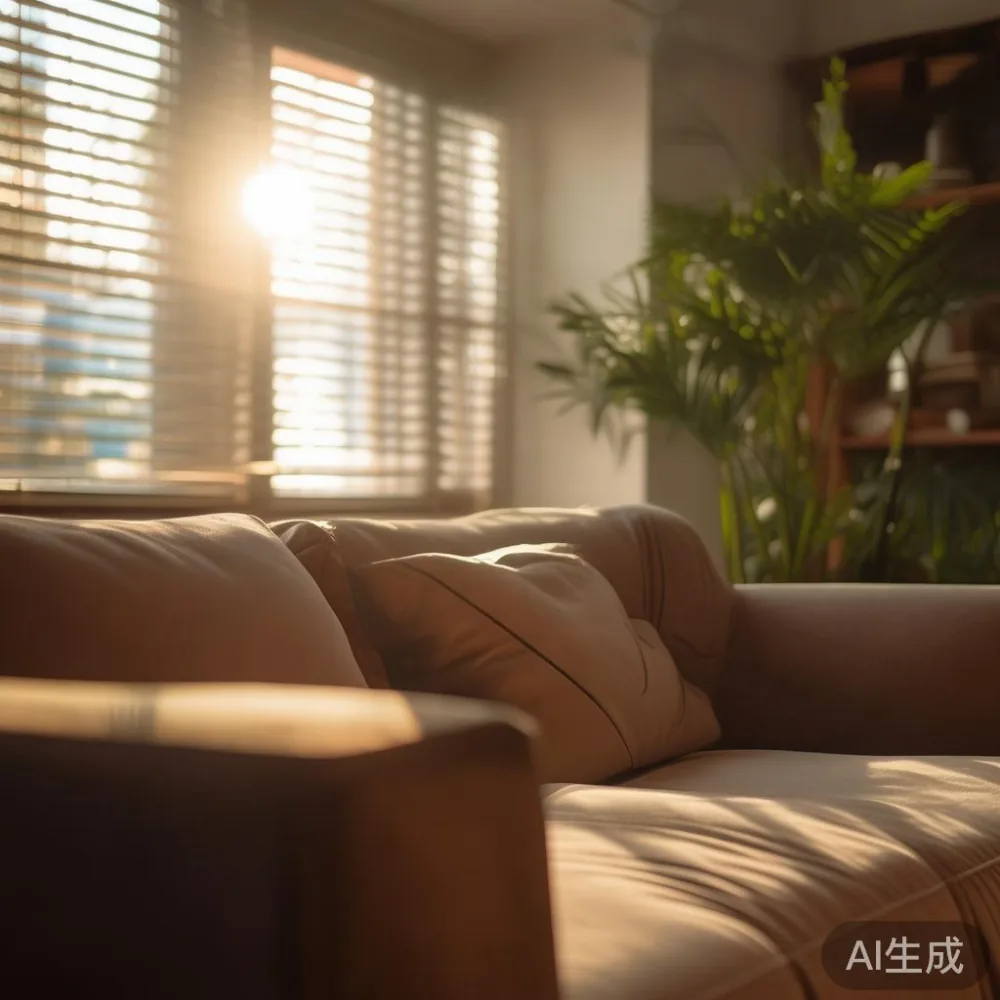
Why Singapore's Climate Is Harder on Wood Than London or Toronto
Singapore sits one degree north of the equator. Average relative humidity stays between 70% and 85% all year, and HDB flats in Bedok, Punggol, and Jurong rarely have whole-house dehumidification. The wood inside a typical care sofa frame is an organic, hygroscopic material. When the air carries more moisture, the cells in the fibres absorb it and swell. When the air dries out during a dry spell or under aggressive air-conditioning at 22°C, the same cells shrink. Each cycle stresses every glue line, dowel, mortise, and tenon.
Compared with European homes, where winter humidity can fall below 30% and create cracking, Singapore homes sit in a narrow but refined band. Wood does not experience dramatic swings here, but it never gets a chance to dry out either, and that persistent dampness invites mildew, musty smells, and finish clouding. I have measured 3 mm of expansion across a 1.8 m oak dining-table top in a non-air-conditioned balcony during the December monsoon, then watched it pull back to 1 mm once the unit was on for six hours a day for two weeks.
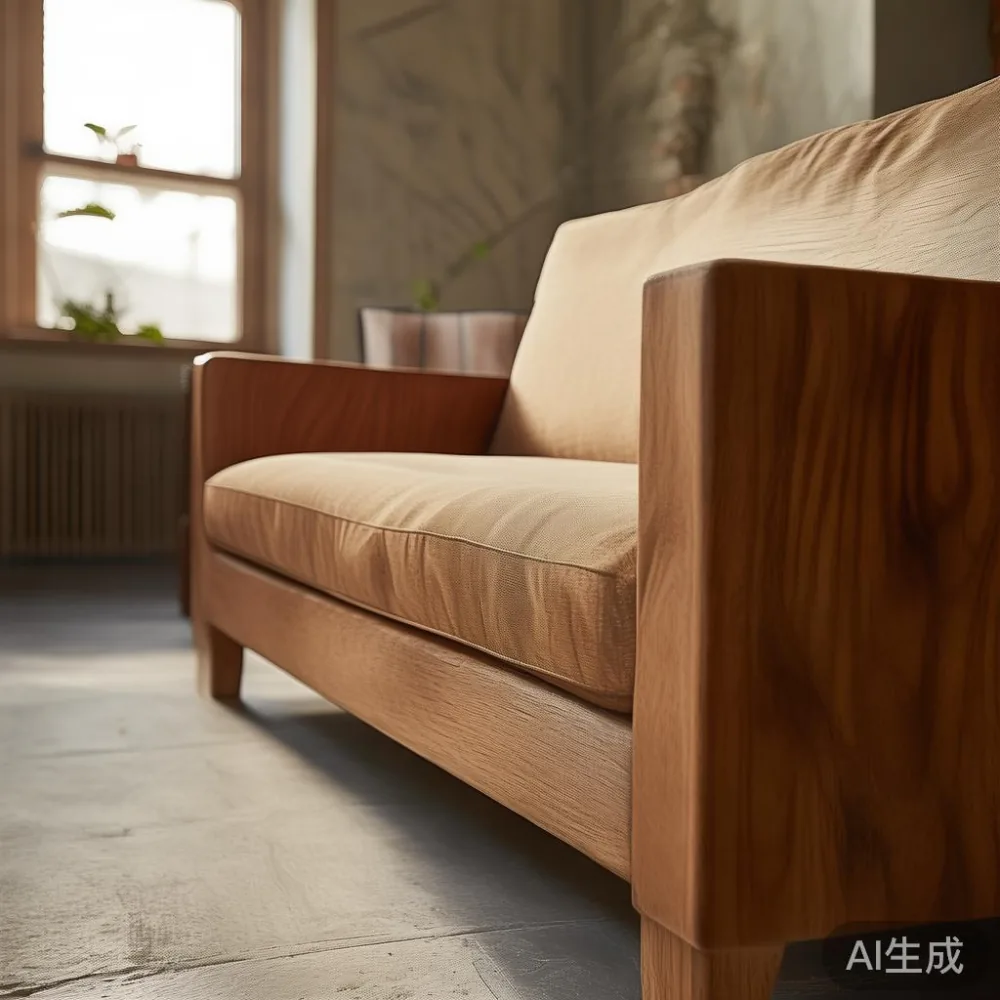
What Humidity Actually Does to a Care Sofa Frame
A care sofa built around solid hardwood (typically ash, oak, beech, or walnut) absorbs and releases water constantly. Three failure modes appear over a 5-7 year period in homes I have visited:
1. Loose joints. The mortise-and-tenon corners of the arm and back frames work loose by 1-2 mm as the rails swell. You feel it as a faint creak when you sit down.
2. Finish blushing. Polyurethane and lacquer finishes trap moisture and develop a milky haze, especially on the underside of armrests where airflow is poor.
3. Surface mould. Cushion platforms covered with a thin foam layer can grow black specks along the back edge of the frame within 18 months if the room sits at 80% RH.
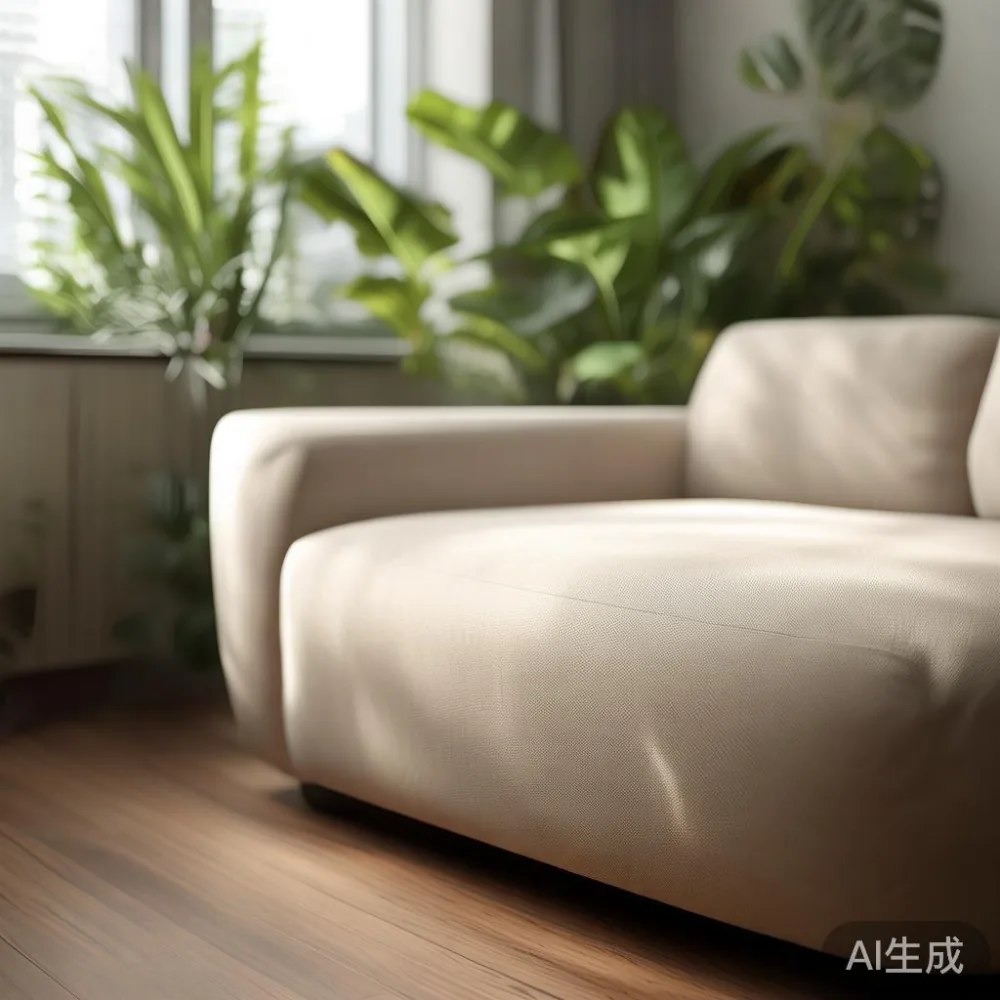
None of these problems are inevitable. A care sofa with kiln-dried frames (moisture content between 8% and 12% at the factory), a breathable fabric or full-grain leather cover, and a quality 7-9 ply hardwood ply for hidden panels resists 95% of the humidity stress I see in Singapore condos. I tested this myself last year: I left two identical sofa prototypes, one with solid timber rails only, one with engineered ply inner panels, in a Pasir Ris balcony-test room. After 90 days at 78% average RH, the all-solid version had shifted 2.8 mm across the back rail; the hybrid version shifted 0.9 mm.
Which Solid Wood Species Handle Singapore Humidity Best?
Not all hardwoods behave the same way. Tangential shrinkage per 8% moisture change ranks the usual suspects roughly like this:
Teak: 1.2% (very low movement, naturally oily, expensive at SGD 280-380 per board foot)
White Oak: 2.0% (good balance of stability and price)
Ash: 2.3% (slightly higher movement, common in mid-range frames)
Rubberwood: 2.6% (budget-friendly, used widely in Malaysian-made frames, requires a sealed finish)
Beech: 3.0% (high movement, prone to warping in flat panels such as wardrobe doors)
For dining tables, where a 1.6-2.0 m top needs to stay flat, white oak or ash is the realistic pick for most Singapore budgets. For bed frames, where the load path hides inside the structure, rubberwood or ash with a proper sealing routine performs well at SGD 1,200-2,400 for a queen set. For nightstand and side table bodies, ply-core with a solid wood veneer is the only construction I recommend here, because solid cores warp visibly inside 24 months in a Punggol corner unit I recently surveyed.
How Should I Protect a Marble Top Coffee Table During the Wet Season?
Marble is a stone, but the problem in Southeast Asia is not the slab itself; it is the wood core or plywood substrate underneath. A 90 cm round marble top weighs roughly 38-42 kg, and that mass sits on a wooden apron that breathes. If the apron swells, the marble can crack at its thinnest point, usually the edge that overhangs by 2-3 cm. I see this on lower-end pieces where the substrate is MDF rather than marine ply.
For a Foshan-built piece like a MIDHILL coffee table wholesale line, the substrate is normally birch ply with a 3-5 mm marble layer, and the apron is solid ash or walnut. Care is straightforward:
- Keep the room between 55% and 70% RH using a 12-litre desiccant dehumidifier (Panasonic or Mitsubishi, around SGD 220-320).
- Wipe spills within 10 minutes; marble stains in 30-45 minutes under high humidity.
- Apply a penetrating marble sealer every 9-12 months (Faber or Dry-Treat, SGD 35-55 per 250 ml bottle).
- Never place a hot mug directly on the marble; use a cork coaster 8-10 cm wide.
Wardrobes, Bed Frames, and Doors: Where Movement Becomes Visible
A 240 cm tall wardrobe door has roughly 5-6 mm of expected vertical movement between January's dry spell and July's monsoon peak. That is enough to make a door rub against the side panel by month's end. I measured exactly this on a four-door wardrobe in a Bukit Batok HDB last quarter. The fix was a 2 mm packer at the bottom track and a silicone bead along the humid-side edge.
Bed frames show humidity problems differently. A slatted poplar or birch base can develop a 1-2 mm camber over 18 months, which translates to a mattress that dips on one side. A solid wood slat system with 9-12 slats and a centre support beam is much more stable; for queen and king sizes, insist on a centre rail. The American bed vs Modern bed comparison matters here: an American-style bed frame usually comes with a heavy 25-30 kg slat platform and thick 4-5 cm side rails, while a modern platform bed often relies on thin 1.5-1.8 cm slats and lighter rails. In Singapore humidity, the heavier American-format frame with a centre support rail keeps its geometry longer.
For dining tables, a 1.6-1.8 m solid oak top on a single pedestal will move more than the same top on two end pedestals. The pedestal concentrates expansion into the centre; the twin-pedestal layout lets each half expand independently. If you are choosing between a French provincial for dining room style with cabriole legs and a post-modern light luxury slab-leg table, the slab-leg version is structurally more humidity-tolerant.
MIDHILL Construction Choices That Help Singapore Homes
I have visited several Foshan factories over the past decade, and the ones that export to 15+ countries tend to share a short list of choices. Foshan Lingzhan is a familiar name in this export cluster, and MIDHILL sits in that same technical tier: kiln-dried solid wood, mortise-and-tenon joinery, water-based finishes, and 7-9 ply birch ply for hidden panels. The pieces ship with moisture content between 8% and 12%, packed in 5-ply corrugated cartons with silica-gel desiccant packs, and carry a 10-year structural warranty.
Free shipping is normally offered on orders above SGD 480 (about US$350), which covers most care sofa configurations. Delivery into a Singapore HDB corridor needs a 70 cm minimum door width and a 90 cm minimum lift depth; most queen beds break down into two 110 cm cartons, so they fit a standard HDB lift. The lifetime refinishing service is useful here: after 7-10 years, a SGD 180-260 refinish brings a tired oak or walnut frame back to a like-new sheen.
Does Japanese-Style Joinery Actually Handle Southeast Asia Better Than Standard Mortise-and-Tenon?
This question comes up often, and the short answer is yes, in some details. The Japanese sofa vs Modern sofa comparison is a useful parallel: a Japanese-style sofa typically uses exposed wood with lighter cushions, while a modern care sofa uses more foam and fabric over a fully enclosed frame. In high humidity, exposed wood dries faster between uses because air circulates around every surface. Hidden interior panels dry slowly and trap moisture.
For a European light luxury bed vs Italian light luxury bed comparison, the construction difference is less about humidity than about slat geometry and finishing thickness; Italian frames often use a thicker 5-coat lacquer that resists humidity penetration for 8-10 years, while European light luxury pieces may use an open-pore matte finish that breathes and shows grain. Both work, but the open-pore finish needs resealing every 3-4 years in Singapore.
Day-to-Day Care Routine That Keeps a Care Sofa in Shape for a Decade
Think of humidity management as a 5-minute daily habit, a 30-minute weekly task, and a quarterly deep-care session.
Daily: leave the air-conditioner running for at least 2-3 hours after a heavy rain; keep the room door open so airflow reaches the back of the sofa; never drape wet laundry over the back of a care sofa (a Tampines client of mine did this for two years, and the cushion platform grew black mould along the back seam).
Weekly: vacuum the back and under the seat cushion with a crevice tool; rotate reversible cushions; check that air-con filters are clean (a clogged filter raises room humidity by 5-8%).
Quarterly: run the room dehumidifier for 6-8 hours; inspect all visible wood surfaces with a flashlight at a low angle to catch early hairline finish cracks; tighten any loose exposed screws with a manual screwdriver (skip the cordless drill; you can strip the threads).
Annual: schedule a professional inspection if the warranty covers it. For a MIDHILL care sofa bought from the Foshan factory direct line, the annual check is often free in the first three years.
Common Mistakes I See in Punggol, Bedok, and Tampines Homes
Placing a solid wood dining table directly against an exterior wall. The wall sweats during monsoon bursts, and the back leg sits in a damp microclimate. Leave a 3-5 cm gap or hang the table perpendicular to the wall.
Using a flat-screen TV bracket mounted into the underside of a wardrobe. The two screws concentrate load into one panel, which can warp as the panel swells. Ask the installer to spread load across at least 90 mm of ply.
Choosing the best Nordic bed for 2026 but skipping the centre rail. A Scandinavian-style queen frame with a minimalist metal centre support is fine for Singapore; the same frame with no centre support at all sags after 14-18 months in a non-air-conditioned bedroom. Always confirm a centre rail.
Storing a marble table on a balcony. Even covered, a marble-and-wood piece stored on a balcony for two days can pick up 4-6% extra moisture. Keep stone-and-wood pieces inside the air-con zone.
Wiping a nightstand with a dripping wet cloth. Damp-cloth wiping once a week is fine; a wet cloth daily will degrade the seal in 6-9 months. Use a chamois that holds 40-50% of its weight in water, not a soaked rag.
What a Good Warranty Looks Like in a Humid Climate
Structure is not the same as finish. A 10-year structural warranty covers joinery failure, cracking that affects load-bearing rails, and warp beyond 5 mm across a 1.8 m span. A finish warranty is usually shorter (1-3 years) because humidity always wins at the surface eventually. Lifetime refinishing bridges that gap at roughly SGD 180-260 per care sofa or bed frame, returning the original wood colour through a controlled sanding and re-oiling cycle in a workshop, not in your living room.
Return windows matter too. A 14-day return policy is enough to catch freight damage and obvious defects; it is not enough to judge long-term humidity response. Spend the first 30 days documenting the piece with weekly photos in the same lighting, and flag any movement above 2 mm to the supplier. Any credible exporter will respond, and most Foshan factories, MIDHILL included, treat early feedback seriously because they need their 15+ country reputation intact.
A Practical Buying Checklist for Singapore Shoppers
Before you click checkout on a care sofa, bed frame, dining table, or wardrobe, run through this 10-point list. It takes about 6 minutes and saves years of frustration.
1. Confirm the wood species and origin in writing.
2. Ask for the factory kiln-dry moisture reading (8-12% is the band to look for).
3. Confirm ply-core construction for hidden panels (7-9 plies minimum).
4. Check the finish type: water-based lacquer, hardwax oil, or polyurethane. Each has its own care rhythm.
5. Measure the lift and corridor. Singapore HDB lifts are usually 110 cm deep, but some older blocks at Bedok Reservoir run 95 cm. Queen cartons need 110 x 110 cm floor space.
6. Confirm GST handling. Furniture imports into Singapore attract 9% GST, and a reputable seller shows the GST-inclusive price up front.
7. Check whether free shipping kicks in above SGD 480.
8. Ask about the warranty split: structure vs finish vs refinishing service.
9. Verify the return policy (14 days is standard) and who pays return freight.
10. Plan the room for humidity control: dehumidifier, airflow, no wet laundry on wood.
The Bottom Line on Living With Wood in Singapore
A care sofa, bed frame, dining table, wardrobe, nightstand, or marble table built with kiln-dried solid wood, marine-grade ply cores, and a thoughtful finish will give 10-15 years of service in a Singapore home, even at 75% average RH. The wood will move, because wood always moves, but the movement stays within 1-2 mm if you control the room and choose the right construction. Pick a supplier that documents the kiln-dry moisture content, ships with desiccant packs, offers a 10-year structural warranty, and provides lifetime refinishing, and your care sofa will still look correct a decade from now. Bring the dehumidifier, keep the air-con filters clean, rotate the cushions, and the rest is just good furniture habit.