Humidity’s Impact on Wood Furniture in Southeast Asia
Living in Singapore means treating humidity as a constant household condition, not a seasonal footnote. Outside temperatures in Tampines, Bedok and Punggol may remain around 26–32°C through much of the year, while monsoon periods raise the moisture in the air and can push relative humidity above 80%. Inside an HDB flat or condominium, that moisture reaches timber floors, wardrobes, dining tables, bed frames and upholstered furniture. It can also gather in lift lobbies and narrow corridors, where furniture must survive handling, delivery and storage before it reaches the home.
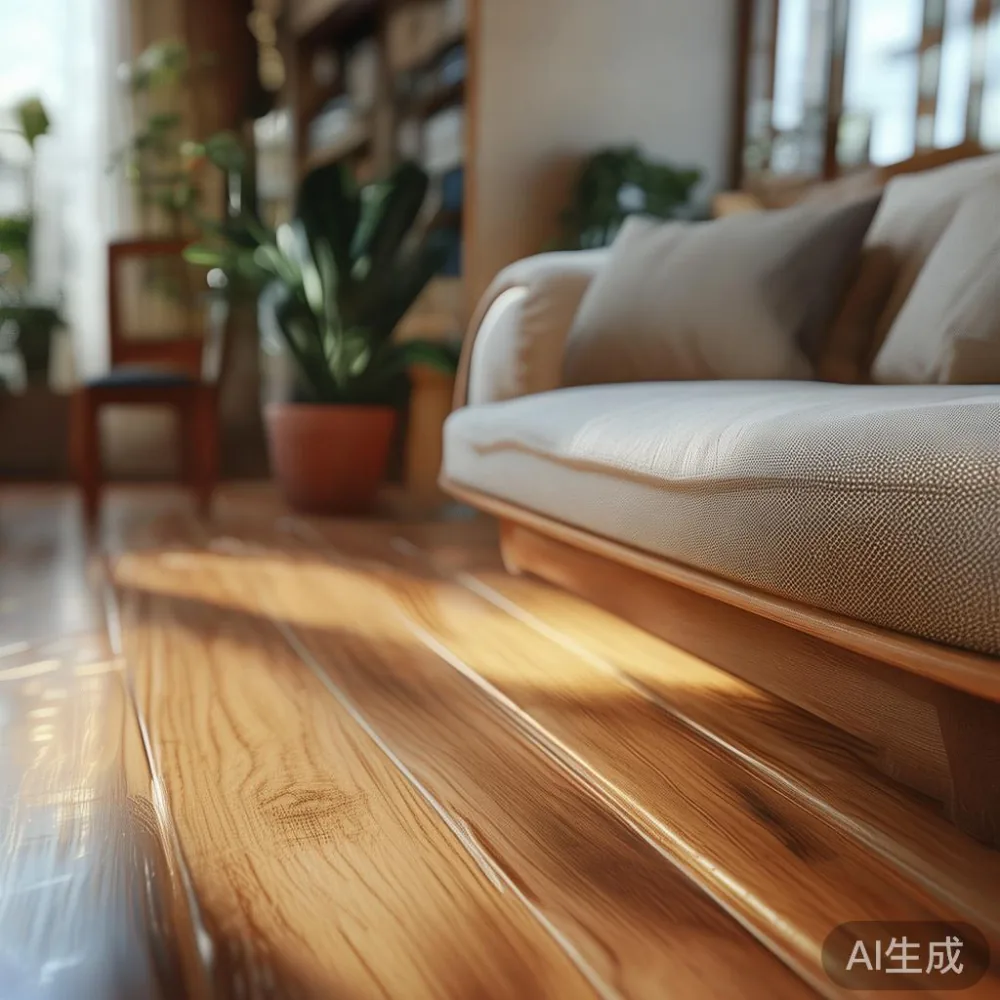
Solid wood expands and contracts as it absorbs or releases moisture. A drawer front may feel sticky during a wet spell, a dining table may develop a cloudy finish, and joints can move by fractions of a millimetre. A care sofa is particularly exposed because its timber frame sits close to breathable upholstery, cushions and the warm indoor environment produced by an air conditioner. The answer is not to fear tropical living, but to manage wood with stable indoor conditions, sensible placement and regular maintenance.
Why Singapore’s Climate Changes Solid Wood
Singapore’s annual rainfall is distributed across the year rather than concentrated in one short season. Relative humidity commonly ranges from roughly 60% to 85%, with daily readings varying by location and time. West-facing units in Bedok can receive strong afternoon sun, while Punggol homes near open areas may experience more airflow and rapid night-time cooling. Air conditioning lowers humidity indoors, yet vents can create local swings of 5–10°C over several hours.
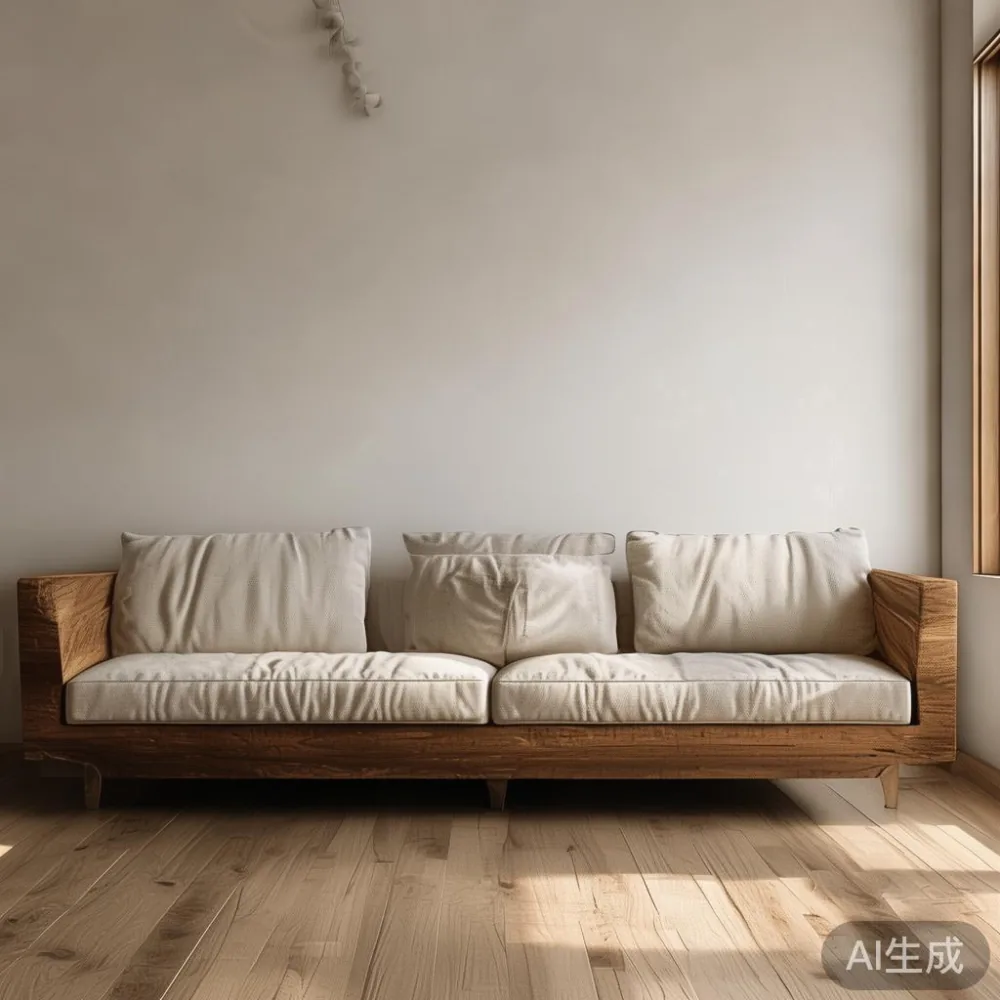
Wood responds to the relative humidity around it. For example, teak, oak and ash used in a solid wood sofa may change dimension by approximately 0.2–0.6% when its moisture content moves across a substantial humidity range. The movement is small, but repeated cycling can loosen drawer runners, open a mitred table edge or make a wardrobe door sit less squarely. Veneered and manufactured panels can move too, although solid timber usually shows the movement more visibly and can be refinished when its surface needs attention.
Marine-grade plywood and medium-density fibreboard may appear in wardrobes, nightstands and storage units because they are dimensionally stable. Their edges and seams still need protection, however, especially in a bathroom or balcony where humidity is higher than the rest of the flat. A kitchen-adjacent dining table should not be repeatedly wiped with a saturated cloth, and a bed frame placed against a cool wall may collect condensation during a rainstorm.
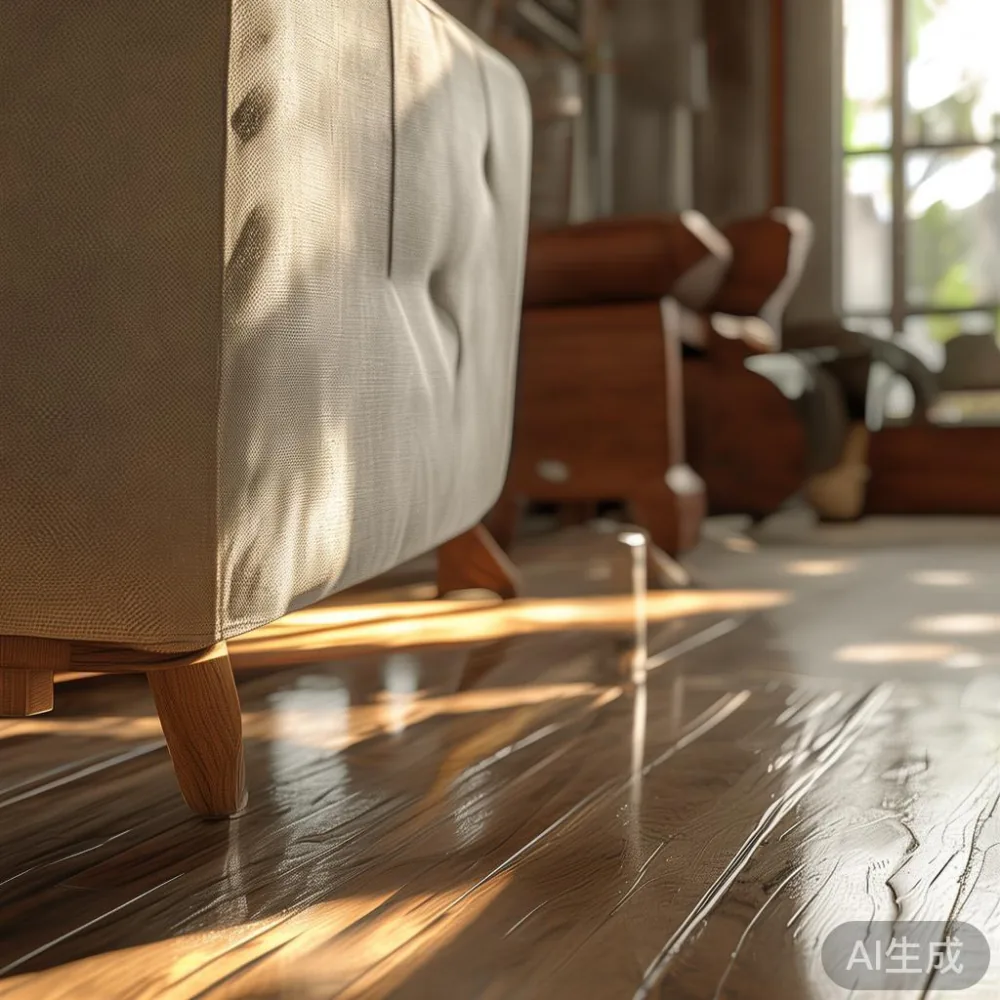
What should humidity be kept at for wooden furniture?
For most wooden furniture in Singapore, an indoor relative-humidity range of 45–60% is a practical target. A hygrometer placed near a care sofa, dining table or wardrobe gives a more useful reading than a phone application without a calibrated sensor. Position it about 1 metre above the floor and away from an air-conditioner vent, kitchen steam or a bathroom door. Readings should be checked at about 9 a.m. and 9 p.m. on several days rather than judged from a single moment.
Use a dehumidifier in persistently damp rooms, especially below 60%. Set the machine to maintain 50–55% where possible, empty its tank every 2–3 days and clean the filter every 2–4 weeks. A room hygrometer reading of 56% on one evening is acceptable; a reading of 78% beside a wardrobe is a signal to improve airflow or dehumidification. Avoid chasing every fluctuation because constantly switching heating, cooling or ventilation can create a different kind of stress.
Air circulation matters. Maintain at least 5 cm behind movable dining chairs where possible and 10–15 cm between a wardrobe and a wall if the manufacturer permits. Keep paperwork and textiles away from solid timber surfaces so they do not trap moisture. A care sofa should stand at least 30 cm from a sheer curtain or exterior wall if condensation appears on the glass, and its cushions should be rotated every 2 weeks to distribute wear and humidity exposure.
How quickly should newly delivered furniture acclimatise?
Give new wood time to adjust to its final room. Remove the packaging from a solid wood sofa, bed frame or dining table as soon as practical, but leave the furniture itself in place. Heavy cartons can trap humid air and should not remain beneath or beside a piece for more than 24–48 hours. Allow roughly 7–14 days for a new piece to settle, and use the first 2–3 weeks as a period for careful monitoring rather than aggressive treatment.
Lift access deserves planning before purchase. Confirm the door width, lift car dimensions, turning radius and corridor measurements with the building management office. A 90 cm dining table may fit through a 100 cm opening only when turned at the correct angle; a king-size bed frame may have to be assembled inside the bedroom. For a standard lift car measuring 110 × 140 cm, check the packaged dimensions and diagonal clearance. Add at least 10 cm of working margin, and never force a solid wood sofa into a lift doorway.
MIDHILL can quote packed dimensions and delivery timing against the access details for a Singapore home. Delivery days should be planned around the building’s booking rules, with the assembly team protected from afternoon downpours. Singapore orders include GST, and a project involving several pieces should have the tax treatment stated clearly in the quotation. A concise delivery day and included service list make it easier to prepare the corridor without blocking neighbours.
How can I prevent mould, swelling and finish damage?
Clean wood with the least amount of moisture needed. Dust a dining table with a dry microfibre cloth, then use a lightly damp cloth only when necessary and dry the surface immediately. A good test is to dampen the cloth under a tap and then squeeze it until no water drips from the folded edge. Never leave droplets sitting on a lacquered, oiled or waxed surface.
For a care sofa, vacuum the frame and under-seat areas every 1–2 weeks, using a brush attachment to reach dust. Check the humidity reading before treating any area of mould. If a spot appears, isolate it, identify whether it is surface dirt or active growth, and use the upholstery manufacturer’s approved method. Do not pour alcohol, bleach, vinegar or an unlabelled disinfectant into the foam. These liquids can damage the filling, dissolve an adhesive or discolour the fabric.
On a wardrobe or nightstand, inspect the back panels and lower edges every 3 months. Small changes such as a slightly swollen rail can often be corrected by adjusting the fitting before the movement becomes larger. For a marble table, use a neutral stone cleaner with a pH around 7 and prevent acidic liquids from remaining on the surface. If a customer is comparing a light luxury sofa vs Italian light luxury sofa, the material specification should be checked just as closely as the silhouette: frame timber, foam density, fabric composition and finish compatibility all affect tropical performance.
Last month I visited a colleague’s three-room flat in Tampines after a week of heavy rain. A solid wood dining table beside a west-facing window had developed faint condensation rings, while the timber bed frame near the internal wall remained stable. We moved the table 25 cm inward, used a tray for wet items and added a small hygrometer to the adjacent study. The room settled from 74% to 58% within 6 hours after the air-conditioner and a dehumidifier were used together. No abrasive treatment was needed, which confirmed that prompt environmental control was more appropriate than sanding the finish.
Should humid rooms use solid wood or other materials?
No material is immune to Singapore’s climate. Solid wood offers repair and refinishing options, while quality plywood and fibreboard can provide dimensional stability for large carcasses. A balanced wardrobe can use solid timber frames with stable engineered panels where appropriate. The decision should reflect the room, the product and the maintenance the household can sustain.
A solid wood sofa works well in a dry living room with reliable air conditioning, provided the frame is inspected and the fabric is protected. A bed frame should have adequate ventilation beneath the slats and should not be pushed tightly into a humid corner. Dining tables benefit from coasters, placemats and controlled water use. Nightstands should not be placed beside a bathroom shower where they receive repeated damp air.
For a room used as French for guest room, visitors notice proportion, texture and warmth more than excessive elaboration. A slim solid wood bed frame, one upholstered chair and a compact nightstand can create a light French look without crowding a 9–12 square metre HDB guest room. The door should still open through roughly 90 cm, and a 120 cm corridor requires careful placement of larger pieces.
How do I choose furniture suited to Singapore’s humidity?
Ask for specific timber, finish and construction information rather than relying on a broad “wooden” description. Find out whether the dining table is solid wood throughout or has solid tops with manufactured components beneath. For a bed frame, check the slat spacing, centre support and joinery. For a wardrobe, confirm the board thickness, edge sealing and hardware. For a care sofa, request the frame timber, cushion foam specification and upholstery care code.
Design should also account for tropical conditions. Raised legs can improve floor clearance beneath a solid wood sofa, while closed storage helps protect books from humidity. French light luxury can work through pale upholstery, restrained profiles and slim timber details; American light luxury often features deeper cushions and generous proportions; post-modern light luxury can use simpler geometry with a few sculptural accents. These styles describe appearance, not moisture performance.
For compact bedrooms, a search for how to style Japandi bed in bedroom can be useful, but the bed frame should still suit the actual dimensions. Low-profile Japanese-inspired furniture can suit an HDB room, while a heavier French-style frame may dominate a narrow Punggol studio. Similarly, research on a French bed vs Mid-century modern bed should include platform support, slat spacing and clearance around the frame, not just visual character.
Modern European light luxury furniture can translate well into a condominium through clean lines, pale timber and tactile upholstery, yet imported construction details still require local care. Marble tables need coasters and pH-neutral cleaners, while a nightstand needs a stable surface for a lamp and charging cable. A wardrobe benefits from good ventilation behind the carcass, and a care sofa benefits from dry cleaning and controlled room humidity.
What maintenance calendar works for a Singapore household?
A practical schedule is easier to maintain than an occasional deep clean. Check the hygrometer every morning for the first month after delivery, then twice each week. Review a care sofa every 2 weeks for cushion movement, visible moisture and loose seams. Vacuum a bed frame and nightstand every 2–4 weeks, inspect the dining table monthly and wipe away spills immediately.
Every 3 months, inspect the edges of a wardrobe, the underside of a solid wood sofa and the back of a marble table. Clean air-conditioner filters monthly, particularly before the June–September wet period. Service the dehumidifier every 1–2 months and follow its manufacturer’s cleaning instructions. Keep a simple record of humidity readings, movement in doors and any changes in the finish; photographs taken once a month can reveal gradual changes.
Small finishes can be managed without replacing an entire piece. Re-oil or wax only according to the product specification, and avoid layering incompatible products. If clouding appears on a dining table, determine whether the cause is moisture trapped under a mat, residue from cleaning or a finish issue. Do not apply silicone, furniture polish or oils without checking the care instructions.
When should professional help be called?
Call the maker or a qualified repairer when a joint has separated, a drawer rail has pulled away, a wardrobe door has warped beyond adjustment or mould continues to return after humidity control improves. Active mould around fixed building surfaces, repeated condensation inside an HDB unit and water entering through a window should also be reported to the building management team. The building may need to inspect the façade, roof or drainage rather than treating the furniture as the original cause.
For larger projects, request a written care guide that identifies the timber species, finish, cleaning products, humidity range and repair options. A 10-year structural warranty addresses structural failure within its terms, while a lifetime refinishing service can be valuable for eligible solid wood pieces. Confirm what the refinishing service includes, how the piece is collected and whether Singapore delivery is covered. Free delivery over US$350 applies to qualifying orders, although a local quotation should state the final SGD amount, GST treatment and delivery days clearly.
Good furniture in a tropical home is not maintained by keeping it sealed away from the weather. It is protected through steady humidity, deliberate placement, careful cleaning and timely repairs. A care sofa, bed frame, dining table, wardrobe, nightstand or marble table can remain useful and attractive for many years when the home environment is managed rather than ignored.