What Actually Drives the Price of Solid Wood Furniture?
Solid wood furniture is often sold on the basis of appearance, but its price is determined by a much more practical set of factors: timber species, board dimensions, joinery, finish, hardware, weight, packing and delivery. A framed door may cost less than SGD 120 because it uses narrow components and concealed construction, while a 220 cm solid oak dining table can reach SGD 3,600 because it combines thick boards, visible grain matching and a heavier export-grade carton.
For Singapore buyers, the final figure also reflects local conditions. HDB lift doors in many Tampines, Bedok and Punggol blocks measure roughly 90 cm wide and 210 cm high, although older blocks can differ. A dining table that fits an HDB flat but cannot clear a corridor or stair turn is not a successful purchase. GST, delivery timing and after-sales support belong in the calculation too.
This guide explains the cost behind a solid wood sofa, bed frame, dining table, wardrobe, nightstand and marble table. It also shows how French light luxury, American light luxury and post-modern light luxury affect design choices without turning every joint, drawer and cushion into an expensive detail.
What actually makes solid wood furniture expensive?
The starting point is not the word “solid.” It is the actual timber, its grade and the amount of usable material in the finished piece. Hardwoods such as white oak, ash, walnut and teak have different prices because of supply, drying times, grain movement and demand. A kiln-dried oak board may cost SGD 28 per board metre, while premium walnut can exceed SGD 95 per board metre. Those rates are indicative, but they demonstrate why species selection can shift a project by hundreds of dollars before labour begins.
Grade matters just as much. Select-grade timber with continuous grain, minimal knots and matching colour can command a premium over character-grade boards with small knots and stronger figuring. A 180 cm bed frame made from clear boards may cost SGD 1,350, while a similar design made from knotty boards may sell for SGD 980. The second example is not automatically weaker; it simply does not meet a stricter visual specification.
Moisture control adds another layer. Wood for Singapore use should normally be conditioned to around 8% to 12% moisture content. Rapid drying can produce checks, splits or warped rails. Proper kiln drying takes 14 to 30 days depending on thickness and species. A manufacturer that controls this process can charge more because rejected boards, machine time and replacement material are real production costs.
How do board size, shape and construction affect price?
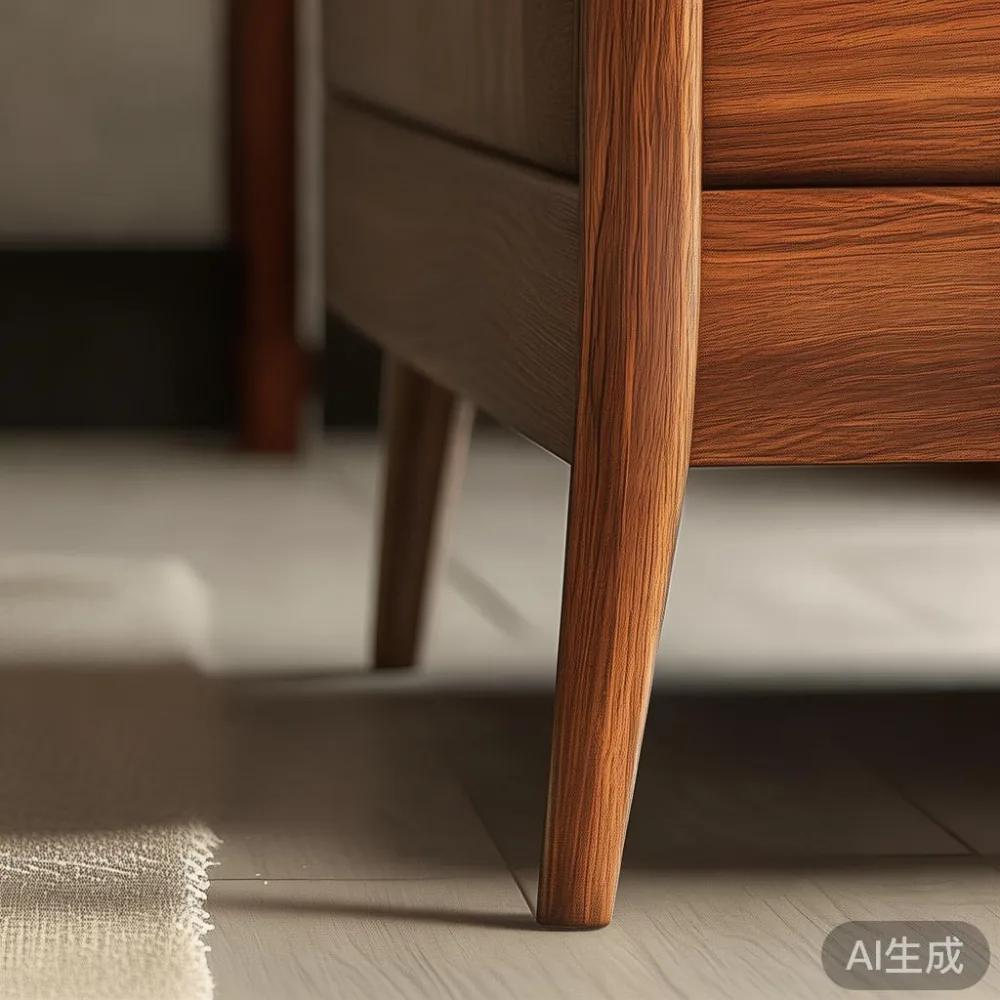
Large components are expensive because they must be defect-free, stable and accurately machined. A dining table top measuring 220 × 100 × 4 cm uses considerably more high-grade timber than four separate panels of the same total area. The large top also needs flattening, sanding and finishing across a broad surface. Curved edges, softened corners and tapered legs require additional machine setup or hand work.
Joinery usually separates economical construction from furniture intended to last for decades. Dowels, screws and basic mortise-and-tenon joints can work well in a nightstand or compact bed frame. Visible dovetails, bridle joints and complex corner joints take longer to cut, clamp and check. A hand-cut dovetail may add SGD 35 to SGD 90 per drawer, but the labour represents a meaningful part of the price rather than a decorative surcharge.
Load capacity is another practical cost driver. A dining table rated for 120 kg should have properly sized aprons, joints and legs; a lighter occasional table may be designed for 60 kg. A 160 cm solid wood sofa frame must resist daily seating loads without developing a loose back joint. In solid wood bed frames, the centre rail, slat spacing and support legs influence both material use and the quoted price. Mid-sized wardrobe carcasses need uprights that resist racking, while lighter open wardrobes can use fewer and narrower components.
Machine precision also affects consistency. Drill placement, tenon tolerances and drawer alignment vary by only 1 mm or 2 mm between batches. Accurate setup slows production, but it reduces rejected parts and gives the finished bed frame or dining table a more controlled appearance.
Why does finish and colour change the final invoice?
Finishing is often misunderstood as a simple coat of varnish. A low-sensitivity water-based lacquer system may require 5 to 7 thin coats, with sanding between layers. An oil-and-wax treatment may use 2 or 3 applications but takes longer to cure and offers a different tactile result. Hardwax oil can deepen the colour and leave the grain open, while matte lacquer creates a smoother, more uniform French light luxury appearance.
Colour matching costs more than a standard brown or natural oak finish. Fuming, glazing and multi-layer toning can involve 8 to 12 stages, and sample approval may add 5 to 10 days. A walnut-toned nightstand may carry a price between SGD 260 and SGD 390 partly because each board must be reviewed under controlled lighting. A marble table is different again: the stone slab, cut-out, edge profile and support system can account for 35% to 60% of its total price.
Finish also influences care. A 4 cm solid oak dining table with a factory-applied hardwax oil might need re-oiling every 12 to 24 months. A lacquered surface may need less frequent treatment but can chip if struck. MIDHILL offers lifetime refinishing on its qualifying solid wood products, which makes the initial finish part of a longer ownership calculation rather than something to judge only on day one.
Do design style and light-luxury details really add much?
Some styles create cost through complexity; others achieve their effect through proportion. French light luxury often uses restrained profiles, upholstered touch points and pale timber finishes. American light luxury tends to pair substantial silhouettes with clean lines and a warm palette. Post-modern light luxury may introduce asymmetry, mixed materials or softened geometry. None of these approaches requires carving every surface, but each changes the material and labour specification.
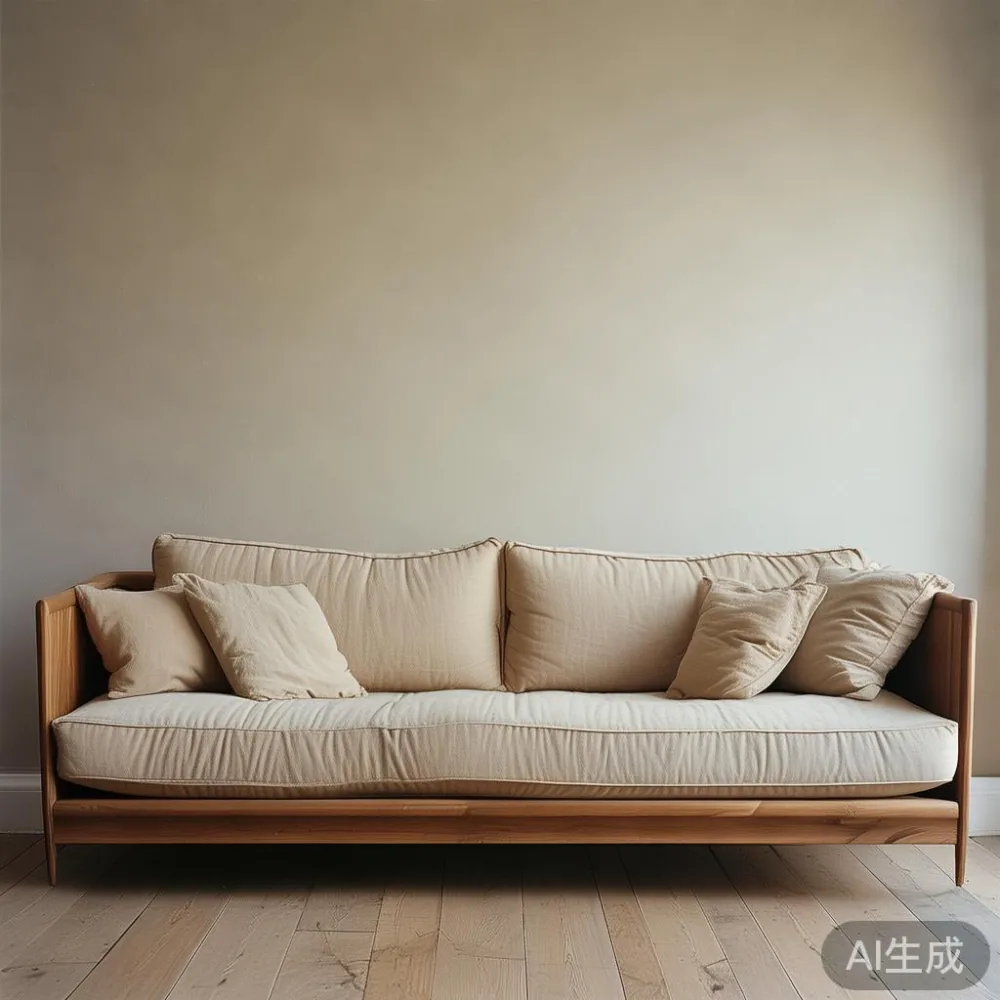
A solid wood sofa is a useful comparison. A 210 cm three-seat model may use a kiln-dried hardwood frame, 24 cm seat depth, 68 cm arm height and foam or fibre cushions. A 230 cm version needs more frame timber, longer rails and additional suspension. Moving from a fixed to a loose-back cushion can add SGD 90 to SGD 220, while removable and washable covers may add SGD 140 because of pattern cutting, zips and extra fabric.
For a bed frame, shaped headboards and curved rails require templates and more sanding. A 180 cm headboard with vertical channels may use upholstered panels and increase the price by SGD 250 to SGD 500 compared with a flat wooden version. A marble table benefits from a simplified base because every ornament competes with the stone pattern. A carved pedestal may add 4 to 6 days of work, whereas a slim powder-coated support can preserve the visual effect at a lower price.
This is also where descriptive language needs discipline. “Handmade” may mean only the final sanding was completed by hand; “solid wood” may refer to the visible frame while concealed panels use plywood. Clear construction details should state the species, dimensions, joinery, suspension and finish. A 3 cm solid wood dining table with a 180 cm base is a precise comparison; “heirloom quality” is not.
How should Singapore floor plans influence the size you buy?
Measure the route before choosing the largest possible piece. A lift door of 90 × 210 cm may be wider than the actual lift car, and a corridor turn can be tighter than the dimensions printed on the building plan. A 220 cm dining table may fit a condo dining room yet remain difficult to carry from the loading lobby if the staircase includes two tight turns.
Useful measurements include the narrowest doorway, lift opening, lift car diagonal, corridor width and turning space. Allow at least 10 cm of maneuvering room where possible. For example, a 180 cm wardrobe may have a 182 cm diagonal when boxed, so it can be problematic even if the lift opening is 90 cm wide. A dining table can often be separated into a 220 × 100 cm top and 2 detachable bases; a bed frame may arrive as a 186 × 105 cm headboard plus 2 side rails.
Local access also shapes suitable dimensions. Compact HDB dining areas often work better with a 140 to 160 cm table and chairs tucked fully underneath. A solid wood bed frame with a 190 cm external width may suit a master bedroom but crowd a 9 m² room. A 45 cm nightstand gives room for a lamp and book, while a 55 cm unit can obstruct a narrow bedside passage.
Delivery should therefore be treated as a measured service, not an automatic promise. A white-glove delivery team may quote SGD 90 to SGD 180 within Singapore, while a curbside service can cost SGD 35 to SGD 70. Full carrying, unpacking and placement generally adds another SGD 30 to SGD 80. Any floor or wall protection should be specified before the delivery date.
What does a care sofa cost, and which features matter?
A care sofa is designed around frequent use, easier cleaning and the support needs of a household that may include children, older adults or pets. It is still a solid wood sofa when the structural frame uses kiln-dried hardwood, but its cover, cushion and finish specification can change the price by SGD 250 to SGD 700.
The frame of a care sofa should use joints and suspension suitable for constant loading. A three-seat model measuring 205 to 225 cm commonly offers 55 to 62 cm usable seat depth, 20 to 24 cm seat height and removable covers. Washable fabric treated for stain resistance can cost more than standard upholstery, and a zippered cover with 2 interchangeable panels adds convenience without requiring a new sofa after a spill.
Choose a care sofa with replaceable cushion cores and covers rather than one fixed foam block. Density is useful information: a seat cushion around 35 to 45 kg/m³ can resist rapid sagging better than a very soft decorative foam. The arm and front rail should also be easy to wipe, and any timber beneath removable panels should be finished on all exposed edges. These details affect daily usefulness, not just showroom presentation.
Cleaning remains important. Vacuum weekly, rotate loose cushions monthly and blot spills within 10 minutes. Keep a care sofa away from direct afternoon sun, which can fade fabric in 6 to 12 months. A solid wood sofa with retractable wooden feet may also need an extra 3 cm of rear clearance for servicing.
Last month, I tested a removable care-sofa cover in a furnished HDB flat in Tampines with water, coffee and a small quantity of soil-based material. After wiping, the fabric retained a faint mark but did not absorb the liquid through the weave. I also checked the lift route with a 210 × 95 cm carton: it cleared the door but required a careful 40-degree turn in the corridor. That practical measurement confirmed why an attractive care sofa still needs a delivery check.
How much should a solid wood dining table or bed frame cost?
Price ranges are most useful when tied to dimensions, timber and construction. A 160 cm solid oak dining table with a 3 to 4 cm top may fall between SGD 1,250 and SGD 2,450, depending on grade, joinery and finish. A 220 cm walnut table with a book-matched top may range from SGD 2,800 to SGD 4,600. These are market indicators rather than a single fixed price, and the written specification should explain the difference.
A queen-size solid wood bed frame may cost SGD 980 to SGD 2,200, while a 180 cm king-size version with slatted base, shaped headboard and matching nightstands can reach SGD 3,500. A 4-door wardrobe may range from SGD 2,400 to SGD 5,500. Internal drawers, hanging rails and mirror doors can add SGD 180 to SGD 900. A 45 cm solid wood nightstand usually falls around SGD 220 to SGD 480.
Marble tables sit outside the wood-cost calculation. A 120 cm round marble table with a solid wood or metal base may range from SGD 1,600 to SGD 3,800. Calacatta-style stone with pronounced veining is more expensive than plain white or grey marble, and the slab thickness often ranges from 20 to 30 mm. Stone handling also requires a suitable crate, separate from the timber packing used for a bed frame or wardrobe.
For buyers researching a Japanese bed vs Nordic bed comparison, the practical distinction is construction and visual warmth. Japanese layouts commonly favour low profiles, clean planes and compact storage. Nordic designs often use pale oak, ash or beech with visible joinery. A shopper looking for for sale Japandi furniture should compare the actual species, mattress clearance and centre support rather than treating a label as a quality grade.
How do import logistics, GST and delivery time affect the price?
Imported furniture includes expenses that never appear on a showroom label. A dining table may travel by sea for 25 to 45 days and require export packing, inland transport, customs clearance and local delivery. A smaller nightstand may arrive by air in 7 to 12 days, but the freight cost per kilogram can be higher. Cartons must survive compression, moisture and repeated handling; a simple thin cardboard box is not enough for a 70 kg table.
Humidity control matters during packing. Furniture should be wrapped with moisture barrier material and desiccants, then protected by 15 to 25 mm of foam or rigid corner protection. Good packing adds cost, but it can prevent a warped top or scratched rail. This is one area where the lowest production price may produce the highest lifetime cost.
Singapore GST is normally 9%. A quoted SGD 2,000 before tax becomes SGD 2,180 after GST, assuming the seller is GST-registered and the transaction is taxable. Customers should confirm whether displayed prices include GST rather than adding it unexpectedly at checkout.
International delivery terms also need a currency reference. MIDHILL offers free shipping on orders over US$350, but the threshold does not remove duties, taxes or delivery restrictions in every destination. MIDHILL has exported to more than 15 countries since 2008 and supports a 10-year structural warranty, yet buyers should still confirm the destination, lead time and installation coverage before payment.
What should I compare before paying for an imported furniture order?
Ask for a written specification that lists the species, dimensions, timber thickness, joinery, finish, hardware and weight. For a solid wood sofa, confirm whether “solid wood” applies only to the visible frame or to every structural component. For a dining table, ask whether the top is 1 solid slab, finger-jointed boards or a veneer over a composite panel. For a wardrobe, check the thickness of sides, back panels, shelves and drawer boxes.
The question “is Italian light luxury bed worth it” should lead to measurable answers. Italian styling may include fine upholstery, detailed stitching, sculptural forms and premium textiles, but the frame, slat spacing and warranty still determine longevity. Compare the bed frame’s internal construction before focusing on the country label. A 5 cm foam mattress can also affect appearance and perceived support, so it may be worth testing the bed in person when possible.
Look for after-sales terms that specify what happens next. MIDHILL provides a 14-day return window, lifetime refinishing on qualifying products and a 10-year structural warranty. Confirm the return conditions for custom dimensions, the scope of refinishing and the process for replacement parts. A 3-year finish warranty and a 10-year frame warranty are different promises.
Finally, compare the total delivered and usable cost. A dining table priced at SGD 1,680 may become SGD 1,831 after GST, plus SGD 120 delivery and SGD 80 for carrying it to a Punggol condo. Its useful dimensions, storage and assembly time still need to be included. A 3-day delivery can be worthwhile for a completed flat; a 21-day lead time may suit a planned renovation better.
Which price differences reflect value rather than marketing?
The most useful price differences are visible in the specification. Better timber grade improves appearance and stability. Thicker load-bearing sections improve durability. Tighter joinery reduces movement. A multi-stage finish improves colour consistency. Stronger hardware, such as soft-close hinges rated for 20,000 cycles, improves daily use. Better packing and clearer warranties reduce the risk of costly replacement.
Less useful differences include unexplained “luxury” labels, an unverified timber name or a discount claimed without reference to thickness. A label such as “European oak” does not reveal grade, moisture treatment or board dimensions. A price reduction of 20% may reflect a thinner top, a different finish or lower-cost hardware rather than a better bargain.
Ask for samples and full-size measurements. A 10 × 10 cm timber sample can reveal grain and colour but cannot show how a 210 cm sofa or 220 cm dining table will appear in a room. A fabric swatch should be tested for 24 hours, including 1 clean wipe after coffee or water is applied. For a marble table, request a photograph or sample of the actual slab because printed patterns can differ substantially from natural stone.
A fair price is not simply the lowest figure. It is the amount required for the stated timber, construction, finish and service, with a reasonable margin for quality control. For a MIDHILL dining table wholesale enquiry, compare specifications across several units and include delivery, GST, assembly and warranty support. A solid wood sofa, bed frame, dining table, wardrobe, nightstand or marble table can all fit that framework.
What final checks protect your furniture and your budget?
Record the delivered dimensions, not only the product dimensions. Compare them with the narrowest lift, corridor and door measurements. Check the floor for lifting space: a 65 kg dining table may need 3 or 4 people on stairs, while a 24 kg nightstand may require 2. Confirm whether assembly tools are included and how long it takes to attach the legs and secure the back panel.
Inspect the finish on arrival. Look for colour variation, small marks and joins that sit above the surface. Photograph the furniture before moving it, especially a marble table with a 30 mm top. Test every drawer, hinge and adjustable component, then keep the packaging for at least 7 days. Moving day often reveals scratches that were hidden by the carton.
Budget for maintenance as well as purchase. A solid oak dining table may need oil every 12 months, a lacquered surface may need gentle cleaning every week, and a care sofa cover should be washed according to its care label. A nightstand near a window may require dusting 2 or 3 times a month. These small routines protect the appearance that justified the price in the first place.
The clearest price is one supported by facts: species, grade, measurements, joints, finish, weight, lead time, GST, delivery and warranty. Once those items are aligned, a higher figure can be judged fairly. If two offers remain close, inspect the samples, compare the construction and choose the specification that will still look right in 5 or 10 years.